Why does my dryer take more than one cycle to dry a load?
A dryer that needs two or three cycles usually has an airflow problem first and a weak heat problem second. Here is what to check, in order, and what a repair costs.
Key takeaways
- A clogged vent line is the most common root cause of a dryer that needs extra cycles.
- Check the lint screen, the hose behind the dryer and the outside vent hood first.
- Strong airflow with only warm air points to the element, thermal fuse or thermostat.
- Most dryer repairs in Metro Vancouver run $180 to $380 with parts.
- Wet North Vancouver weather and tree debris can make vent trouble show up sooner.
The short answer
If your dryer runs a full cycle and the clothes are still damp, the dryer is not getting rid of moisture fast enough. That comes down to two things. Either the damp air can't leave, or the air isn't hot enough to pick up the moisture.
A clogged vent line is the most common root cause. A failed heating element, thermal fuse or thermostat is the other usual cause. Start with the vent, because it is free to check and often fixes the problem.
Why November makes it more noticeable
North Vancouver is one of the wettest parts of the region. Clothes go into the dryer heavier, and the air around the house is already damp. A dryer with a partly blocked vent can limp along in summer and then fall behind once the rain sets in.
Many homes in Lynn Valley, Edgemont and Blueridge sit under tall cedar and fir. Needles, moss and small debris can collect at the outside vent hood. Shaded walls stay wet, so lint at the hood can mat down and stay that way.
In Lower Lonsdale and other condo buildings, the dryer is often in a closet or small laundry room. If the door is closed, the room fills with warm, wet air. That slows drying too.
What to check first
Work through these in order. None of it needs tools beyond a vacuum and maybe a screwdriver.
- Lint screen. Pull it out and clean it after every load. Hold it up to the light. If you can't see through the mesh, wash it with warm water and dish soap and let it dry fully. Fabric softener sheets can leave a film that blocks airflow.
- Load size. A packed drum can't tumble freely. Towels and bedding dry better in smaller loads.
- Washer spin. If clothes come out of the washer dripping, the dryer isn't the only problem. Check that the washer is draining and spinning properly.
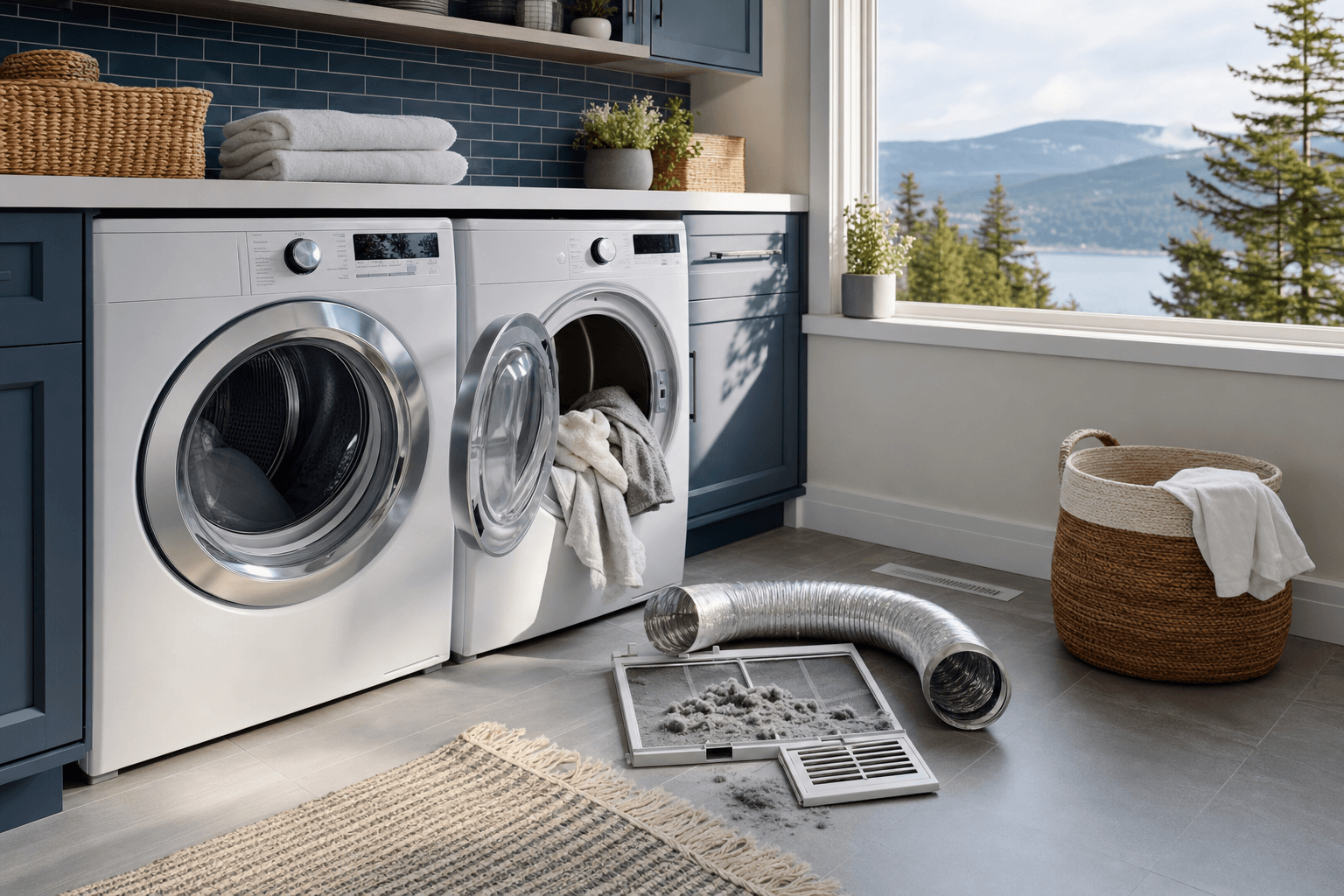
- Hose behind the dryer. Pull the dryer out a little and look. A crushed, kinked or pinched hose is common, especially after the dryer has been pushed back against the wall.
- Outside vent hood. Run the dryer and go outside. The flap should open and push out a steady stream of warm, damp air. If the flap barely moves, or it is stuck shut with lint or debris, you have found a likely cause.
- Air strength. Strong airflow at the hood is a good sign for the vent. Weak airflow means the line is restricted somewhere.
Unplug the dryer before you pull it away from the wall. If it is a gas dryer, be careful not to bend the gas line.
What the symptoms point to
Use what you found to narrow it down.
- Weak airflow at the hood, drum hot to the touch. The vent is restricted. Lint is the usual cause. Clean the full run, not just the end of the hose.
- Strong airflow, but the air is only warm. The dryer is moving air but not heating properly. That points to a worn heating element, a thermal fuse or a thermostat.
- Dryer shuts off before the cycle ends. It may be overheating from a blocked vent. Clearing the vent often stops it.
- Clothes are dry in one cycle some days and not others. Check the load size, the humidity in the room and whether the hood flap sticks in wet weather.
A clean vent will not fix a failed heating part. If the vent is clear and the dryer still takes multiple cycles, the heating side is the next place to look.
Why a blocked vent matters beyond drying time
A restricted vent makes the dryer run hotter and longer. That is hard on the heating parts and can cause the thermal fuse to blow. So a vent problem you ignore can turn into a parts repair.
It also means the dryer is working harder for the same result. If you keep running a second and third cycle, you are adding heat and wear without fixing the cause.
What a repair involves and costs
Most dryer repairs in Metro Vancouver run $180 to $380 with parts. The range depends on which part has failed and how hard the dryer is to get into.
When we come out, we find the cause first and give you an upfront quote on site. You don't pay unless we fix it, though a service call fee applies. Every repair carries a 90-day parts warranty and a 7-day satisfaction guarantee on the workmanship.
If the cause is a blocked vent, we will tell you what we found. Some vent runs in older walk-ups or split-levels are awkward to reach, and it helps to know that before you plan the fix.
When to call a professional
Call if you have cleaned the screen, cleared the hose and checked the outside hood, and the dryer still needs extra cycles. Call if the air at the hood is strong but only warm, since that usually means a heating part has failed. Call right away if you notice a burning smell or the dryer keeps shutting off mid-cycle. If the vent run is hard to reach, or the hood is high up on a steep or sloped lot, it is reasonable to leave it to someone with the right gear.
Need a hand from a real technician?
Our licensed pros repair washers and dryers across Metro Vancouver — same-day and next-day, with 90-day parts warranty + 7-day satisfaction guarantee.
Keep reading
Can you run a dryer in a cold garage during a BC winter?
Most dryers can run in an attached garage in winter if the manual allows it. Cold slows drying and stresses the vent, so a few checks matter before the first frost.
What does agitator maintenance involve on a top-load washing machine?
Agitator maintenance is a short check you can do at home. Clean it, test that it sits tight, and listen for clicking. Here is what to look at and when a repair makes sense.