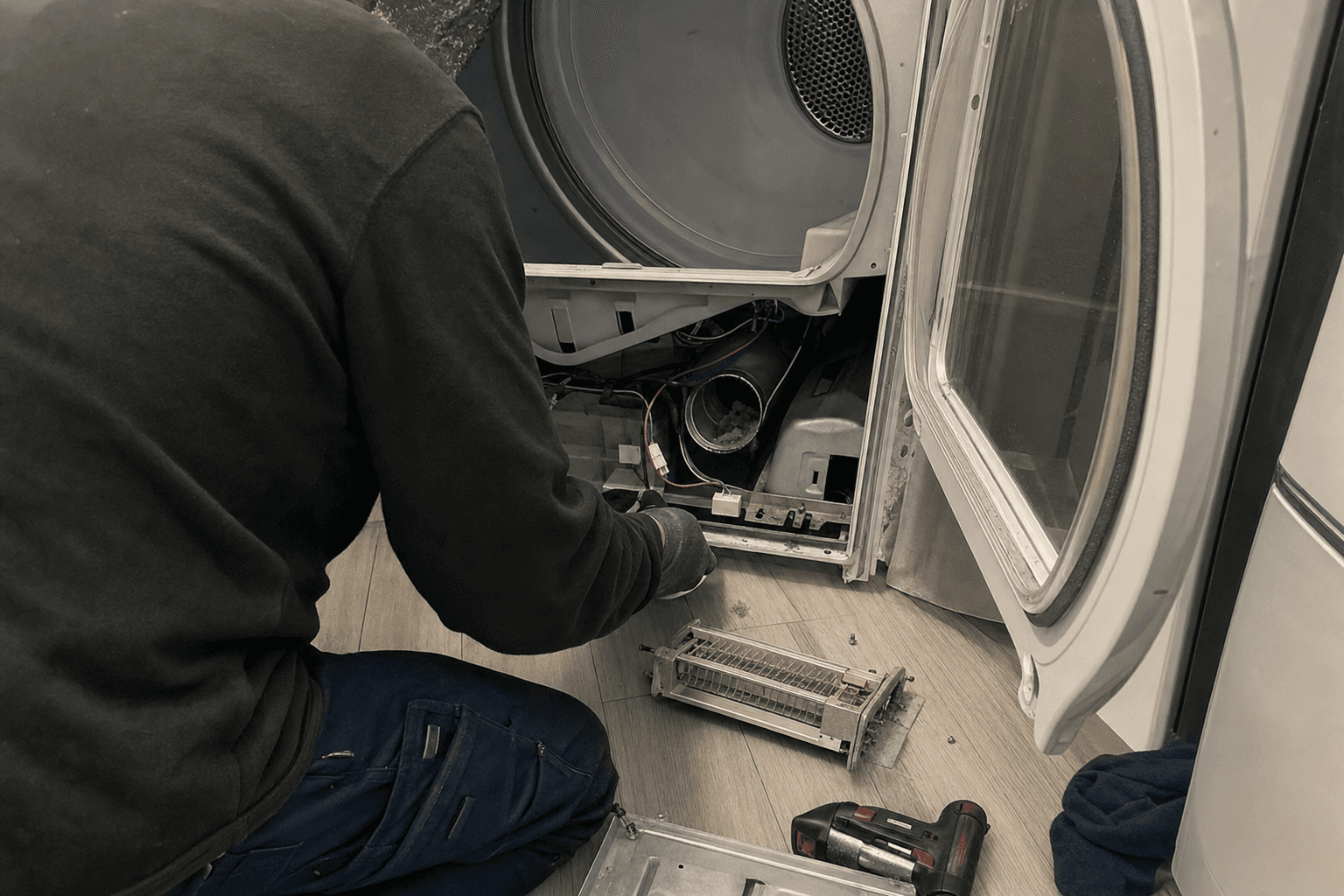
What does a burning smell from your dryer mean, and is it safe?
A burning smell from a dryer is a reason to stop and unplug it. Here is what the different smells usually mean, what you can check safely, and what a repair costs.
Key takeaways
- Stop the cycle, unplug the dryer and let it cool before you check anything.
- Hot lint from a clogged vent is the most common cause of a burning smell.
- The type of smell points to the cause, such as rubber, hot dust or electrical.
- If you smell gas, leave the home and call your gas utility, not a repair company.
- Most dryer repairs in Metro Vancouver run $180 to $380 with parts.
Is a burning smell from a dryer dangerous?
It can be. Lint is dry and burns easily, and a dryer makes a lot of heat. So treat any burning smell as a reason to stop.
Hit stop, turn the dryer off and unplug it. Open the door to let heat out. Do not run another load until you know where the smell came from.
If you have a gas dryer and smell gas, leave the home and call your gas utility from outside. That is not a repair call.
What the smell tells you
The type of smell helps narrow down the cause. Here are the usual ones.
Hot dust or scorched lint
This is the most common one. Lint has collected somewhere it should not, like the vent line, the lint housing or on the heating element. The dryer can't push air out, so heat builds up. The same blockage is also the usual root cause behind a failed heating element, thermal fuse or thermostat.
Burning rubber
A drive belt that is slipping or a worn drum roller can smell like hot rubber. You may also hear squeaking or grinding while the drum turns. If the drum feels stiff or noisy, the smell and the noise likely have the same cause.
Hot plastic or electrical smell
A sharp, fishy or chemical smell can point to a wiring or terminal problem, or a failing component. Do not keep using the dryer. This one needs a technician.
Something burning that is not lint
A sock, a coin, a tissue or a piece of clothing can slip behind the drum and land near the heat source. It will smell like burnt fabric and the smell tends to be strongest at the start of a cycle.
What you can check safely
Wait until the dryer is fully cool and unplugged. Then go through this list.
- Clean the lint trap and look into the slot. Lint often sits at the bottom of the housing.
- Check the drum for stray items, and check the pockets of the last load.
- Pull the dryer out and look at the vent hose. It should not be crushed, kinked or full of lint.
- Go outside and check the vent hood. Make sure the flap opens freely and nothing is blocking it.
- Look at the plug and the cord for scorch marks or discolouring.
If the vent is packed with lint, clean it out before the next cycle. If you find scorch marks, melted plastic or a damaged cord, stop there.
Local factors in Langley
Langley homes vary a lot, and that affects what you might find.
In Langley City and older parts of Walnut Grove and Brookswood, many dryers have been vented through the same line for decades. Long runs and extra bends collect more lint. Brookswood and Fernridge also have heavy evergreen cover on many lots. Needles and debris can collect around an outside vent hood, so check it.
In Willoughby and Yorkson, many homes are strata townhouses with attached garages. The dryer is often against an exterior wall or near the garage, and the vent run may be tucked behind drywall. Before you open anything up, check your strata rules. Some ststratas manage vent cleaning for the whole building.
Langlery nights are colder than on the coast, with more frost. A cold vent line can make lint sit heavier and hold moisture, so a vent that was fine in summer can get worse in November. This is general advice. Check the vent more often once the weather turns.
What a repair usually involves
A burning smell is a symptom, so the repair depends on what is found. Common fixes include clearing the vent, replacing a belt or drum roller, replacing a heating element, or swapping a thermal fuse or thermostat that tripped from overheating.
Most dryer repairs in Metro Vancouver run $180 to $380 with parts. A technician should give you a price before starting work, so you can decide.
If the vent was the root cause, replacing the part without clearing the vent means the new one can fail too. Ask whoever does the work to check airflow before they leave.
Should you keep using the dryer?
No, not until you know the cause. If you cleaned out a clogged vent and the smell is gone, run a short test load and stay nearby. If the smell returns, stop again.
A dryer that has overheated may have a damaged thermal fuse or thermostat. These are safety parts. Do not bypass them.
When to call a professional
Call a technician if the smell is electrical, if you see scorching or melted parts, or if the smell returns after you cleaned the vent. The same goes if you hear grinding with the smell. We are licensed and insured, we give an upfront quote on site, and you don't pay unless we fix it, though a service call fee applies. Repairs come with a 90-day parts warranty. If it is not an emergency, you can unplug the dryer and book a visit when it suits you.
Need a hand from a real technician?
Our licensed pros repair washers and dryers across Metro Vancouver — same-day and next-day, with 90-day parts warranty + 7-day satisfaction guarantee.
Keep reading
What does agitator maintenance involve on a top-load washing machine?
Agitator maintenance is a short check you can do at home. Clean it, test that it sits tight, and listen for clicking. Here is what to look at and when a repair makes sense.
How much does it cost to fix a Samsung washer?
Most washer repairs in Metro Vancouver run $180 to $420 all-in, and a Samsung is no different. Here is what moves the price and how to get a fair quote.