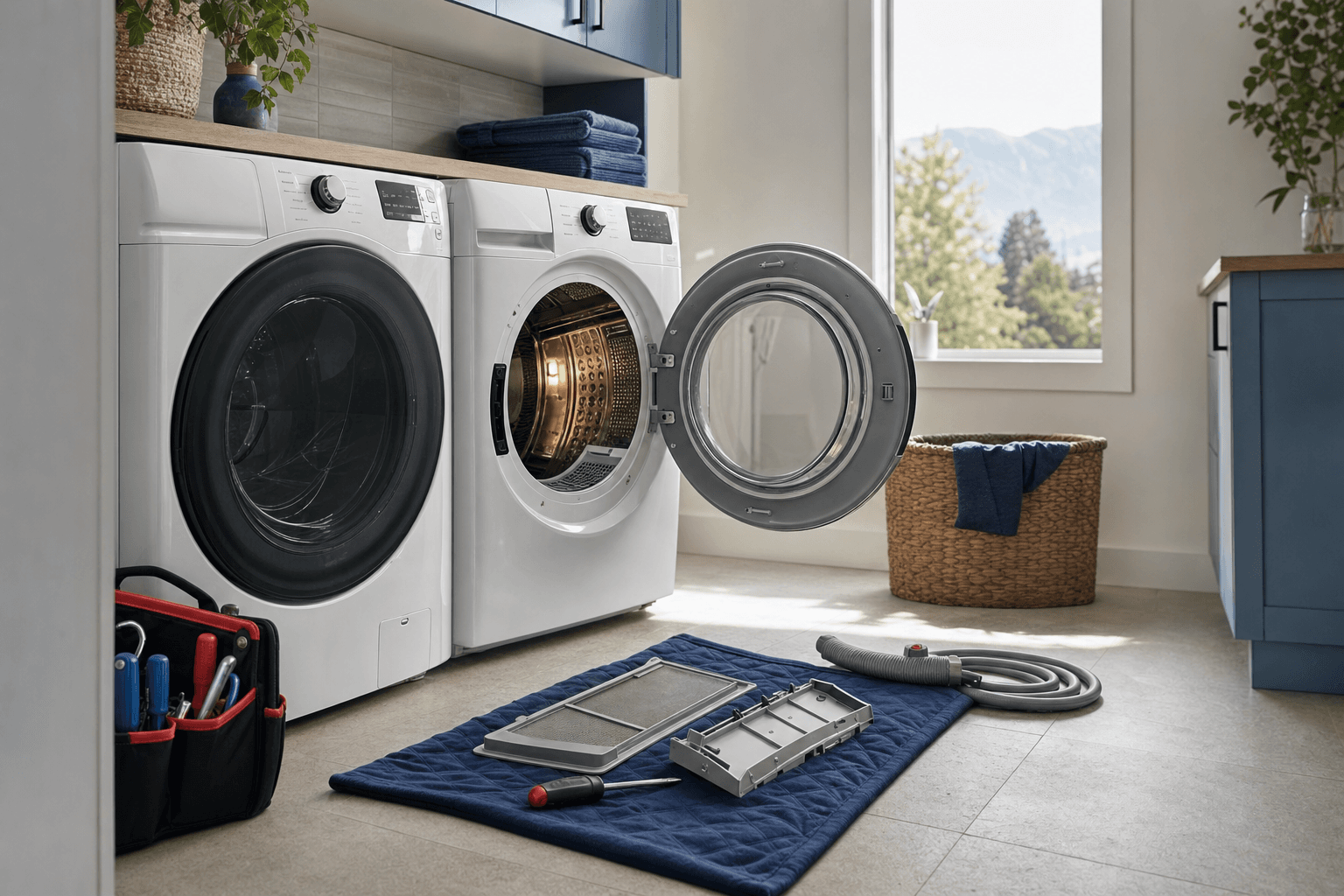
How do sensor drying and timed drying affect results on a washer dryer?
Sensor drying stops when clothes are dry. Timed drying runs for the minutes you set. Here is how each affects dryness, fabric wear and energy use, and what to do when results are off.
Key takeaways
- Sensor drying stops when the load is dry. Timed drying stops when the clock does.
- Sensor cycles are gentler on fabric and usually use less energy on mixed loads.
- Fabric softener and lint film on the sensor bars is a common cause of damp or over-dried loads.
- A washer that spins poorly makes any dryer cycle run long, so check the washer too.
- If the dryer stays damp after a clean and a lighter load, a technician can test the sensor and heat.
Sensor drying and timed drying differ in how the dryer decides to stop. Sensor drying measures moisture in the load and ends the cycle when clothes are dry. Timed drying runs for the minutes you set, even if the load dried early or is still damp. In most homes, sensor drying gives more even results with less shrinking, static and wear. Timed drying gives you control when a load is small, bulky or awkward.
How sensor drying works
Inside the drum there are two metal strips, often called sensor bars. Wet clothes touching both strips complete a small electrical circuit. As the clothes dry, the signal weakens. The control board reads that change and decides when to stop.
Some machines also read air temperature at the exhaust. Either way, the dryer is judging dryness, not counting minutes.
The cycle settings (more dry, normal, less dry) tell the board how dry to aim for.
How timed drying works
Timed drying is simple. You pick a length of time and the dryer heats and tumbles until it runs out. It does not check the load.
That is useful in some cases. It is also easy to get wrong. Too long and you get hot, over-dried fabric. Too short and you pull out damp clothes.
How do sensor drying and timed drying affect results on a washer dryer?
Here is what you will usually notice.
Dryness and shrinkage
Sensor drying stops close to dry, so cottons and blends are less likely to shrink or feel stiff. Timed drying can over-dry a small load because the clock keeps going after the clothes are ready.
Fabric wear and static
Extra heat wears elastic, wrinkles synthetics and builds static. Sensor cycles cut down on all three because they end sooner on lighter loads.
Energy use
Less time running means less energy. Sensor drying tends to save the most on mixed loads that vary week to week.
Bulky and odd loads
Pillows, comforters, rugs and a single heavy item can fool a sensor. The bars may touch only a small part of the load, so the dryer may stop early. Timed drying, with a check partway through, often works better for these.
Combination washer dryers
Combo units that wash and dry in one drum often rely on sensing, and they are sensitive to load size. A load that is too full dries unevenly in either mode. Keep loads moderate and use the extra dry setting if the result is damp.
When sensor drying gives bad results
A sensor dryer that leaves clothes damp, or runs far too long, is usually telling you something. These are the common causes.
- Fabric softener and dryer sheets leave a thin film on the sensor bars. The bars then read the load wrongly.
- Lint builds up on the bars and the drum wall.
- The load is too big, so wet items never touch the bars.
- The vent is partly blocked, so moist air stays in the drum.
- The washer is not spinning properly, so clothes arrive soaking wet.
- A sensor wire, the sensor itself or the control board has failed.
Start with the easy checks. Unplug the dryer. Wipe the sensor bars with a cloth and a little rubbing alcohol until they look bright. Clean the lint screen. Run a smaller, mixed load and see if the result improves.
When timed drying is the better choice
Use timed drying when you have a very small load, a single bulky item, or a sensor you do not trust yet. Start with a shorter time and add more if needed. Check the load partway through and open the door to feel the thickest seams.
If a sensor cycle keeps stopping early or late, timed drying is a fair workaround while you sort out the cause. It is not a fix.
What to check in a Maple Ridge home
Maple Ridge gets more rain than the western suburbs, and homes near Golden Ears and the forested north side stay damp and shaded. Laundry rooms in older Haney and Hammond houses can be cool and humid in November. That slows drying and makes it harder to judge whether a sensor is working.
In the 1980s to 2000s subdivisions around Cottonwood and Albion, vent runs are often long, with several bends. In newer Silver Valley townhouses, the dryer may sit far from an outside wall. Both setups can leave moist air in the drum and trick a sensor dryer into running long.
On rural acreages toward Whonnock and Thornhill, cold laundry rooms in an outbuilding or garage can slow drying through the colder months. Cold incoming air and hard frost can make any dryer work harder.
If you are in any of these areas, clean the vent and the lint screen before blaming the sensor. A washer with a weak spin also matters. Wetter clothes mean longer cycles in either mode.
When to call a professional
Call a technician if the dryer still leaves clothes damp after you clean the sensor bars, empty the lint screen and try smaller loads. The same goes if the cycle ends in a few minutes on a wet load, or if the washer leaves clothes dripping after spin. Most washing machine repairs in Metro Vancouver run $180 to $420 all-in, depending on the part. We give you an upfront quote on site before any work begins, and every repair carries a 90-day parts warranty and a 7-day satisfaction guarantee. If it is something you can fix yourself, we will say so.
Need a hand from a real technician?
Our licensed pros repair washers and dryers across Metro Vancouver — same-day and next-day, with 90-day parts warranty + 7-day satisfaction guarantee.
Keep reading
What does agitator maintenance involve on a top-load washing machine?
Agitator maintenance is a short check you can do at home. Clean it, test that it sits tight, and listen for clicking. Here is what to look at and when a repair makes sense.
How much does it cost to fix a Samsung washer?
Most washer repairs in Metro Vancouver run $180 to $420 all-in, and a Samsung is no different. Here is what moves the price and how to get a fair quote.