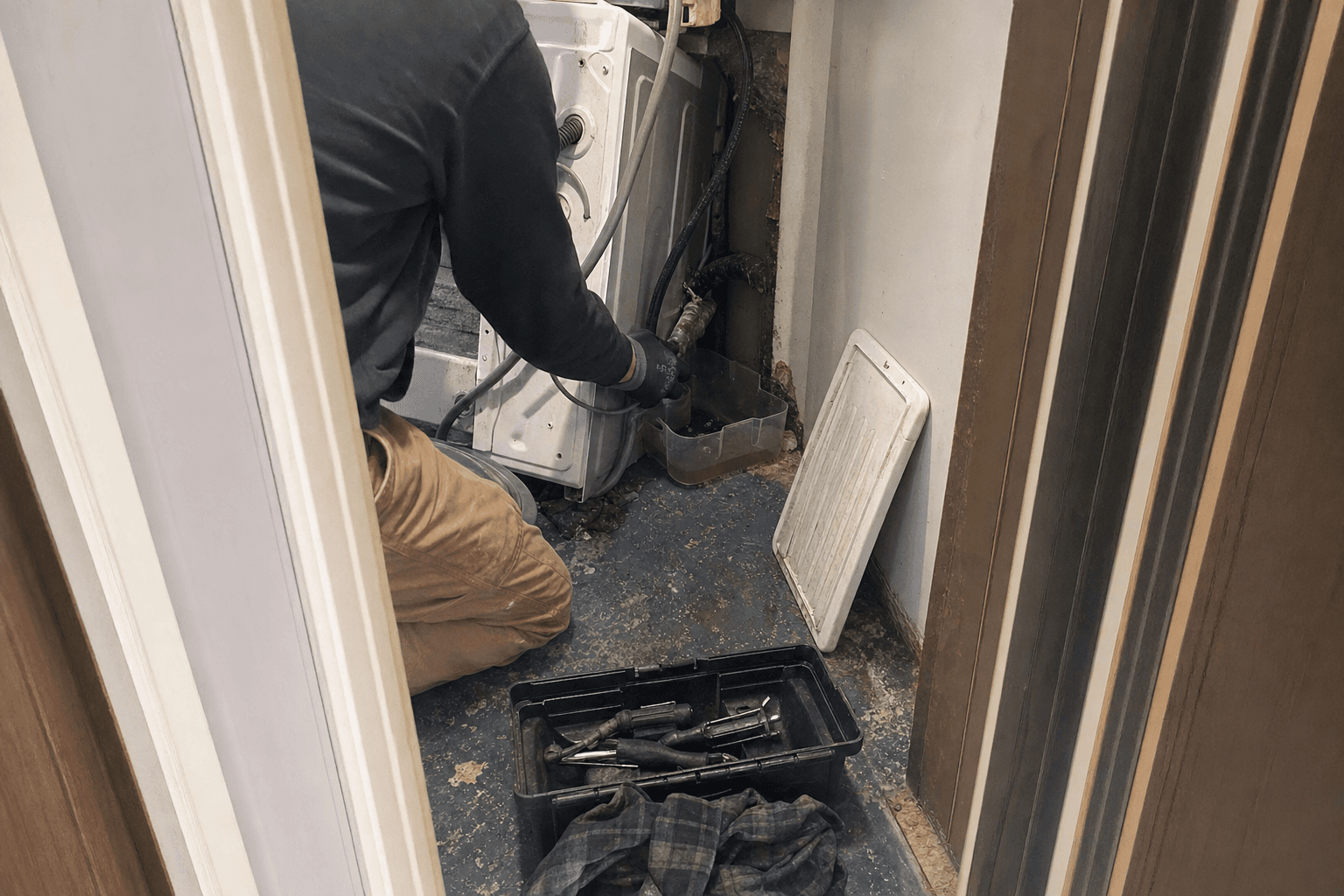
Why your washer floods after heavy November rain—and how to prevent it
Delta's autumn storms can overwhelm your washer's drainage system. Here's what to check before the winter deluge hits.
Key takeaways
- Backflow from municipal drains during heavy rain is common in Delta's low-lying areas.
- A kinked or clogged drain hose is the fastest way to trap water inside your washer.
- A one-way check valve costs under $20 and stops sewage from flowing backward into your machine.
- Inspect hoses and connections now—November storms can hit fast and hard across Metro Vancouver.
The November flood risk in Delta
Delta sits in one of Metro Vancouver's wettest, lowest-lying zones. When November downpours hit—and they will—your home's drainage system can become overwhelmed. That pressure backs up into the lowest points in your plumbing, and your washing machine's drain hose is often the path of least resistance. A flooded washer isn't just inconvenient; standing water in the drum breeds mould and can damage the pump, drum seal, and control board.
Check your drain hose first
Before you worry about municipal drainage, inspect your washer's drain hose. Walk to where it connects to your standpipe, wall drain, or utility sink. Is the hose kinked, crushed, or pinched behind the machine? A restricted drain forces water to back up into the tub instead of flowing out. Straighten any kinks and ensure at least 2 inches of clearance on all sides.
Next, check the hose for internal clogs. If water drains slowly during a normal cycle, the line may be partially blocked by lint, detergent buildup, or mineral deposits. A plumbing snake or wet-dry vacuum can clear minor blockages; for stubborn ones, consider replacing the hose entirely—they're inexpensive and easy to swap.
The drain hose slope matters
Your drain hose should slope downward at least 1/4 inch per foot as it runs from the washer to the drain. If it's level or slopes upward, water pools inside the hose and drains slowly—or not at all. Check the height of where the hose enters the standpipe or sink. If it's lower than the outlet at your washer, gravity works against you. Reposition the hose so it descends gradually, or raise the washer slightly on a sturdy platform.
Install a check valve
The real game-changer for Delta homes is a one-way check valve installed on your drain line. This inexpensive device (usually under $20) allows water to flow out of your washer but prevents sewage and stormwater from flowing backward into it. Most plumbers can install one in under an hour, or confident DIYers can do it themselves.
A check valve is especially valuable if you live in a flood-prone area or if your home's main drain is lower than your washer. During heavy rain, municipal sewers can back up; the valve keeps that mess out of your machine.
Don't wait until the storm hits
November weather in the Lower Mainland changes fast. If you've noticed slow draining, standing water, or any gurgling sounds from your washer, act now. A quick inspection today takes 15 minutes and could save you hundreds in repairs or water damage. If you find a clogged hose or suspect a deeper drainage problem, a licensed technician can diagnose and fix it before the serious rains arrive.
Remembrance Day reminds us to look after what matters. Your home's integrity—and your washer's health—deserves the same care.
Need a hand from a real technician?
Our licensed pros repair washers and dryers across Metro Vancouver — same-day and next-day, with 90-day parts warranty + 7-day satisfaction guarantee.
Keep reading
Why your washing machine won't start and what to check first
A washer that is dead or won't start often has a simple cause. Here is what to check, in order, before you decide whether to book a repair.
How often should you clean your dryer vent?
Most homes need a dryer vent cleaning once a year. Long runs, multi-unit buildings and heavy laundry loads mean every 6 to 9 months. Here is how to tell which you are.