Why your dryer takes twice as long in November—and what to do about it
Metro Vancouver's autumn humidity makes your dryer work harder. Here's why cycle times spike and how to get your laundry dry again.
Key takeaways
- Moisture sensors fail in humid air—they can't tell wet from ambient dampness.
- A clogged dryer vent forces longer cycles and wastes energy.
- New Westminster's autumn humidity peaks around 75–85%; this stalls sensor performance.
- Timed dry mode bypasses the sensor during wet months.
- Annual vent cleaning prevents both long cycles and fire risk.
The November Dryer Slowdown
If your dryer has suddenly decided that a load of towels needs 90 minutes instead of 45, you're not alone. Every November, New Westminster and across Metro Vancouver, dryers start running longer cycles—and it's not a mechanical failure. It's humidity.
Your dryer's moisture sensor sits inside the drum. It measures the electrical conductivity of the air between your clothes. When that reading drops low enough, the sensor tells the dryer the load is dry and the cycle ends. Simple system. Except in November, when the Lower Mainland's outdoor humidity climbs and your laundry room air becomes saturated.
Why Sensors Struggle in Damp Air
When the ambient air around your dryer is already 75–85% humidity (typical for Metro Vancouver autumn), the sensor can't easily distinguish between "clothes are still wet" and "the room is just damp." It keeps running, waiting for a reading that might never come. Your dryer isn't broken—it's just confused.
This happens most in homes with poor laundry room ventilation or dryers vented indirectly into the house. If your vent exhausts outside but the room itself is damp, the sensor still struggles.
The Vent Clog Factor
Here's where it gets worse: a partially clogged dryer vent makes the problem compound. Lint buildup reduces airflow, trapping humid air inside the drum. The sensor reads this trapped moisture and extends the cycle further. You're now burning energy to run a machine that can't dry anything efficiently.
In November, when you're already running the dryer more often (damp laundry takes longer to air-dry outside), a clogged vent turns a minor inconvenience into a real energy drain.
Clean the Sensor First
Your dryer's moisture sensor is usually a small metal strip or pair of contacts inside the drum, near the lint trap. Over time, lint dust settles on it, making it even less reliable in humid air.
Unplug the dryer, locate the sensor (check your manual—locations vary), and wipe it gently with a soft, dry cloth or a slightly dampened microfiber cloth. Don't use solvents. Dry it completely before plugging back in. This single step often cuts cycle times in half.
Clean the Vent from Outside
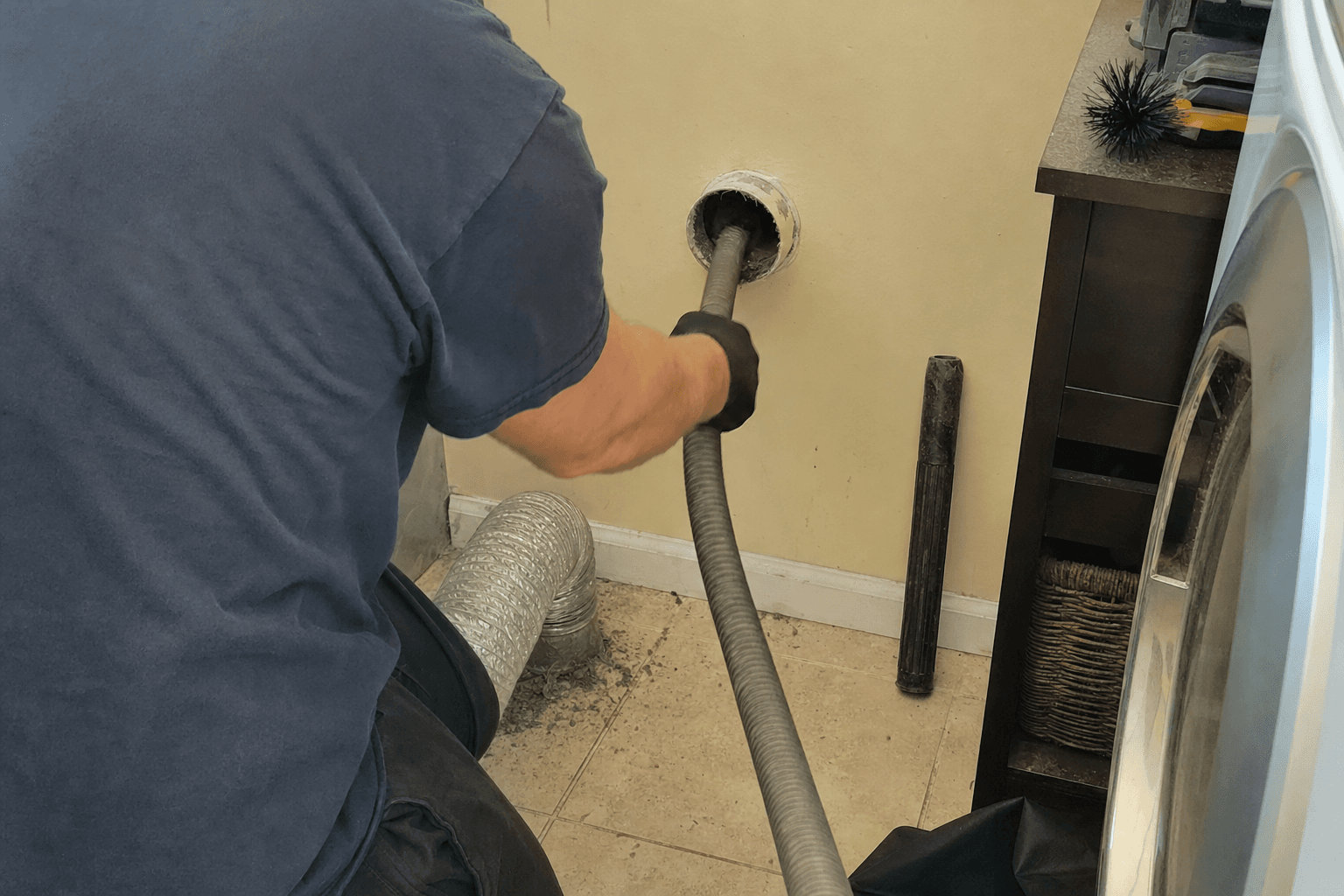
Walk around your home and find where the dryer vent exits to the outside. In November's wet weather, that vent hood should be clear and unobstructed. If lint, leaves, or debris are blocking the opening, clear them away. Then disconnect the vent hose from the back of the dryer (or have a technician do it) and vacuum out any lint buildup inside the hose and the exhaust duct.
A clogged vent not only lengthens cycles—it's a genuine fire hazard. Lint is highly flammable, and trapped heat in a blocked vent is a recipe for danger.
Switch to Timed Dry During Wet Months
If your dryer has both a moisture-sensor setting and a timed dry setting, consider switching to timed dry from November through March. You'll need to experiment to find the right time for different load sizes, but once you dial it in, timed dry bypasses the sensor entirely. Your dryer will run for exactly 45 minutes (or whatever you set) and stop—no false humidity readings, no extended cycles.
When to Call for Help
If you've cleaned the sensor and vent and your dryer still runs for 90+ minutes on a normal load, the heating element or thermal fuse may be failing. That's a job for a technician. But nine times out of ten in November, the culprit is humidity and lint.
Need a hand from a real technician?
Our licensed pros repair washers and dryers across Metro Vancouver — same-day and next-day, with 90-day parts warranty + 7-day satisfaction guarantee.
Keep reading
Why your washing machine won't start and what to check first
A washer that is dead or won't start often has a simple cause. Here is what to check, in order, before you decide whether to book a repair.
How often should you clean your dryer vent?
Most homes need a dryer vent cleaning once a year. Long runs, multi-unit buildings and heavy laundry loads mean every 6 to 9 months. Here is how to tell which you are.