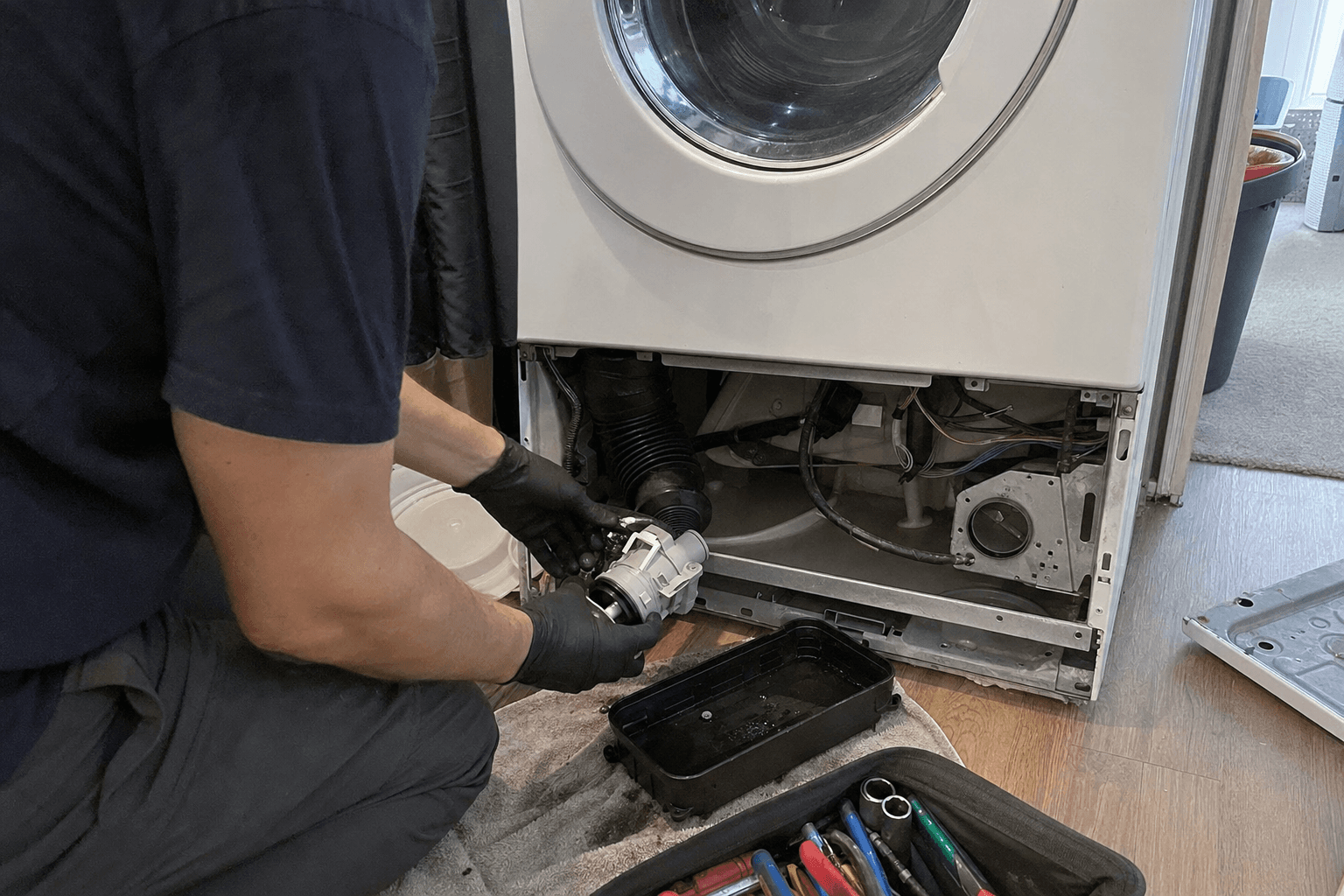
Why your washer's spin cycle weakens in West Vancouver's wet fall—and how to fix it
As November rain picks up across the Lower Mainland, a struggling spin cycle often signals a drainage problem. Here's what to check before winter arrives.
Key takeaways
- A weak spin cycle often means water isn't draining fully before the spin begins.
- Check your drain hose for kinks, clogs, or standing water first—it's the easiest fix.
- The pump filter (if your model has one) collects lint and coins and needs regular cleaning.
- West Vancouver's damp fall weather can worsen mould if wet clothes sit after a failed spin.
- If the hose and filter are clear, the pump itself may be failing and need professional replacement.
The spin cycle weakness you're noticing
When your washer completes the wash cycle but the spin barely turns, or clothes come out dripping wet, water is trapped inside the drum. This isn't a motor problem—it's a drainage problem. The spin can't do its job until the water leaves the tub, so your machine stops or spins weakly to protect itself.
November's constant rain and damp air in West Vancouver make this issue more urgent. Wet clothes sitting in a drum create the perfect environment for mould and mildew, especially if you're away or busy.
Start with the drain hose
Your drain hose is the first thing to inspect. Follow it from the back of your washer to where it empties (usually into a standpipe, sink, or floor drain). Look for kinks, pinches, or areas where it's been bent sharply—even a small kink restricts water flow enough to cause a weak spin.
If the hose looks straight, check where it connects to the wall or drain. Make sure it's not pushed in too far or clogged at the outlet. A simple adjustment often solves the problem.
Check the pump filter
Most modern washers have a small pump filter near the bottom front of the machine (check your manual for the exact location). This filter traps lint, coins, hair, and small debris before they damage the pump. When it clogs, water can't drain.
Access the filter by removing the small panel or door at the washer's base. Unscrew the filter cap (have a towel ready—water will spill), and pull out the filter. Rinse it under warm running water and check for visible blockages. Coins, bobby pins, and twisted lint are common culprits. Once clean, screw it back in firmly and test a spin cycle.
Why timing matters in autumn
If you ignore a weak spin now, you're setting yourself up for mould problems through the damp Lower Mainland winter. Wet fabrics in a closed drum can smell sour within hours. West Vancouver homes, especially those near the water or in tree-heavy areas, experience higher humidity that speeds up mould growth.
Clearing the drain and filter takes 20 minutes and costs nothing. It's worth doing this week.
When to call for help
If the hose is clear, the filter is clean, and the spin cycle still fails, the pump itself may be stuck or failing. The pump is a sealed component that requires professional removal and replacement. Don't try to force it—a broken pump can flood your laundry room, and water damage in November can linger for months in our wet climate.
A working spin cycle is essential, not optional. Wet clothes breed mould, and a flooded laundry room becomes an expensive repair. If your hose and filter are clear but the problem persists, it's time to get it checked before the rainy season deepens.
Need a hand from a real technician?
Our licensed pros repair washers and dryers across Metro Vancouver — same-day and next-day, with 90-day parts warranty + 7-day satisfaction guarantee.
Keep reading
Why your washing machine won't start and what to check first
A washer that is dead or won't start often has a simple cause. Here is what to check, in order, before you decide whether to book a repair.
How often should you clean your dryer vent?
Most homes need a dryer vent cleaning once a year. Long runs, multi-unit buildings and heavy laundry loads mean every 6 to 9 months. Here is how to tell which you are.