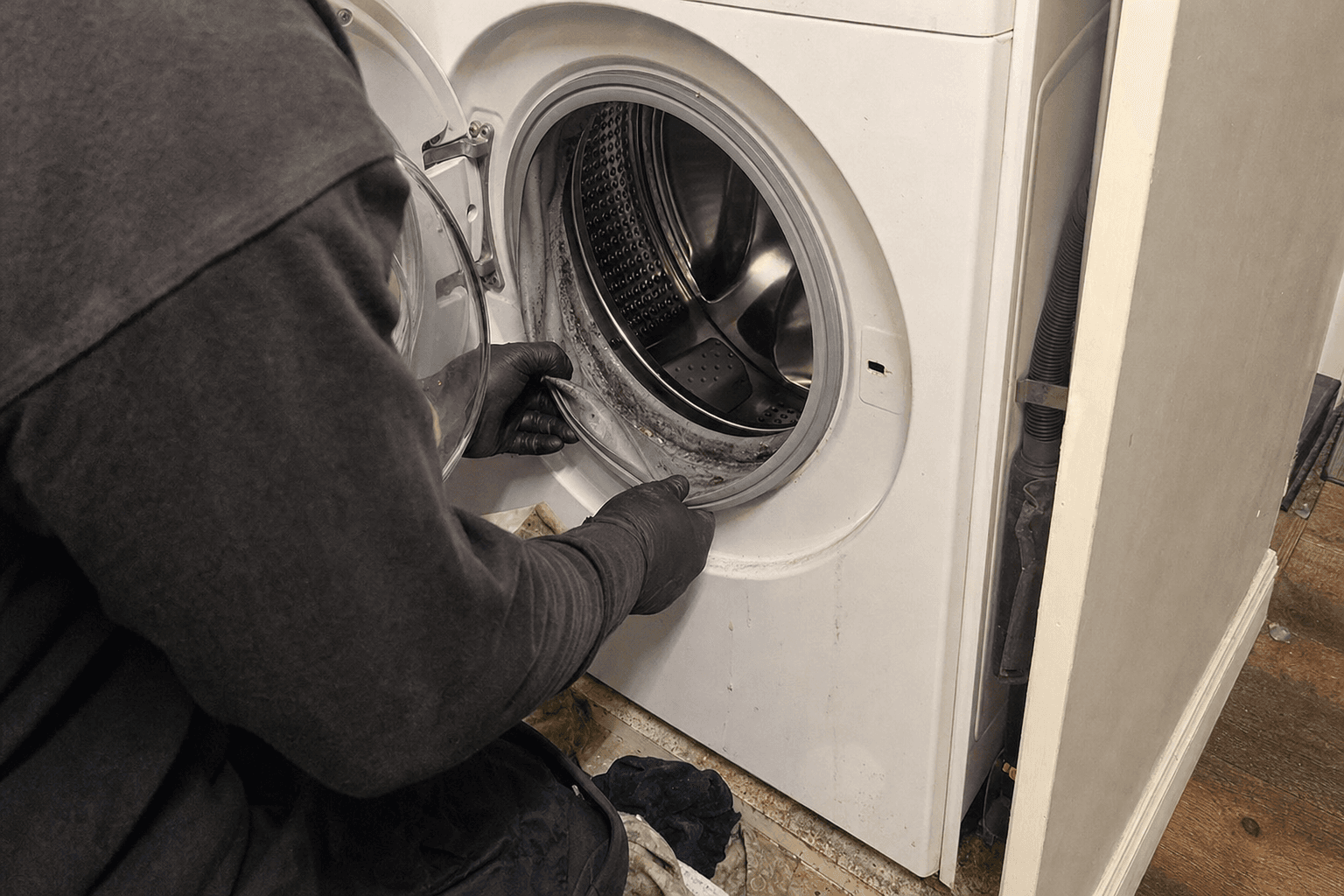
Why your washer smells like mildew in November—and how to fix it fast
Metro Vancouver's damp autumn air creates the perfect breeding ground for mildew in your washing machine. Here's how to eliminate the smell before it ruins your laundry.
Key takeaways
- North Vancouver's November humidity traps moisture in washer drums, feeding mildew growth.
- Rubber door seals and detergent dispensers are mildew hotspots—scrub them weekly.
- Run a 60°C hot cycle with white vinegar or bleach monthly to kill spores.
- Leave the washer door and detergent drawer open after every load to dry the drum.
- If smell persists after cleaning, the drain filter or pump may need professional inspection.
The November mildew problem is real in North Vancouver
As the days shorten and rain becomes a daily fixture across Metro Vancouver, your washing machine is silently becoming a mildew farm. The culprit? Moisture. Every load leaves water droplets clinging to the drum, gasket, and hoses. In autumn, when humidity sits around 80% and temperatures hover near 10°C, that moisture takes days—sometimes weeks—to fully evaporate. Mildew spores thrive in this damp, cool environment.
Unlike a mouldy shower tile, mildew inside your washer is invisible until you smell it—a sharp, sour odour that transfers straight onto your freshly washed clothes. North Vancouver's rainy climate makes this problem worse than in drier regions, so tackling it now, before December's heaviest rains, is worth the effort.
Start with the rubber gasket and drawer
The door seal (gasket) on front-load machines is the number-one mildew hideout. Water pools in the folds, and detergent residue feeds the spores. Pull back the gasket gently and inspect the underside—you'll likely see grey or black specks.
Wipe the entire gasket with a damp cloth and a 50/50 white vinegar and water solution. Don't skip the detergent dispenser drawer; pull it out fully, rinse it, and scrub the slot it slides into. These two areas alone often eliminate 70% of the smell.
Run a hot vinegar or bleach cycle
Once you've cleaned the visible surfaces, run your washer on the hottest cycle available (usually 60°C) with no clothes inside. Add 2 cups of white vinegar to the drum, or 1 cup of unscented bleach if your machine is stainless steel. The heat and acidity (or bleach) will kill dormant spores deep in the drum and drain lines.
If your washer has a "cleaning" or "sanitise" cycle, use that instead—it's designed for exactly this job. Let the cycle run fully, then run a second hot rinse cycle with plain water to flush out any remaining vinegar or bleach smell.
Make it a habit, not a crisis
The best defence against November mildew is prevention. After every load, wipe the gasket dry with a clean cloth and leave the door open for at least 2 hours (or overnight). Prop open the detergent drawer too. This simple step cuts mildew risk by more than half.
Once a month, repeat the hot vinegar or bleach cycle, especially during autumn and winter when humidity is highest. In North Vancouver's damp climate, this monthly reset takes just 90 minutes and saves you from weeks of sour-smelling laundry.
When to call a professional
If the smell persists after cleaning the gasket and running a hot vinegar cycle, the problem may be deeper—a clogged drain filter, a blocked drain hose, or mildew growth inside the pump. These require professional diagnosis and cleaning. Catching mildew early means a simple DIY fix; ignoring it can lead to costly repairs and permanent odours.
Need a hand from a real technician?
Our licensed pros repair washers and dryers across Metro Vancouver — same-day and next-day, with 90-day parts warranty + 7-day satisfaction guarantee.
Keep reading
Why your washing machine won't start and what to check first
A washer that is dead or won't start often has a simple cause. Here is what to check, in order, before you decide whether to book a repair.
How often should you clean your dryer vent?
Most homes need a dryer vent cleaning once a year. Long runs, multi-unit buildings and heavy laundry loads mean every 6 to 9 months. Here is how to tell which you are.