How to prevent washer leaks before winter floods your Surrey laundry room
November's heavy rains expose hidden washer problems. A simple pre-winter inspection now stops costly water damage before it starts.
Key takeaways
- Inspect the rubber door seal for mould, cracks, or warping—common failure points in damp climates.
- Check inlet hoses for bulges, splits, or discolouration; replace any showing age or damage.
- Run a hot-water vinegar cycle monthly to prevent mineral buildup that weakens internal seals.
- Ensure the drain hose sits properly in the standpipe—kinks or loose connections cause backflow leaks.
- Test the overflow valve by tilting the washer slightly; water should not leak from the back panel.
November in Surrey brings the rains—and with them, a sharp spike in basement water damage claims. Most of those calls start with a washer that seemed fine in October. The culprit is rarely dramatic. It's a slow weep behind the machine, a small pool under the drum, or water trickling from the door seal. By the time you notice it, your laundry room is already at risk.
The good news: a 20-minute inspection now will catch 90% of winter leak problems before the heavy rains hit hard.
Check your door gasket first
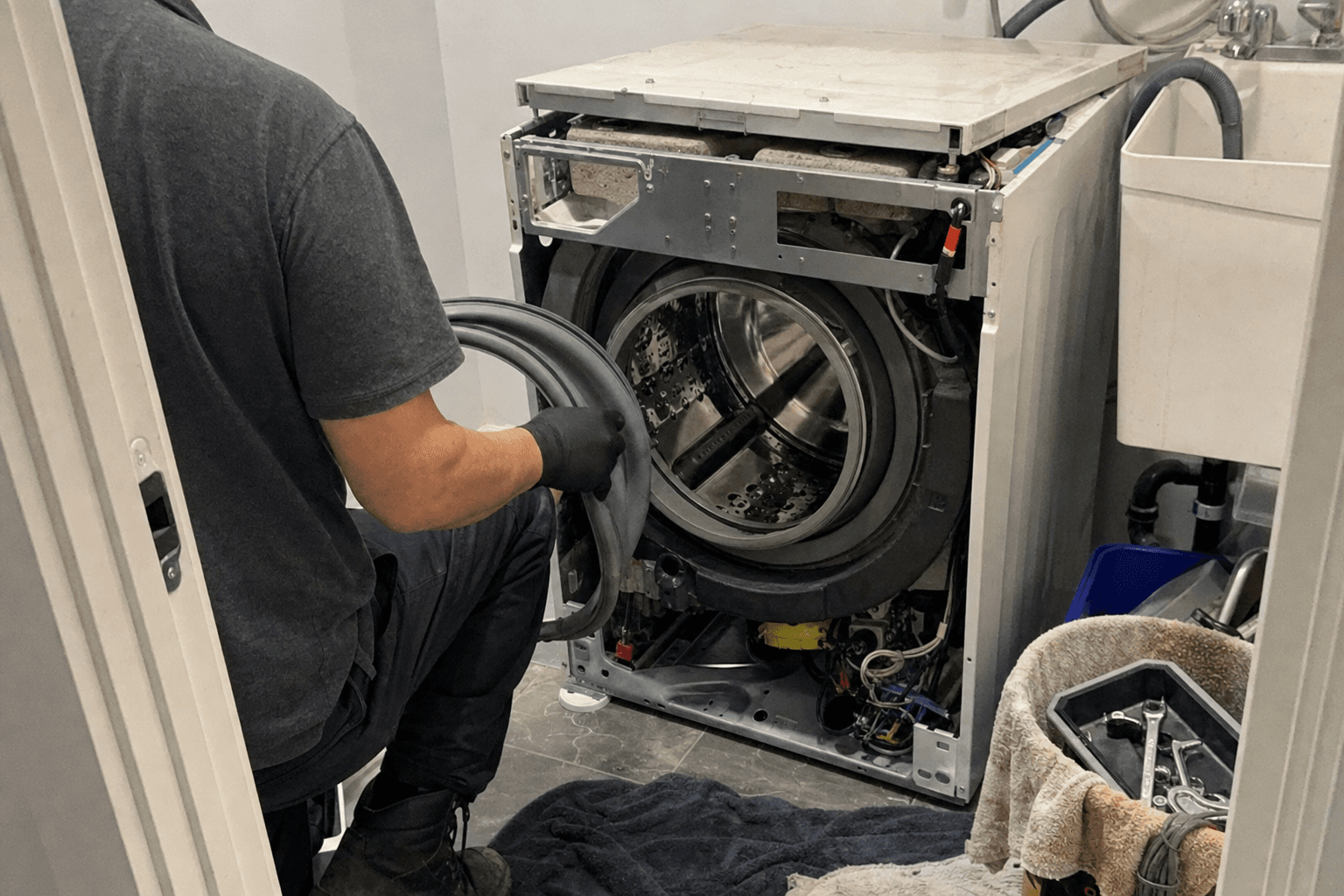
The rubber seal around your washer door is the first line of defence against leaks—and it takes a beating in the Lower Mainland's damp climate. Open the door and run your finger around the entire gasket. Look for visible mould (black or grey spots), cracks, or areas where the rubber has hardened or warped. If you see any of these, the seal has lost its flexibility and won't hold water properly when the drum fills.
A gasket in good condition should feel soft and pliable, with no visible damage. If you spot mould but no structural damage, clean it with a damp cloth and a little white vinegar. If the seal is cracked or permanently deformed, replacement is your only option—and it's far cheaper than fixing water-damaged flooring.
Inspect your inlet hoses
These are the two hoses that bring hot and cold water into your washer from the wall. Over time, the rubber deteriorates, especially in homes with hard water or temperature fluctuations. Look for bulges (a sign of internal pressure damage), visible cracks, discolouration, or brittleness. If a hose is more than five years old and you've never replaced it, assume it's at risk.
Kink the hose gently—it should bend smoothly. If it cracks or feels stiff, it's time to replace it. This is one of the easiest DIY maintenance jobs, but if you're not comfortable doing it yourself, it's inexpensive to have done professionally.
Run a hot-water vinegar flush
Mineral deposits build up inside your washer's internal seals, especially in Surrey's mineral-rich water. Once a month, run a hot-water wash cycle with a cup of white vinegar and no clothes. This dissolves buildup and keeps seals flexible. It also freshens the drum and prevents the musty smell that plagues washers in damp climates.
Check the drain hose and overflow valve
Your drain hose should sit snugly in the standpipe without kinks or bends. If it's coiled too tightly or positioned at an odd angle, water can back up into the washer and leak onto the floor. Gently straighten it and ensure the standpipe is at least 30 inches tall.
The overflow valve is your last-resort safety feature. If the main drain fails, this valve should prevent water from spilling into the cabinet. Tilt your washer slightly forward and look at the back panel. You should see a small tube or valve near the bottom. If water leaks from here during a normal cycle, the valve is failing and needs professional attention.
Why this matters now
November through March is when Metro Vancouver experiences its heaviest rainfall. A small leak that goes unnoticed for a week can cause thousands of dollars in damage to your flooring, subfloor, and foundation. The cost of a gasket replacement or hose swap is trivial compared to water remediation. Spend 20 minutes now, and you'll sleep soundly through the winter rains.
Need a hand from a real technician?
Our licensed pros repair washers and dryers across Metro Vancouver — same-day and next-day, with 90-day parts warranty + 7-day satisfaction guarantee.
Keep reading
Why your washing machine won't start and what to check first
A washer that is dead or won't start often has a simple cause. Here is what to check, in order, before you decide whether to book a repair.
How often should you clean your dryer vent?
Most homes need a dryer vent cleaning once a year. Long runs, multi-unit buildings and heavy laundry loads mean every 6 to 9 months. Here is how to tell which you are.