Why your washer's water temperature won't rise in November—and how to fix it
As Richmond's cold-water pipes chill in late autumn, your washer's hot cycle may deliver lukewarm water. Here's what's happening and how to restore proper temperatures.
Key takeaways
- Incoming water temperature in Richmond drops 10–15°C between September and November, slowing heat-up.
- Mineral scale on heating elements is worse after damp autumn months and blocks heat transfer.
- Fill valve screens clogged with sediment restrict hot water flow and reduce cycle temperature.
- Older washers with undersized heaters cannot compensate for cold inlet water in late fall.
- Thermostat failure is common; if the heater runs but water stays cool, replacement is usually needed.
The November temperature drop is real
When you move into late autumn in the Lower Mainland, the temperature of water coming into your home drops noticeably. By November, Richmond's incoming water temperature sits around 8–10°C, compared to 18–20°C in summer. Your washer's heating element has to work much harder—and if it's anything less than pristine, it simply won't keep up.
This is why you might notice your "hot" wash cycle feels tepid or your whites don't come out as bright. The problem isn't your detergent or your settings; it's the seasonal reality of Metro Vancouver plumbing.
Mineral scale is your silent enemy
After months of Vancouver's damp autumn weather, mineral deposits accumulate inside your washer's heating element. Hard water minerals—calcium and magnesium—cling to the heating coil and create an insulating layer. This scale acts like a blanket, preventing heat from transferring efficiently to the water flowing past it.
If you live in Richmond or anywhere across Metro Vancouver, you're dealing with moderately hard water. Over time, especially during wet seasons when humidity and condensation are high, scale builds up faster than you'd expect.
Check your fill valve screens first
Before you assume the heating element is the culprit, inspect the inlet screens where hot water enters your washer. These small mesh filters trap sediment and mineral particles from your pipes. A clogged screen dramatically restricts water flow, which means less water reaches the heating element and the cycle runs cooler overall.
Turn off your water supply and unscrew the inlet hoses from the back of the machine. Look at the small screen inside each connection—if it's discoloured or clogged, soak it in white vinegar for 30 minutes, then gently brush it clean. This simple step often restores temperature dramatically.
When the heating element needs attention
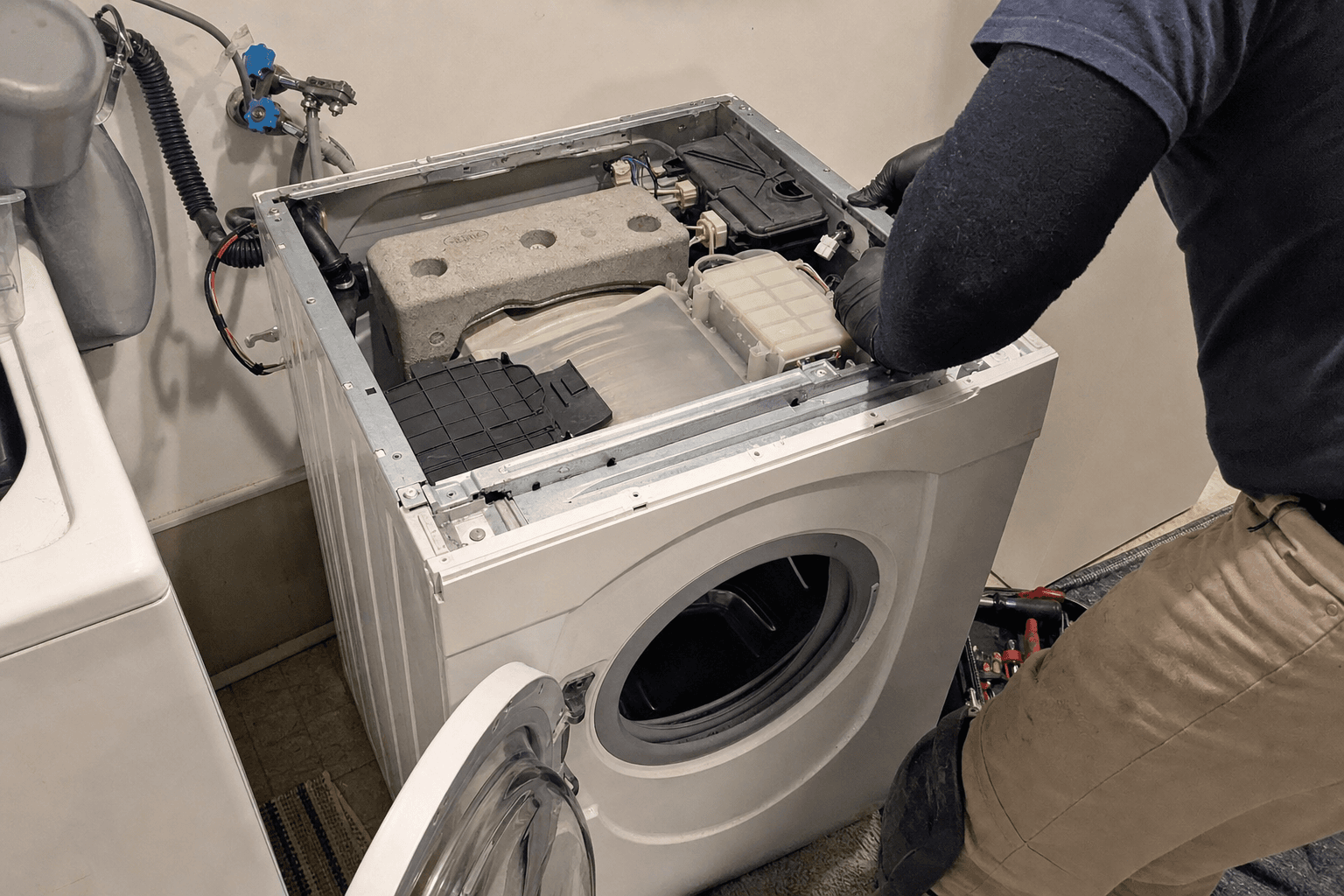
If your screens are clear but the water still won't heat, the element itself may be heavily scaled or failing. Some washers let you access the element directly; others require partial disassembly. Soaking the element in vinegar can dissolve mineral buildup, but if it's cracked or visibly corroded, replacement is the only option.
Older washers—especially those over 8–10 years old—often have undersized heaters that can't compensate for November's cold inlet water. In these cases, accepting slightly cooler wash temperatures or running the machine on the hottest setting available is sometimes the realistic solution.
The thermostat factor
Your washer's thermostat tells the heating element when to turn on and off. If it fails, the element may run continuously but never reach target temperature, or it may not run at all. A faulty thermostat is hard to diagnose without testing equipment, but it's common in machines that are 5+ years old.
If the element is warm to the touch but water stays cool, or if you hear the element humming without any temperature change, the thermostat is likely the problem.
Simple prevention for next year
Running a cleaning cycle with vinegar every month—especially November through March—keeps mineral buildup minimal. Use one litre of white vinegar on your hottest, longest cycle with no laundry inside. This habit extends your heating element's life and maintains consistent water temperature year-round across the Lower Mainland.
Need a hand from a real technician?
Our licensed pros repair washers and dryers across Metro Vancouver — same-day and next-day, with 90-day parts warranty + 7-day satisfaction guarantee.
Keep reading
Why your washing machine won't start and what to check first
A washer that is dead or won't start often has a simple cause. Here is what to check, in order, before you decide whether to book a repair.
How often should you clean your dryer vent?
Most homes need a dryer vent cleaning once a year. Long runs, multi-unit buildings and heavy laundry loads mean every 6 to 9 months. Here is how to tell which you are.