Why your washer's cold-water cycle fails in Burnaby's damp fall—and how to fix it
As November humidity climbs, mineral buildup and temperature sensors go haywire. Here's why your cold-water wash isn't working—and what to do about it.
Key takeaways
- Mineral deposits in inlet valves block cold water and trigger false heating in damp weather.
- A simple descale cycle with white vinegar clears buildup without chemicals or tools.
- Thermal sensors fail when moisture corrodes their connectors—inspect for rust around the valve housing.
- Lower Mainland's high autumn humidity accelerates mineral accumulation; check your machine monthly November through March.
- Running a cold-water rinse cycle weekly prevents mineral lockup and extends washer life.
The November problem: cold water that isn't
You set the dial to cold, but your washer heats the water anyway. Or it takes twice as long to fill. In Burnaby and across Metro Vancouver, November's damp air and mineral-rich municipal water create the perfect storm for inlet valve failure. Your machine isn't broken—it's confused.
When humidity climbs and water sits in the inlet hoses overnight, minerals (calcium and magnesium) crystallise inside the valve seats. These deposits act like tiny dams, restricting water flow. The washer's temperature sensor then misreads the water temperature, thinking it's colder than it is, and the heating element kicks in unnecessarily. Result: your "cold" cycle becomes lukewarm, energy bills spike, and delicate fabrics get damaged.
Why autumn makes it worse
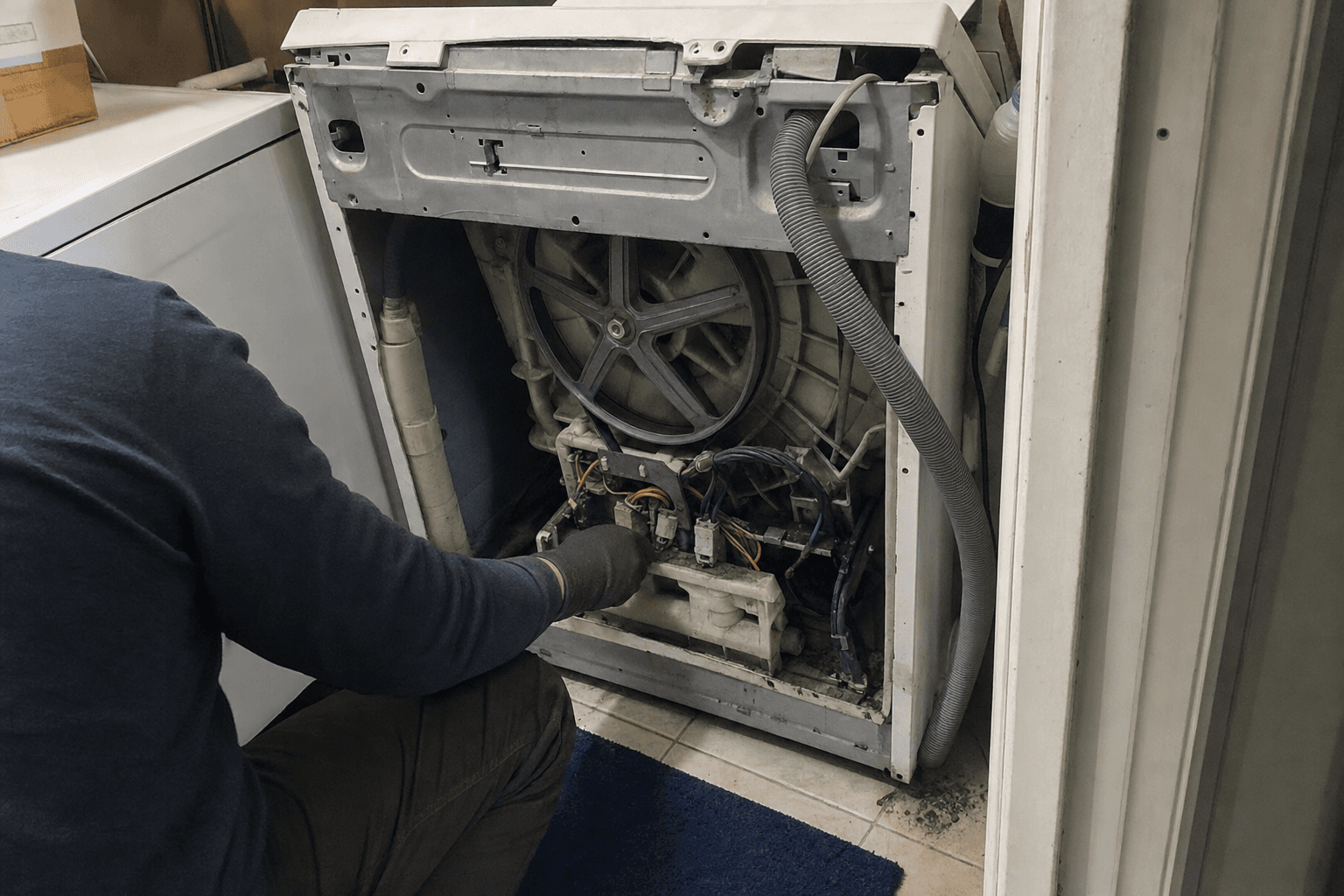
Vancouver's Lower Mainland rainfall peaks in November, and that moisture doesn't just fall outside—it seeps into laundry rooms through walls, windows, and ventilation. Your washer's inlet valve housing, typically located at the back of the machine, becomes a condensation magnet. When the thermal sensor's electrical connector gets damp, corrosion sets in. The sensor sends false readings to the control board, and the heating cycle misfires.
Burnaby's older homes and damp basement laundry setups are especially vulnerable. The combination of high humidity and mineral-laden city water accelerates the problem from September through March.
How to fix it: the vinegar descale
Before calling for a repair, try a descale cycle. Fill the detergent dispenser with white vinegar (not apple cider vinegar) and run a hot-water wash on an empty drum. This dissolves mineral deposits inside the inlet valves without chemicals or disassembly. Repeat once a month through winter.
If that doesn't work, inspect the inlet valve housing (at the back, where hoses connect). Look for white crusty buildup or green corrosion around the connectors. If you see corrosion, the thermal sensor likely needs replacement—that's a job for a technician.
Prevention: your November checklist
Run your washer's rinse cycle once weekly using cold water only. This keeps water moving through the valves and prevents mineral stagnation. Check the inlet hose screens (small mesh filters inside the connection ports) every two weeks; rinse them under the tap if they look discoloured.
If your laundry room is particularly damp, consider a small dehumidifier or ensure your dryer vent is sealed and venting outside. Lower the thermostat in that room slightly—cooler air holds less moisture, and your washer will thank you.
When to call a pro
If descaling doesn't restore cold-water flow within two cycles, or if you spot corrosion on the valve connectors, book a service visit. Replacing a thermal sensor or inlet valve is straightforward for a licensed technician and costs far less than replacing a corroded machine.
Need a hand from a real technician?
Our licensed pros repair washers and dryers across Metro Vancouver — same-day and next-day, with 90-day parts warranty + 7-day satisfaction guarantee.
Keep reading
Why your washing machine won't start and what to check first
A washer that is dead or won't start often has a simple cause. Here is what to check, in order, before you decide whether to book a repair.
How often should you clean your dryer vent?
Most homes need a dryer vent cleaning once a year. Long runs, multi-unit buildings and heavy laundry loads mean every 6 to 9 months. Here is how to tell which you are.