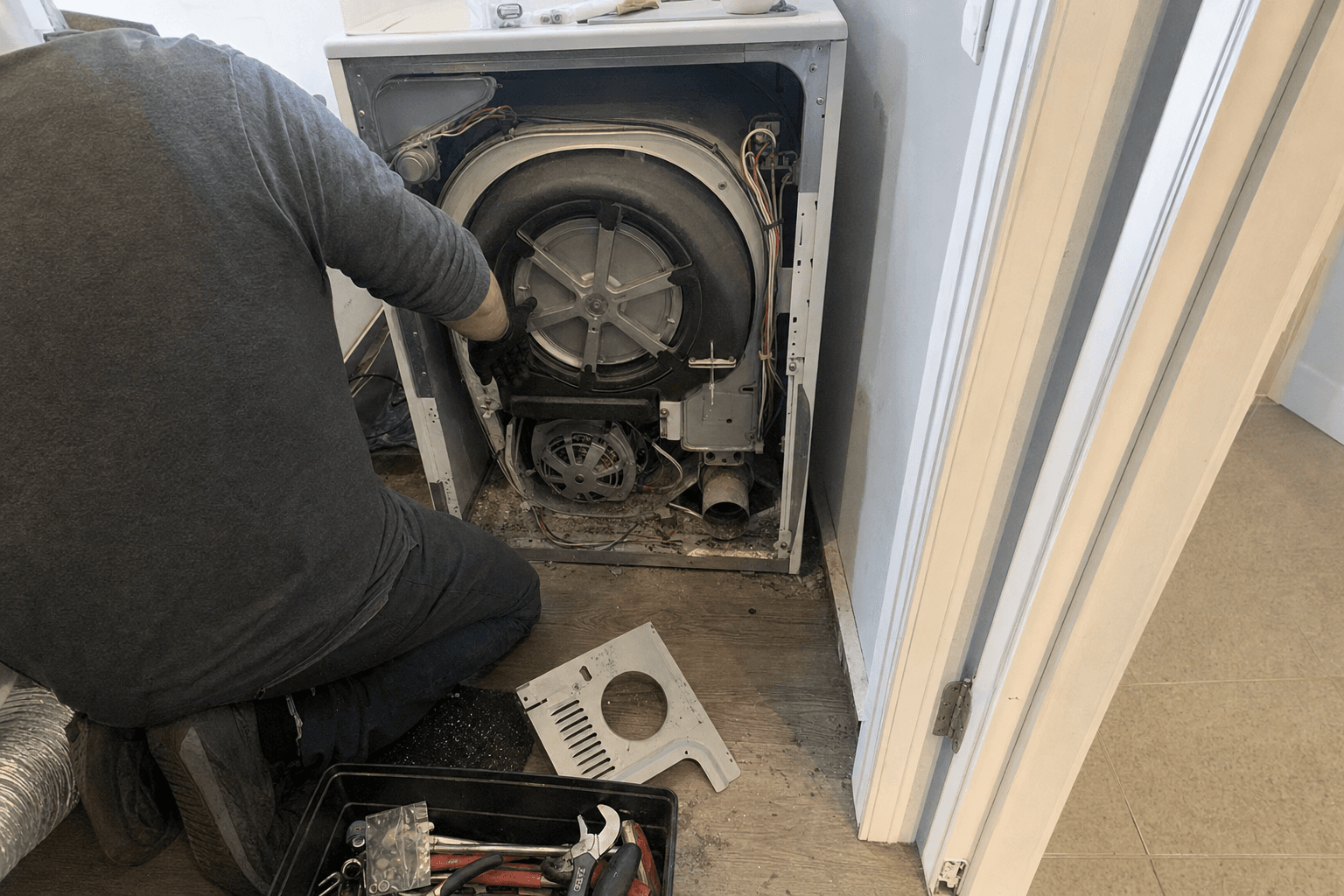
Why your dryer's moisture sensor gets fooled by Port Moody's damp fall air
Metro Vancouver's November humidity can trick your dryer into stopping early—leaving clothes damp and wasting energy. Here's why, and how to fix it.
Key takeaways
- Moisture sensors detect ambient humidity, not just wet fabric—fall dampness triggers false shutoffs.
- Clean sensor bars with a soft cloth and rubbing alcohol every month during wet seasons.
- Switch to timed-dry mode on damp days; sensor mode works best in drier months.
- A clogged vent traps humid air inside, worsening sensor confusion and energy waste.
- Check vent airflow monthly; a weak exhaust means moisture isn't leaving your laundry room.
How moisture sensors actually work
Your dryer's moisture sensor doesn't measure water in your clothes directly. Instead, it detects electrical conductivity between two metal bars inside the drum. When damp fabric touches the bars, electrical current flows, and the dryer keeps running. When the bars sense dry fabric, current stops, and the cycle ends.
The catch: the sensor also detects moisture in the *air* around it. On a clear, dry summer day in the Okanagan, this isn't a problem. But in Port Moody in November, when humidity regularly sits above 80 per cent, the sensor gets confused. It reads the damp air itself as a sign that clothes are still wet—even when they're bone-dry—and shuts off early. You pull out clammy socks and a higher electricity bill.
Why Port Moody's autumn makes it worse
Metro Vancouver's Lower Mainland climate is built for moisture. November brings rain, overcast skies, and a water table that keeps our air perpetually damp. Port Moody, nestled between the Inlet and surrounding forests, sees even higher humidity than Vancouver proper.
When your laundry room itself is humid—especially if your dryer vent isn't working properly—the sensor has nowhere to find a "dry" baseline. It's like trying to read a thermometer in a steam room. The bars stay slightly conductive no matter what, and your dryer gives up too soon.
Clean the sensor bars every month
Dust, lint, and mineral deposits build up on the sensor bars, making them less reliable. During wet months, this buildup is especially problematic because it traps residual moisture.
Open your dryer's lint trap and look inside the cavity. You'll see two metal bars (or sometimes a single bar with a contact point). Turn off and unplug the dryer, then gently wipe each bar with a soft, dry cloth. For stubborn residue, dampen the cloth slightly with rubbing alcohol and wipe again. Let it dry completely before plugging back in. Do this monthly from October through March.
Switch to timed-dry when humidity is high
Most modern dryers offer two drying modes: auto-sense (moisture-based) and timed-dry (duration-based). During Port Moody's wet season, timed-dry is your friend.
Use the dryer's dial or touch panel to select a fixed time—usually 45 to 60 minutes for a full load—instead of relying on the sensor. You lose the energy-saving benefit of early shutoff, but you gain reliability. Your clothes will dry properly, and you'll eliminate the frustration of damp results. Switch back to sensor mode in May when the air dries out.
Check your vent for blockages
A clogged or kinked vent is the hidden culprit behind sensor confusion. If moist air can't escape, it accumulates inside the dryer cabinet and around the sensor. The sensor then reads this trapped humidity as wet clothes and shuts down prematurely.
Once a month, go outside and feel the vent opening behind your house. You should feel strong, warm air flowing out. If the airflow is weak or you feel lint around the opening, the vent needs cleaning. Lint buildup is also a fire hazard—especially important to address before winter arrives.
The bigger picture
Your dryer isn't broken; it's just overwhelmed by your environment. Port Moody's damp autumn is real, and your appliances feel it. By cleaning the sensor, adjusting your settings seasonally, and keeping your vent clear, you'll restore reliable drying and save energy through the wet months ahead.
Need a hand from a real technician?
Our licensed pros repair washers and dryers across Metro Vancouver — same-day and next-day, with 90-day parts warranty + 7-day satisfaction guarantee.
Keep reading
Why your washing machine won't start and what to check first
A washer that is dead or won't start often has a simple cause. Here is what to check, in order, before you decide whether to book a repair.
How often should you clean your dryer vent?
Most homes need a dryer vent cleaning once a year. Long runs, multi-unit buildings and heavy laundry loads mean every 6 to 9 months. Here is how to tell which you are.