Why your washer's door seal gets sticky in Port Coquitlam's damp fall—and how to clean it now
October's moisture and Halloween costume laundry create the perfect storm for mould and mildew in your washer's rubber gasket. Here's how to spot it and stop it.
Key takeaways
- Mould thrives in the door seal when moisture lingers in Metro Vancouver's 70–80% autumn humidity.
- Halloween costume washing adds extra water and detergent residue that feeds mildew growth.
- A 50/50 vinegar-and-water solution dissolves mould without damaging the rubber gasket.
- Leaving the door open for 30 minutes after each wash prevents moisture from being trapped.
- Clean the entire gasket monthly during fall and winter to avoid odours and seal failure.
Why autumn humidity makes your door seal a mould hotspot
October in Port Coquitlam brings rain, cool temperatures, and humidity that hovers around 70–80%. Your washing machine's rubber door gasket—that flexible ring that seals the drum—is a moisture trap. When you close the door after a wash cycle, any water left in the grooves sits there in a dark, warm environment. In autumn, that moisture has nowhere to escape, and mould spores settle in within days.
The problem gets worse this week. Halloween costumes, masks, and synthetic fabrics often require heavy or delicate cycles, which means longer wash times and more water sitting in the seal. If you've done several loads of damp costume pieces, your gasket is working overtime—and mould is already starting to grow.
What to look for
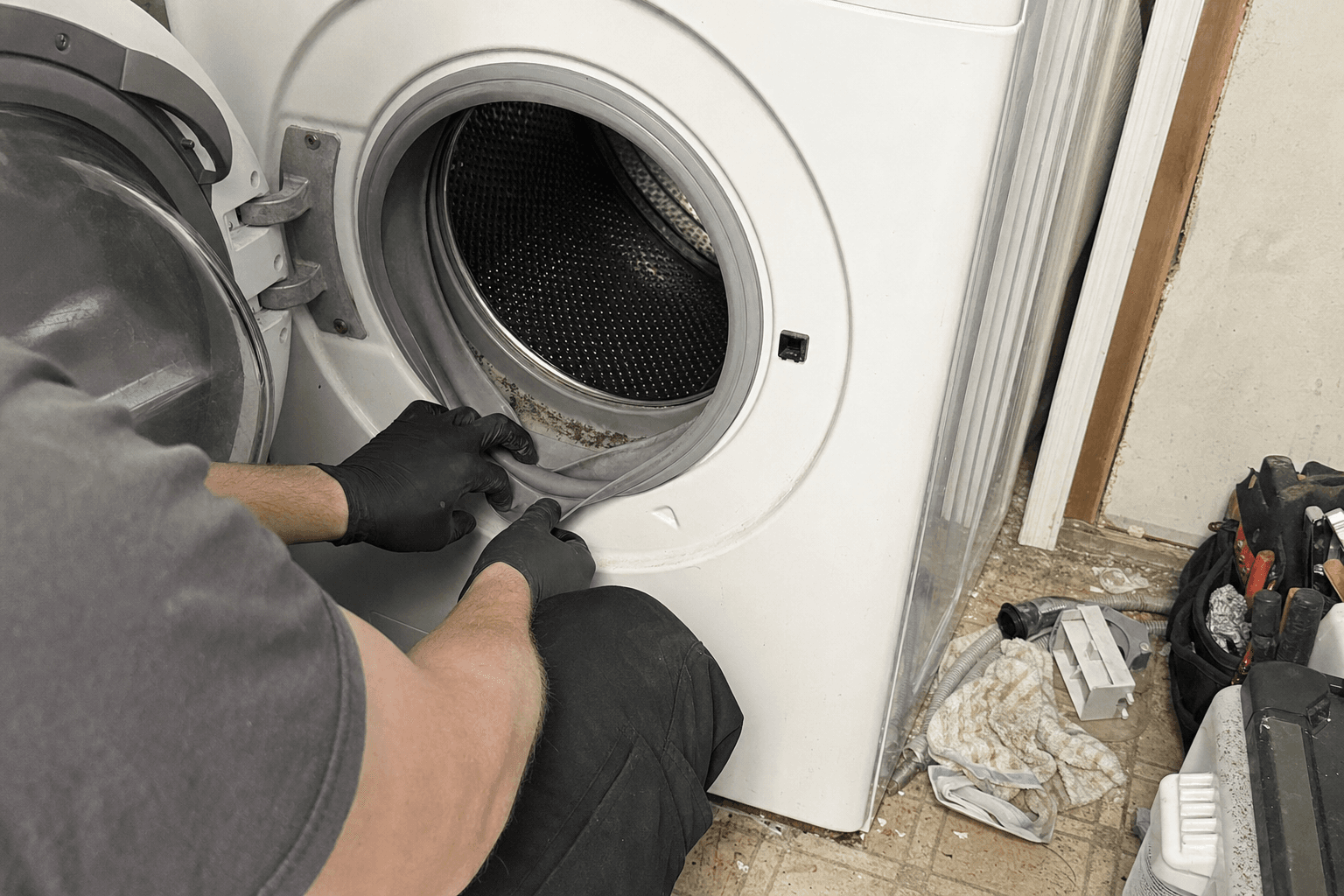
Pull back the rubber gasket gently and look along the inner groove. You'll see either a dark grey or black film, or a slimy texture. Sometimes it's just a faint smell—a musty, sour odour that transfers to clean laundry. That's mould and mildew, and it won't go away on its own.
Don't ignore it. A neglected seal can fail completely, leading to leaks that damage your laundry room floor and walls—especially risky in Port Coquitlam basements where moisture is already a concern.
How to clean it properly
You don't need expensive products. Mix equal parts white vinegar and water in a spray bottle. Spray the solution generously along the entire gasket, especially in the creases. Let it sit for 10–15 minutes—the acidity breaks down mould without harming the rubber. Then use an old toothbrush or soft cloth to scrub the groove thoroughly, working from one side to the other.
Rinse with a damp cloth and dry the gasket completely with a clean towel. This removes the vinegar smell and prevents new moisture from settling in.
Prevent it from coming back
The key to avoiding this problem is airflow and dryness. After every wash, wipe the gasket dry with a cloth and leave the washer door open for at least 30 minutes. This simple habit breaks the cycle: no trapped moisture means no mould.
Also, use the correct amount of detergent. Extra soap leaves residue in the gasket, which feeds mildew growth. Many people use twice as much detergent as needed—especially in Metro Vancouver's soft water. Use less, and your gasket stays cleaner.
During autumn and winter, aim to clean the entire gasket once a month. It takes five minutes and prevents hundreds of dollars in repairs or replacement.
When to call a professional
If the gasket is cracked, torn, or the mould has penetrated deep into the rubber, replacement is your only option. A damaged seal will leak water no matter how often you clean it. Port Coquitlam's damp climate makes seal failure more common, so don't wait if you notice cracks or persistent leaks around the door.
Need a hand from a real technician?
Our licensed pros repair washers and dryers across Metro Vancouver — same-day and next-day, with 90-day parts warranty + 7-day satisfaction guarantee.
Keep reading
Why your washing machine won't start and what to check first
A washer that is dead or won't start often has a simple cause. Here is what to check, in order, before you decide whether to book a repair.
How often should you clean your dryer vent?
Most homes need a dryer vent cleaning once a year. Long runs, multi-unit buildings and heavy laundry loads mean every 6 to 9 months. Here is how to tell which you are.