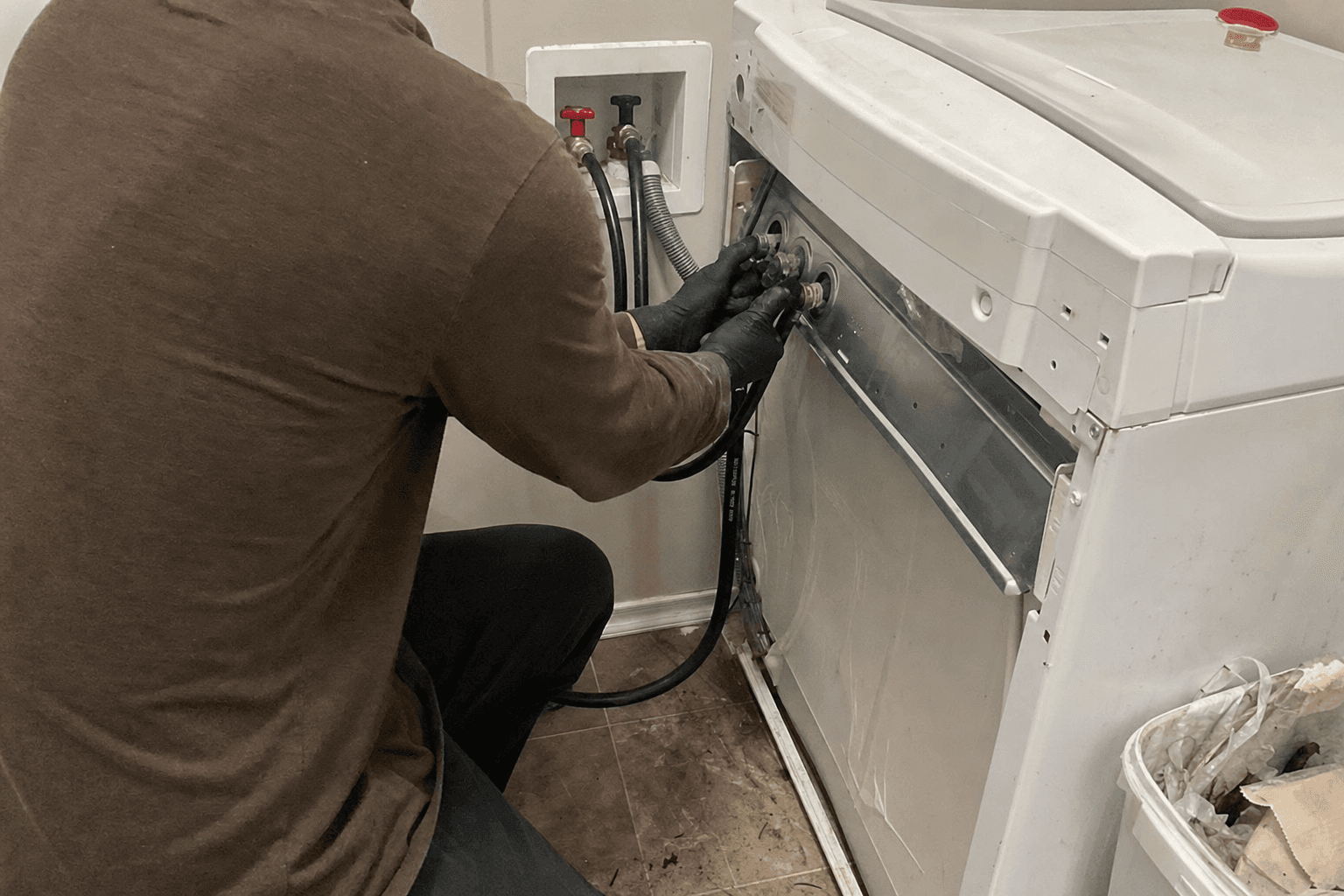
Why your washer's water inlet hoses need a pre-winter inspection in Langley
As autumn rain picks up across the Lower Mainland, your washing machine's inlet hoses face hidden stress. A few minutes of inspection now prevents costly water damage before winter arrives.
Key takeaways
- Check inlet hoses monthly for cracks, bulges, kinks, or white mineral deposits.
- Replace hoses every 5–7 years, or sooner if you see visible wear or damage.
- Turn off the water shutoff valve behind your washer when it's not running.
- Use braided stainless-steel hoses instead of rubber for longer durability.
- Listen for hissing or dripping sounds—signs of an imminent leak.
Why autumn is the danger zone for inlet hoses
Metro Vancouver's fall weather—cool mornings, wet afternoons, and dramatic temperature swings—puts real stress on your washing machine's water inlet hoses. These rubber tubes carry pressurised water into your drum, and they're constantly expanding and contracting as temperatures drop. Add Langley's mineral-rich tap water, and you've got a recipe for hose failure.
By October, many hoses that made it through summer are already weakened. A small crack now can burst into a full leak by December, flooding your laundry room or basement when you least expect it.
What to look for during your inspection
Take five minutes this week to check both inlet hoses—the one bringing hot water and the one bringing cold. Look for:
Visible cracks or splits. Hold the hose up to light and squeeze it gently. If you see any breaks in the rubber, replace it today.
Bulges or soft spots. These are early warning signs that the hose is losing structural integrity. Don't wait for it to burst.
White, crusty deposits. This mineral buildup (limescale) weakens the rubber from the inside. If deposits are heavy, the hose is nearing the end of its life.
Kinks or permanent bends. Twisted hoses restrict water flow and concentrate pressure in one spot, accelerating failure.
Discoloration or brittleness. Faded, stiff rubber is drying out. It'll crack soon.
The replacement timeline
Most rubber inlet hoses last 5–7 years in Metro Vancouver's climate. If yours is older than five years and showing any signs of wear, replace it now—before the rainy season gets worse. New hoses cost $15–$40 each and take ten minutes to install (shut off the water, unscrew the old hose, screw on the new one).
If you're not comfortable doing it yourself, a technician can swap them in under an hour.
Upgrade to braided stainless steel
If you're replacing hoses anyway, consider upgrading to braided stainless-steel hoses. They cost a bit more ($30–$60 per pair) but last 10+ years and are far less prone to cracking. In Langley's damp climate, they're worth the investment.
The water shutoff habit
Whether your hoses are new or old, adopt one simple practice: turn off the water shutoff valve behind your washer when you're not using it. This removes constant pressure from the hoses and dramatically reduces the risk of a catastrophic leak. It takes two seconds and could save you thousands in water damage.
Listen to your machine too. A faint hissing or dripping sound coming from behind the washer is a red flag. Don't ignore it—that's your hose telling you it's failing.
The bottom line
Autumn is the perfect time to catch hose problems before they become disasters. A quick visual inspection, a replacement if needed, and a water shutoff habit will keep your laundry room dry all winter long.
Need a hand from a real technician?
Our licensed pros repair washers and dryers across Metro Vancouver — same-day and next-day, with 90-day parts warranty + 7-day satisfaction guarantee.
Keep reading
Why your washing machine won't start and what to check first
A washer that is dead or won't start often has a simple cause. Here is what to check, in order, before you decide whether to book a repair.
How often should you clean your dryer vent?
Most homes need a dryer vent cleaning once a year. Long runs, multi-unit buildings and heavy laundry loads mean every 6 to 9 months. Here is how to tell which you are.