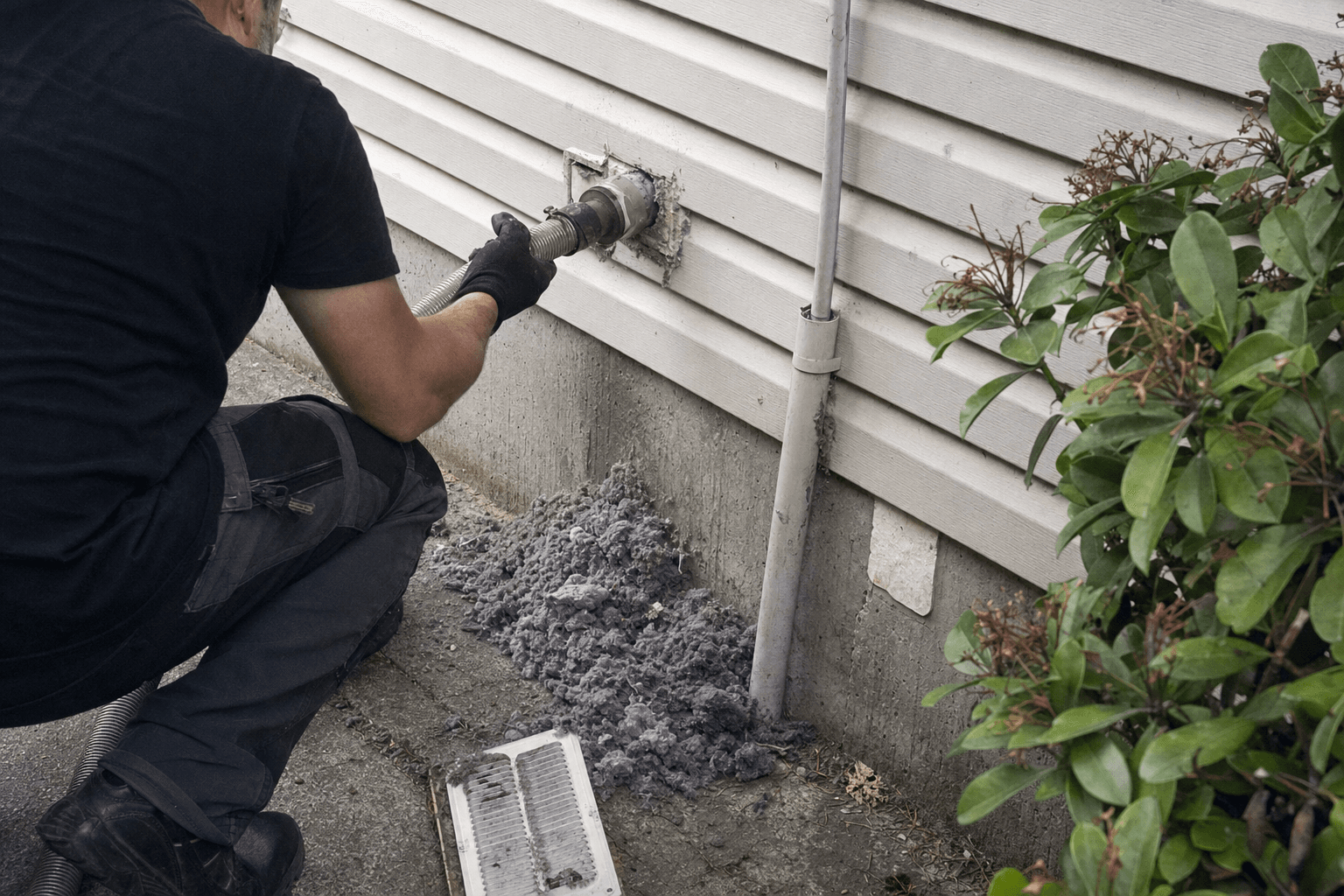
Why your dryer overheats in Vancouver's damp fall—and how to cool it down
Metro Vancouver's autumn humidity can trap moisture in your dryer vent, forcing your machine to work harder and hotter. Here's what Delta homeowners need to check right now.
Key takeaways
- Metro Vancouver's 70–90% autumn humidity overwhelms standard dryer vents designed for drier climates.
- A clogged or kinked vent forces your dryer to cycle longer, raising internal temps and risking thermal fuse failure.
- Lint traps, ductwork, and exterior dampers all collect moisture and lint faster in fall—clean them weekly now.
- Dryers venting into crawl spaces or attics (common in Delta) trap humidity; exterior venting is safer in wet seasons.
- If your dryer is hot to the touch or clothes take 90+ minutes to dry, have the vent professionally cleared before November.
Why autumn humidity makes your dryer work so much harder
Vancouver's fall weather is beautiful, but it's brutal on laundry appliances. When outdoor humidity sits at 70–90%—which it does most of October through November in Delta and the Lower Mainland—your dryer's exhaust air has nowhere to go. A vent designed to push warm, dry air outside meets a wall of wet air trying to come back in. Your dryer compensates by running hotter and longer, wearing out faster and risking a thermal fuse blowout before winter even arrives.
Unlike drier regions where a lint trap and basic vent are enough, Metro Vancouver dryers need extra attention during the damp months. The moisture doesn't just disappear—it condenses inside the ductwork, mixes with lint, and hardens into a blockage that forces your machine to overheat.
Check your lint trap every single load—not just weekly
You probably already know to clean the lint trap, but autumn demands a different approach. In dry months, lint is light and easy to remove. In October, lint absorbs moisture and clings to the trap mesh like wet paper. A damp lint trap reduces airflow by up to 50%, making your dryer work twice as hard.
During fall, inspect the trap after every load. Rinse it under warm water once a week to remove the sticky film that builds up. If you see grey or brown discolouration on the mesh, soak it in hot water for five minutes—that's moisture-trapped lint that's restricting air.
Inspect your ductwork and exterior vent damper
Your dryer vent doesn't end at the wall. It runs through ductwork (ideally rigid metal, sometimes flexible foil) to an exterior damper—a flap that opens when the dryer runs and closes to stop outdoor air from coming back in.
In Delta's wet autumn, that damper gets stuck shut by condensation and lint buildup. Walk outside and look at your vent opening. If the flap doesn't move freely or you see frost or water around it, moisture is pooling inside. Check that your ductwork slopes slightly downward toward the exterior (not level or uphill), so any condensation drains out instead of pooling inside the duct.
If your ductwork runs through a crawl space or attic before exiting, you're at higher risk. Uninsulated ducts in unheated spaces let warm dryer air cool too quickly, turning into condensation that never leaves. Consider rerouting to a direct exterior vent if possible, or at minimum, have the existing duct professionally cleaned and sealed.
Watch for signs your dryer is overheating
A dryer that's struggling in damp weather shows clear warning signs. If your clothes take 90 minutes or longer to dry, or if the dryer casing feels hot to the touch, the machine is working overtime. You might also smell a burning lint odour—that's friction and heat building up.
Don't ignore these signs in October. A thermal fuse (the safety device that shuts the dryer down if it overheats) costs $30–$50 to replace if you catch it early. If it blows, the dryer won't run at all, and you'll be without clean clothes heading into winter. Have the vent professionally inspected and cleared before November if you notice any of these symptoms.
Why now matters
October and November are the sweet spot for dryer maintenance in Metro Vancouver. You catch problems while weather is still mild enough to work outdoors, and you prevent catastrophic failures when you actually need your dryer every day. Winter humidity is even worse, but by then, scheduling a repair means waiting weeks.
Give your vent system a thorough check this week. Your dryer—and your sanity on laundry day—will thank you.
Need a hand from a real technician?
Our licensed pros repair washers and dryers across Metro Vancouver — same-day and next-day, with 90-day parts warranty + 7-day satisfaction guarantee.
Keep reading
Why your washing machine won't start and what to check first
A washer that is dead or won't start often has a simple cause. Here is what to check, in order, before you decide whether to book a repair.
How often should you clean your dryer vent?
Most homes need a dryer vent cleaning once a year. Long runs, multi-unit buildings and heavy laundry loads mean every 6 to 9 months. Here is how to tell which you are.