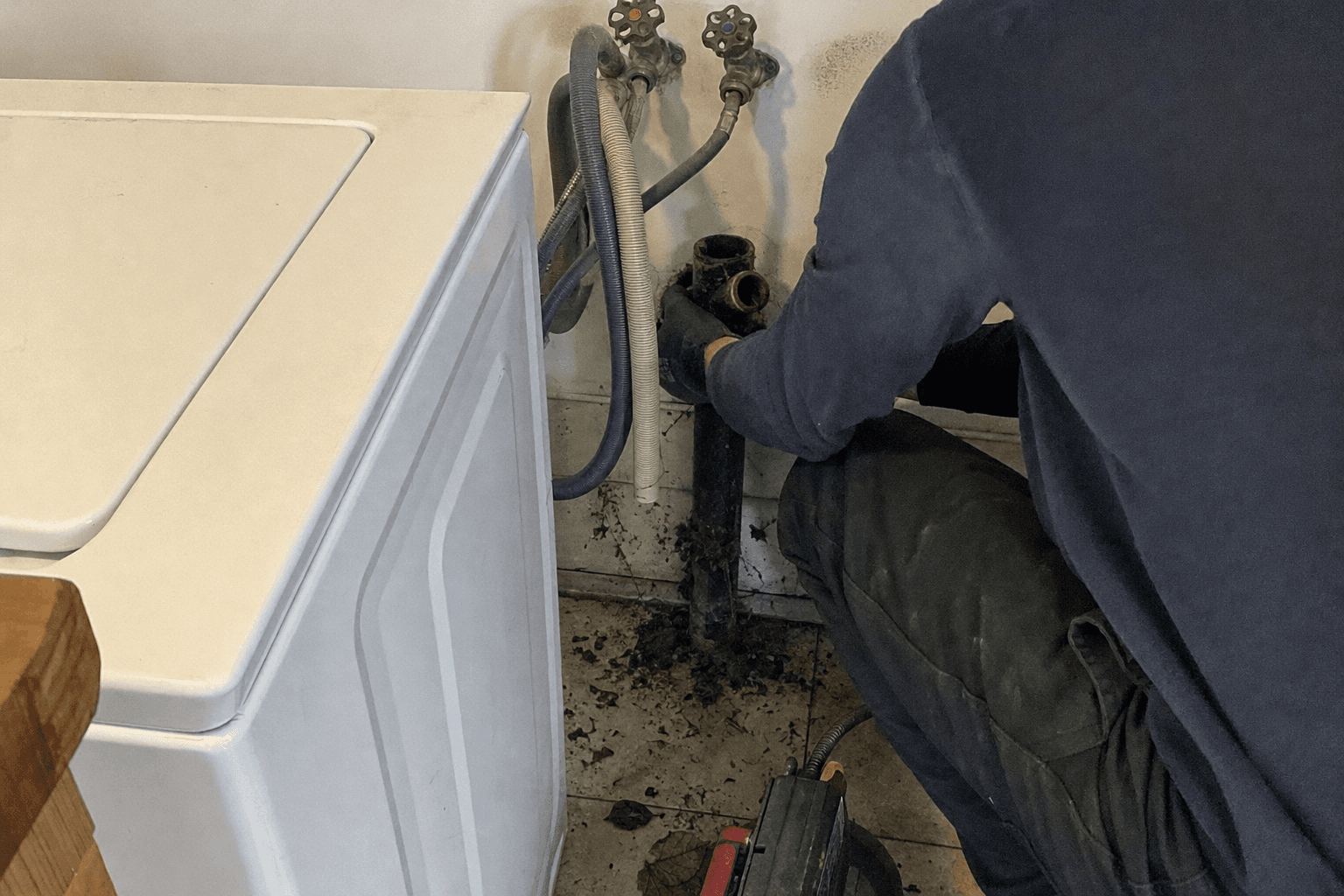
Why your washer's drain hose clogs after Halloween—and how to clear it
Autumn rain, costume mud, and holiday laundry create the perfect storm for drain blockages. Here's how to spot and fix the problem before it floods.
Key takeaways
- Mud and debris from Halloween costumes accumulate in drain hoses, especially in Metro Vancouver's damp autumn.
- A kinked or pinched drain hose is the most common cause of slow drainage or standing water.
- Clear blockages by disconnecting the hose and flushing with hot water or a plumbing snake.
- Run a monthly hot-water maintenance cycle with no load to prevent sediment buildup.
- If water backs up into the tub, stop using the washer and check the hose before damage spreads.
The Halloween laundry crunch
October in Metro Vancouver brings trick-or-treaters, costume parties, and a surge of muddy, grass-stained laundry. That combination—plus our region's typical autumn rainfall—puts real stress on your washing machine's drain system. When costumes, face paint residue, and outdoor grime go into the wash, they don't always exit cleanly. Over a week of heavy laundry, sediment and fibres can accumulate inside your drain hose, causing slow drainage or pooling water in the tub.
New Westminster residents know this cycle well: seasonal rain keeps soil moist, kids track it indoors, and the washer takes the hit. The good news is that drain issues are preventable and usually fixable without calling a technician.
Check for kinks first
Before you assume a blockage, inspect the drain hose itself. Look behind and beneath your washer for kinks, pinches, or places where the hose has been compressed against the wall or floor. Even a gentle bend can restrict water flow enough to cause drainage problems. If you find a kink, straighten it gently—don't force it, as older hoses can crack.
The drain hose should slope downward toward the standpipe or sink with no dips or sags in the middle. If it sags, water pools inside and sediment settles, creating a clog over time.
How to clear a blocked drain hose
If the hose is straight but water still drains slowly, disconnect it at both ends (place a bucket underneath—there will be spillage). Hold the hose up to a light and look through it. You may see a visible blockage of lint, mud, or hair.
Flush the hose with hot water from a garden hose or tap. If that doesn't work, feed a plumbing snake (or even a straightened wire coat hanger) through gently to dislodge the clog. Never use a high-pressure jet or force the snake—you can puncture the hose. Once clear, reattach it and run a test cycle.
Prevent autumn clogs with monthly maintenance
Run a hot-water cycle once a month with no clothes inside. This flushes sediment and prevents buildup. In October through March—our wettest season—consider doing this every two weeks if your household does heavy laundry.
Also, shake out muddy costumes and outdoor clothes before washing. A quick rinse outside removes loose dirt and saves your drain system real stress.
When to call for help
If water backs up into the tub and won't drain at all, or if you see water pooling under or around the washer, stop using it immediately. This usually signals a blockage deeper in the standpipe or sewer line—territory for a professional plumber or appliance technician. Don't run another cycle; you risk water damage to your laundry room floor.
Need a hand from a real technician?
Our licensed pros repair washers and dryers across Metro Vancouver — same-day and next-day, with 90-day parts warranty + 7-day satisfaction guarantee.
Keep reading
Why your washing machine won't start and what to check first
A washer that is dead or won't start often has a simple cause. Here is what to check, in order, before you decide whether to book a repair.
How often should you clean your dryer vent?
Most homes need a dryer vent cleaning once a year. Long runs, multi-unit buildings and heavy laundry loads mean every 6 to 9 months. Here is how to tell which you are.