Why your washer's detergent dispenser clogs in wet autumn—and how to fix it
West Vancouver's damp fall weather makes detergent buildup worse. Here's why your dispenser gets stuck and how to clean it before winter.
Key takeaways
- Damp autumn air slows detergent drying, creating sticky buildup in dispenser trays.
- Liquid detergent clogs more easily than powder in humid conditions.
- Clean your dispenser drawer monthly during fall and winter months.
- Vinegar dissolves soap residue faster than water alone.
- Clogged dispensers force you to overdose detergent manually, wasting money.
The autumn humidity problem
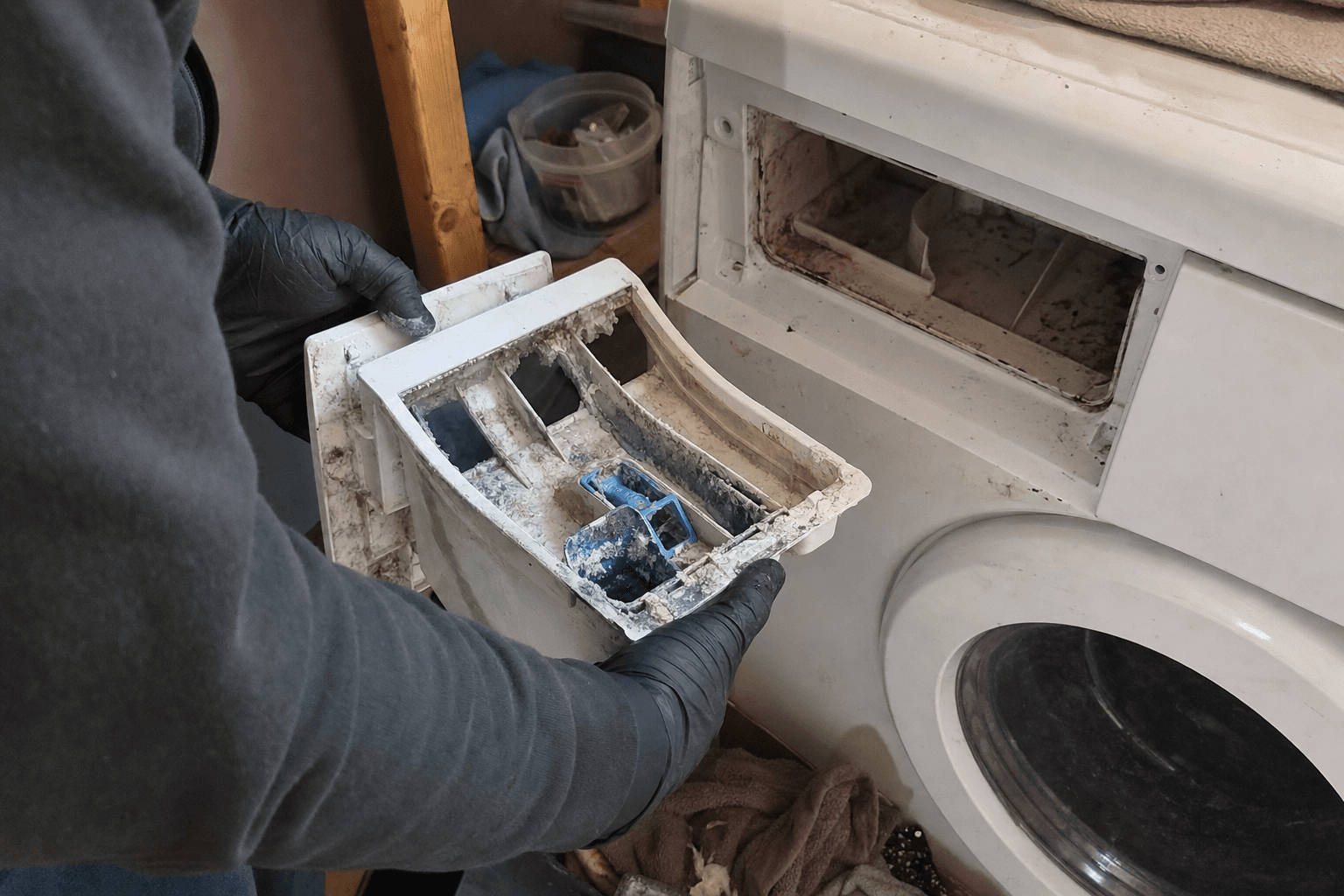
West Vancouver's rainy, humid October weather isn't just hard on your roof—it's affecting your washing machine. When moisture lingers in your laundry room, detergent inside the dispenser drawer takes longer to dry between cycles. That extra time creates a perfect environment for soap residue to harden and cake up, blocking the small holes where detergent is supposed to flow into the drum.
Liquid detergents are especially prone to this. They're thicker and stickier than powders, and they don't dry as quickly in our Lower Mainland damp. If you've noticed your washer isn't dispensing soap properly—or you're finding undissolved detergent clumps in your clothes—your dispenser is likely clogged.
Why this matters now
As we head into the winter months, your laundry room stays cooler and damper. If you don't address this now, a clogged dispenser will get worse, not better. You'll end up manually pouring detergent into the drum to compensate, which wastes product and money. Worse, excess detergent can leave residue on your clothes and inside your machine, dulling fabrics and encouraging mildew growth—something we see a lot in Vancouver homes.
How to clean your dispenser drawer
Start by removing the dispenser drawer completely. Most washers have a small release button or lever—check your manual if you're unsure. Once it's out, run it under hot water and let it soak for 30 minutes. This softens the hardened detergent.
After soaking, use an old toothbrush to scrub the inside of the drawer, paying special attention to the corners and the small holes where soap flows out. For stubborn buildup, soak the drawer in a 50/50 mix of white vinegar and hot water for another 15 minutes. Vinegar dissolves soap residue much faster than water alone.
Rinse thoroughly under warm water, dry it completely with a cloth, and slide it back in. Run your next load on a hot cycle with the drawer empty—this clears any loose debris from the dispenser channel inside the machine.
Preventing future clogs
Cleaning your dispenser drawer once a month during autumn and winter will stop this problem from happening again. If you live in a particularly damp part of West Vancouver (or anywhere in the Lower Mainland with high humidity), aim for every three weeks instead.
Consider switching to powder detergent during the wetter months—it dries faster and clogs less often. If you prefer liquid, use slightly less than the recommended amount; our water is already soft, so you need less soap than the label suggests.
Leave your washer door open between cycles to let moisture escape. This simple habit prevents detergent buildup, mildew, and odours. It's especially important in autumn and winter when your home's natural ventilation drops.
Need a hand from a real technician?
Our licensed pros repair washers and dryers across Metro Vancouver — same-day and next-day, with 90-day parts warranty + 7-day satisfaction guarantee.
Keep reading
Why your washing machine won't start and what to check first
A washer that is dead or won't start often has a simple cause. Here is what to check, in order, before you decide whether to book a repair.
How often should you clean your dryer vent?
Most homes need a dryer vent cleaning once a year. Long runs, multi-unit buildings and heavy laundry loads mean every 6 to 9 months. Here is how to tell which you are.