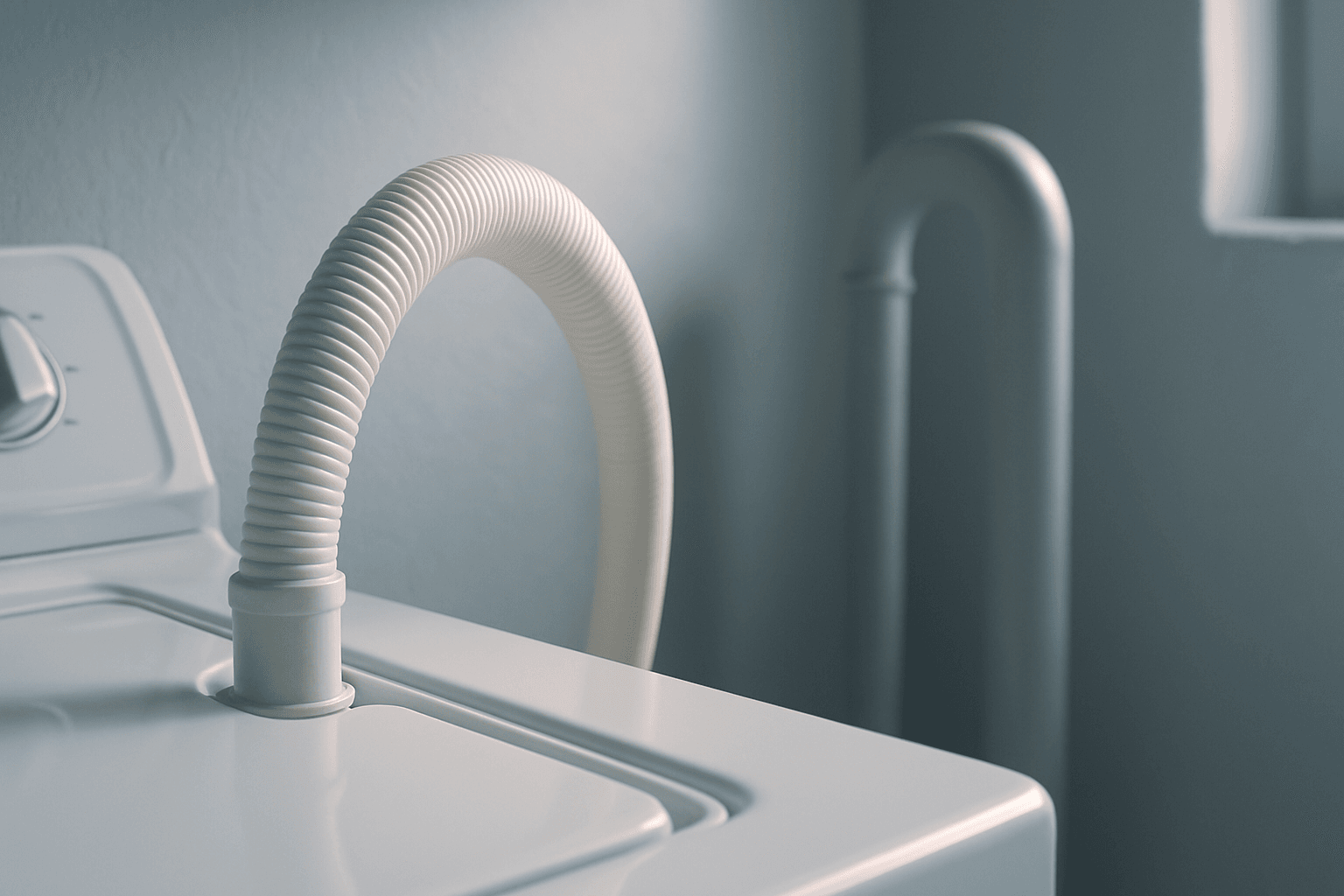
Thanksgiving prep: why your washer's drain hose needs inspection now
Before hosting guests this weekend, check your washing machine's drain hose for autumn debris and blockages—a common culprit in Metro Vancouver's wet fall season.
Key takeaways
- Damp autumn laundry increases lint and debris that accumulate in drain hoses, causing slow drainage or backups.
- Look for kinks, cracks, pinching, or white mineral deposits inside the hose—all signs of imminent failure.
- Straighten kinked hoses and clear visible blockages with a plumbing snake or by flushing warm water through the hose.
- Replace the hose if it's cracked, bulging, or more than five years old—especially before heavy-use weekends.
- Position the hose outlet above the standpipe to prevent siphoning, which traps water and allows bacterial growth.
Why autumn is drain-hose season
October in Burnaby and across Metro Vancouver brings rain, fallen leaves, and muddy footprints straight into your laundry room. Towels, work clothes, and bedding carry far more lint and soil this time of year. When your washer drains that extra debris, it doesn't vanish—it collects in the drain hose, slowly narrowing the passage until water backs up into the tub or leaks onto your floor.
The last thing you need on Thanksgiving weekend is a flooded laundry room while guests are arriving.
What to look for
Get behind or beside your washing machine and inspect the rubber drain hose. You're checking for three things: **kinks or sharp bends** (which block water), **cracks or bulges** (which leak or burst), and **mineral deposits or hardened gunk** inside the hose opening.
Run your hand along the hose length. It should feel firm but flexible, not brittle. If it's been sitting in the same position for years, kinks often develop where the hose bends at the wall or standpipe connection.
Quick fixes you can do today
If the hose is kinked, gently straighten it and secure it with a cable tie or strap to keep it that way. Avoid sharp angles—aim for a gentle curve instead.
For minor blockages, disconnect the hose at the standpipe end (place a bucket underneath) and use a plumbing snake or straightened coat hanger to push debris out. You can also flush warm water through the hose to dislodge lint. Don't use boiling water on older rubber hoses, as extreme heat can weaken them.
If you see white, chalky deposits, that's limescale from Metro Vancouver's mineral-rich water. Soak the hose in equal parts white vinegar and water for an hour, then flush it out.
When to replace it
If the hose is cracked, bulging, or leaking, replacement can't wait—even if it's only a small drip. A full rupture during a wash cycle can spill 40+ litres onto your floor. Hoses typically last 5–8 years; if yours is older and showing wear, now is the time to swap it out.
Replacement hoses cost £15–£40 and take 10 minutes to install. You'll disconnect the old hose from both the washer outlet and the standpipe, then slide the new one on and tighten the hose clamps.
One more detail: hose positioning
Make sure the drain hose outlet sits **above** the standpipe opening. If it hangs below, water can siphon backward into the hose, trapping moisture and encouraging mould and odour. The hose should loop upward before dropping into the standpipe.
A few minutes of inspection now means your washer will run smoothly through the Thanksgiving rush and beyond.
Need a hand from a real technician?
Our licensed pros repair washers and dryers across Metro Vancouver — same-day and next-day, with 90-day parts warranty + 7-day satisfaction guarantee.
Keep reading
Your washer's water temperature dial: why Thanksgiving prep starts here
As Vancouver's damp autumn arrives, your washer's temperature settings matter more than you think—especially before hosting. Here's what to check.
Your washer's cold-water cycle isn't enough for autumn stains—here's why
October's mud, wine, and cranberry spills need warmer water than you think. Here's how to tackle stubborn fall stains before Thanksgiving guests arrive.