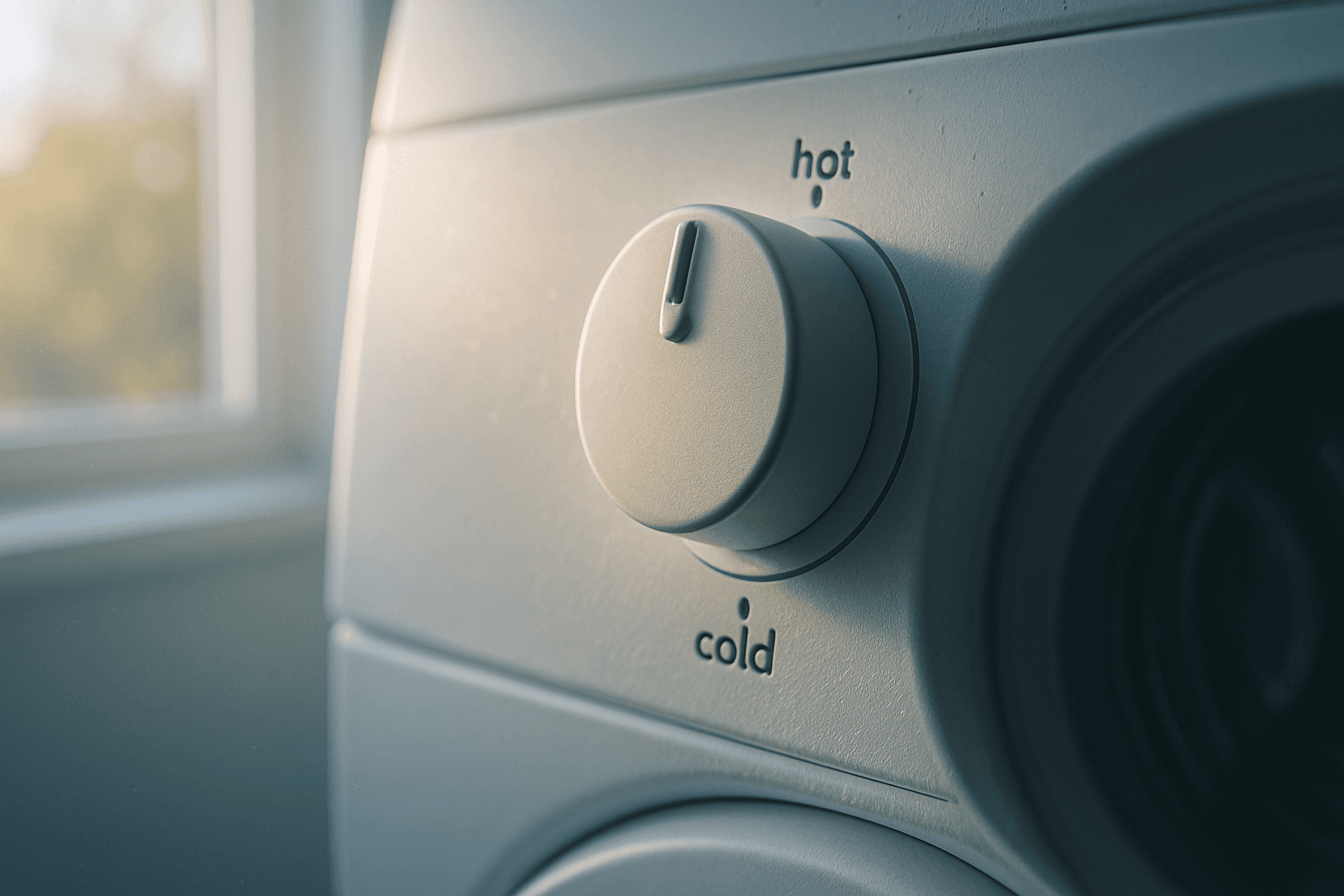
Your washer's water temperature dial: why Thanksgiving prep starts here
As Vancouver's damp autumn arrives, your washer's temperature settings matter more than you think—especially before hosting. Here's what to check.
Key takeaways
- Test your washer's actual water temperature with a thermometer before Thanksgiving.
- Autumn's cooler Metro Vancouver groundwater slows hot water heating—a sign your inlet valve may be failing.
- Cold water removes most autumn stains (wine, gravy, cranberry) better than warm cycles.
- Linens and cotton tablecloths need 50–60°C water for sanitisation; check your washer reaches it.
- Worn temperature dials can mismatch the water you think you're using with what actually enters the drum.
Why temperature matters this week
Thanksgiving hosting means tablecloths, napkins, and guest linens—all items that benefit from reliable hot water cycles. But here in Vancouver, where groundwater temperatures drop noticeably in October, your washer's ability to deliver hot water becomes visible. If your machine struggles to heat water now, you'll notice it most when washing heavier fabrics.
The autumn water-heating reality
Metro Vancouver's water supply cools significantly by October. Your washer's inlet valve and mixing valve have to work harder to blend incoming cold water with the heating element's output. If either valve is wearing out, you won't get the temperature you selected—you'll get something cooler. A washer that delivered perfect hot water in July might only reach lukewarm by October, and you won't know until you test it.
How to test your washer's actual temperature
Fill a heat-safe glass or mug from your washer's drum mid-cycle while it's running a hot water wash. Use a kitchen or meat thermometer to check the temperature. For sanitising linens (especially guest items), aim for at least 50–60°C. If the water feels warm but reads below 40°C, your inlet or mixing valve is likely restricting flow or failing.
What to wash in cold water instead
Don't assume you need hot water for Thanksgiving stains. Most autumn marks—red wine, gravy, cranberry sauce, coffee—actually come out better in cold water, because heat can set protein-based stains permanently. Cold water cycles use less energy and work just as well on modern detergents. Save the hot water for cotton napkins and linens that benefit from sanitisation.
Why your temperature dial might lie
Older washers rely on a mechanical dial or thermostat to balance hot and cold inlet water. If that dial is worn or the internal mixing valve is stuck, selecting "hot" doesn't guarantee hot water arrives. Digital displays are slightly more reliable, but they still depend on properly functioning inlet valves. Autumn is when this weakness shows up most clearly.
What to do before guests arrive
If your test reveals water that's cooler than expected, don't ignore it. A failing inlet or mixing valve won't repair itself, and it will only worsen as Vancouver's winter water gets colder. A quick professional check now—before your busiest hosting week—can confirm whether you need a valve replacement or just a cleaning. Running a load of delicate linens through a machine that underperforms is frustrating when you're already juggling meal prep.
One more tip: if you're washing tablecloths in cold water (which we recommend for most stains), use a cold-water detergent and add a small amount of white vinegar to the rinse cycle. It brightens whites and removes any residual soap—perfect for linens that guests will actually notice.
Need a hand from a real technician?
Our licensed pros repair washers and dryers across Metro Vancouver — same-day and next-day, with 90-day parts warranty + 7-day satisfaction guarantee.
Keep reading
Your washer's cold-water cycle isn't enough for autumn stains—here's why
October's mud, wine, and cranberry spills need warmer water than you think. Here's how to tackle stubborn fall stains before Thanksgiving guests arrive.
Why your washer overflows in October—and how to spot it before Thanksgiving
Autumn rain and cooler water temperatures can trigger overflow problems in your washing machine. Here's what Maple Ridge homeowners need to check this week.