Why your washer overflows in October—and how to spot it before Thanksgiving
Autumn rain and cooler water temperatures can trigger overflow problems in your washing machine. Here's what Maple Ridge homeowners need to check this week.
Key takeaways
- Detergent dissolves slower in cool water, triggering false overflow signals on modern washers.
- Kinked or partially blocked inlet hoses reduce water flow, confusing the machine's fill sensors.
- Detergent buildup in the dispenser drawer prevents proper drainage and cycle timing.
- A monthly hot-water vinegar cycle clears mineral deposits and recalibrates fill accuracy.
- Inspect hoses for cracks or discolouration now—autumn weather stresses rubber faster.
October in Maple Ridge brings rain, cooler groundwater, and shorter days. For your washing machine, it also brings a subtle but frustrating problem: overflow during the wash or rinse cycle.
When water starts pooling around your machine or spilling out mid-cycle, it's usually not a catastrophic failure. It's your washer's water-level sensor getting confused by cooler temperatures and residue buildup. With Thanksgiving guests arriving in a week, now is the time to understand why this happens—and fix it.
Why autumn triggers overflow problems
Modern washers use electronic sensors to detect how full the drum is. These sensors rely partly on water conductivity—essentially, how easily electricity passes through the water. Cool water is less conductive than warm water. When Metro Vancouver's groundwater temperature drops in October, your machine's sensor can misread the actual water level, thinking the drum is fuller than it really is. The result: the inlet valve stays open too long, and water spills over.
Add detergent residue from months of use, and the problem compounds. Powder and liquid detergent don't dissolve as readily in cool water, so they accumulate in the dispenser drawer and around the inlet valve. This buildup further confuses the sensor and can partially block water flow, forcing the machine to overfill to reach its target level.
Check your inlet hoses first
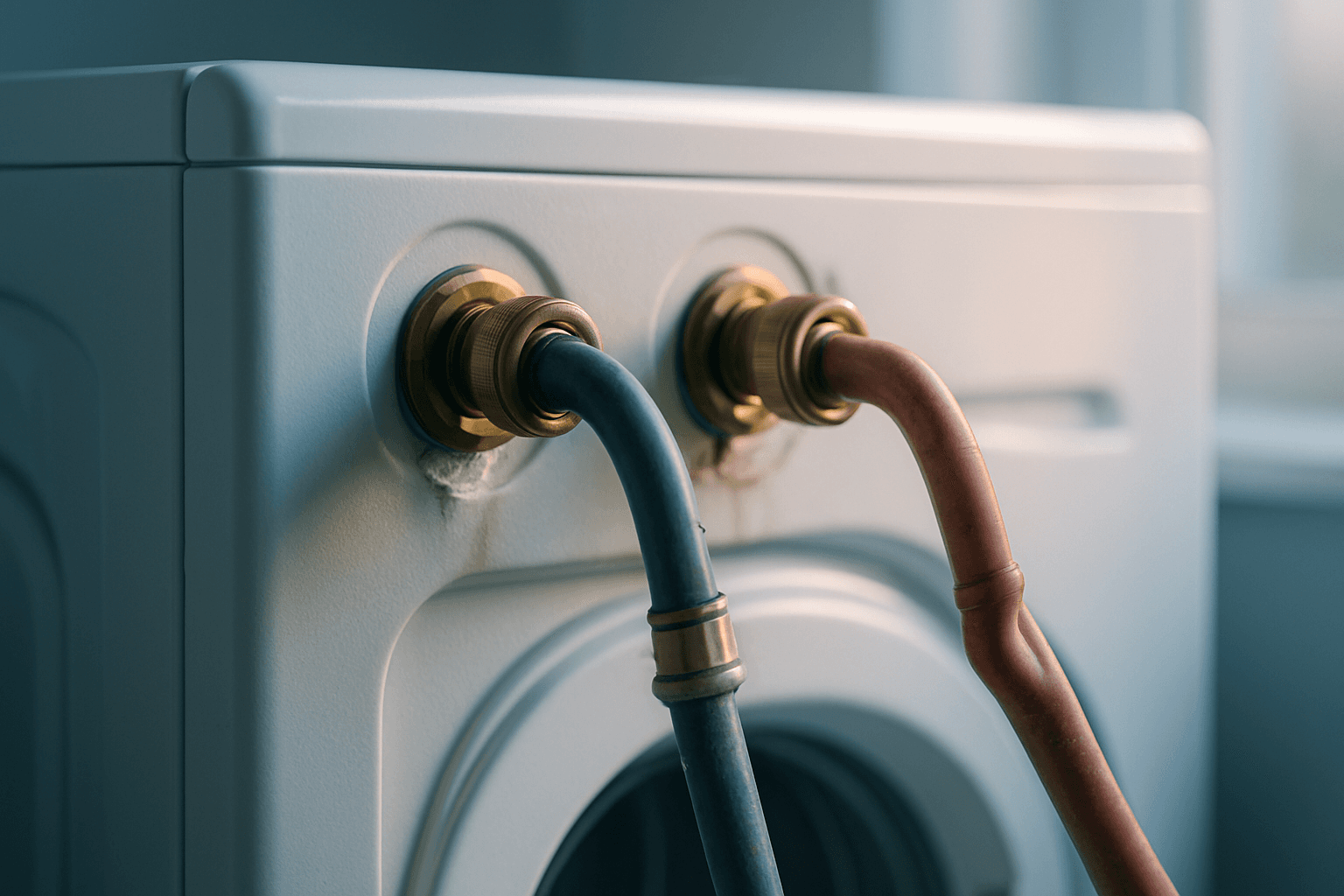
Before you assume it's a sensor issue, inspect the two inlet hoses (usually blue for cold and red for hot) at the back of your washer. Look for kinks, cracks, or discolouration. A kinked hose restricts water flow dramatically. When flow is restricted, the machine's pressure switch—which signals the valve to stop filling—doesn't trigger properly. The result is the same: overflow.
Gently straighten any kinks and ensure hoses aren't pinched between the washer and the wall. If you see cracks or the rubber feels brittle, replace the hoses now. They're inexpensive and take 10 minutes to swap. Autumn weather accelerates rubber degradation, so older hoses are especially vulnerable.
Clean the detergent dispenser drawer
Slide out the dispenser drawer (usually located at the top front of front-loaders) and rinse it thoroughly under hot running water. Use an old toothbrush to scrub the corners and channels. Detergent and fabric softener residue accumulate here and can dam up water, preventing the drawer from draining properly during the cycle. This throws off the machine's fill calculations.
While the drawer is out, use a flashlight to inspect the cavity it slides into. You'll often find a small filter or screen—clean that too.
Run a hot-water recalibration cycle
Once a month, especially in autumn, run an empty wash cycle using hot water and two cups of white vinegar. This dissolves mineral deposits from cooler water and clears residue from the inlet valve and sensor. Many modern washers have a "clean" or "maintenance" cycle—use that if available. Otherwise, select the hottest water temperature and longest cycle.
This simple step recalibrates your machine's sensors and extends the life of internal components. It takes no extra effort and costs pennies.
When to call for help
If overflow continues after you've checked hoses, cleaned the dispenser, and run a vinegar cycle, the water-level sensor or inlet valve may need professional attention. Don't delay—overflow can damage your flooring and create mould risk in our damp Lower Mainland climate. A technician can test the sensor, replace the valve, or adjust the pressure switch in under an hour.
Need a hand from a real technician?
Our licensed pros repair washers and dryers across Metro Vancouver — same-day and next-day, with 90-day parts warranty + 7-day satisfaction guarantee.
Keep reading
Thanksgiving guests and wet laundry: why your dryer's lint trap needs weekly cleaning now
As Port Moody heads into peak hosting season, a clogged lint trap turns drying time into a full-day chore. Here's why autumn humidity makes it worse—and how to stay ahead.
Thanksgiving tablecloths and heavy linens: why your washer needs a pre-holiday strength check
Before you load up on festive linens and guest towels this Thanksgiving, make sure your washer can handle the heavier fabrics—Port Coquitlam's autumn humidity makes this more critical than you think.