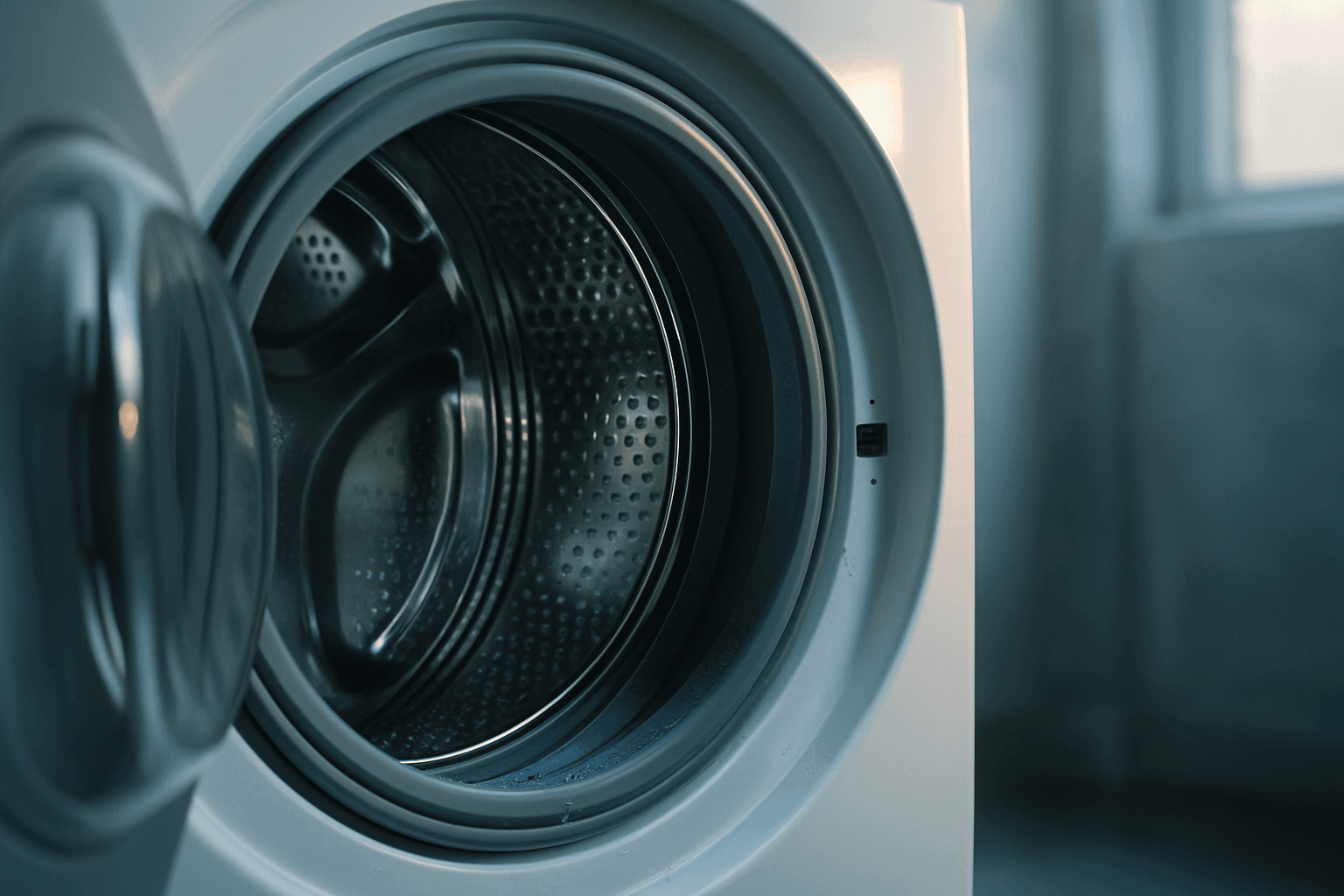
Why your washer's spin cycle struggles in autumn—and how to fix it
As Metro Vancouver's humidity climbs this fall, excess moisture in your machine's drum and bearings can slow your spin cycle. Here's what's really happening.
Key takeaways
- Autumn humidity accelerates bearing corrosion; moisture inside the drum reduces spin efficiency.
- Run a hot-water cleaning cycle monthly with white vinegar to dissolve mineral deposits.
- Check your drain hose for kinks or lint blockages—they trap water that seeps into bearings.
- Crack a window or run a fan while drying to reduce laundry room humidity.
- If spin speed doesn't improve after cleaning, the bearing may need professional inspection.
Why autumn humidity affects your spin cycle
September through November brings persistent dampness to Metro Vancouver. New Westminster's average autumn humidity hovers around 75–80%, and that moisture doesn't just affect your clothes—it creeps into your washing machine's mechanical heart. The drum bearing (the component that lets your tub spin freely) sits in a sealed chamber at the back of the machine. When humidity is high and your laundry room isn't well-ventilated, condensation builds up inside the bearing housing. That moisture mixes with detergent residue and mineral deposits from our Lower Mainland water, creating a sticky film that increases friction.
The result: your spin cycle takes longer, clothes come out wetter, and your dryer has to work harder to finish the job.
The hidden culprit: your drain hose
Before you panic about bearing replacement, check the simplest thing first. Your drain hose is the most common point where water gets trapped. Over autumn, lint, hair, and soap scum accumulate inside the hose. If the hose is kinked, pinched, or slightly clogged, water doesn't fully drain after the cycle ends. That residual water sits in the hose and seeps back into the drum seal and bearing cavity during the spin phase.
Inspect the hose where it connects to your washer and where it exits to your drain or standpipe. Straighten any kinks, and if you spot a blockage, disconnect the hose and flush it with warm water. This alone often restores normal spin speed.
The monthly vinegar cycle
Run a hot-water cleaning cycle with white vinegar once a month from now through winter. Pour two cups of white vinegar directly into the drum (not the detergent dispenser), set your machine to a hot-water heavy-duty or sanitize cycle, and run it empty. The vinegar dissolves mineral deposits, kills odour-causing bacteria, and helps dry out residual moisture in the bearing area.
If your machine has a dedicated cleaning cycle, use that instead—it often runs hotter and longer than a standard wash.
Improve airflow in your laundry room
Many New Westminster homes have laundry rooms tucked into basements or interior closets with poor ventilation. During autumn, that stagnant air becomes a humidity trap. If you have a window, crack it open while running loads. If not, position a small fan to push moist air toward an exterior door or vent. Even 10 minutes of air circulation after each load makes a measurable difference in bearing longevity.
When to call for help
If your spin cycle remains sluggish after cleaning the drain hose and running vinegar cycles, the bearing itself may be corroded or failing. A professional inspection now—before Thanksgiving hosting season hits—can catch wear early. Bearing replacement is a more involved repair, but catching it before the bearing seizes completely will save money and prevent water damage to your home.
Need a hand from a real technician?
Our licensed pros repair washers and dryers across Metro Vancouver — same-day and next-day, with 90-day parts warranty + 7-day satisfaction guarantee.
Keep reading
Thanksgiving laundry crunch: why your washer's cycle time is slowing down now
As Thanksgiving hosting season hits, a sluggish wash cycle often signals a problem that's easy to fix—and crucial before the big cook.
Is your washer's pump straining before Thanksgiving? Here's why autumn leaves matter
North Vancouver's fall debris can clog your washing machine's pump without you realising it. A quick inspection now prevents costly repairs during the busiest hosting season.