Is your washer's pump straining before Thanksgiving? Here's why autumn leaves matter
North Vancouver's fall debris can clog your washing machine's pump without you realising it. A quick inspection now prevents costly repairs during the busiest hosting season.
Key takeaways
- Autumn debris clogs the pump filter, causing the washer to drain slowly or not at all.
- North Vancouver's wet fall weather tracks more outdoor material into laundry rooms.
- Inspect your pump filter and drain hose now, before Thanksgiving hosting season.
- Clear blockages yourself or call a technician—don't ignore slow drainage.
- A working pump prevents mid-cycle failures and extends your machine's lifespan.
Why autumn debris targets your washer's pump
Every time someone walks in from the North Vancouver rain, they track moisture, leaves, twigs, and fine dirt. Unlike lint from clothes, this outdoor material is heavier and doesn't dissolve in water. When you wash jeans, work clothes, or anything worn outside, those particles slip past the drum and settle in your pump—the component that forces water out of the machine.
A clogged pump doesn't just slow drainage; it forces the motor to work overtime. Over weeks, that strain weakens the pump seal, and you end up with a leak or a complete failure right when you need your washer most.
The signs your pump is struggling
Water draining slowly from the tub is the clearest warning. You might also notice the washer taking longer to finish its cycle, or hear an unusual grinding or straining sound during the drain phase. Some machines display an error code. Don't ignore these signals—they mean your pump is already working harder than it should.
How to inspect your pump filter now
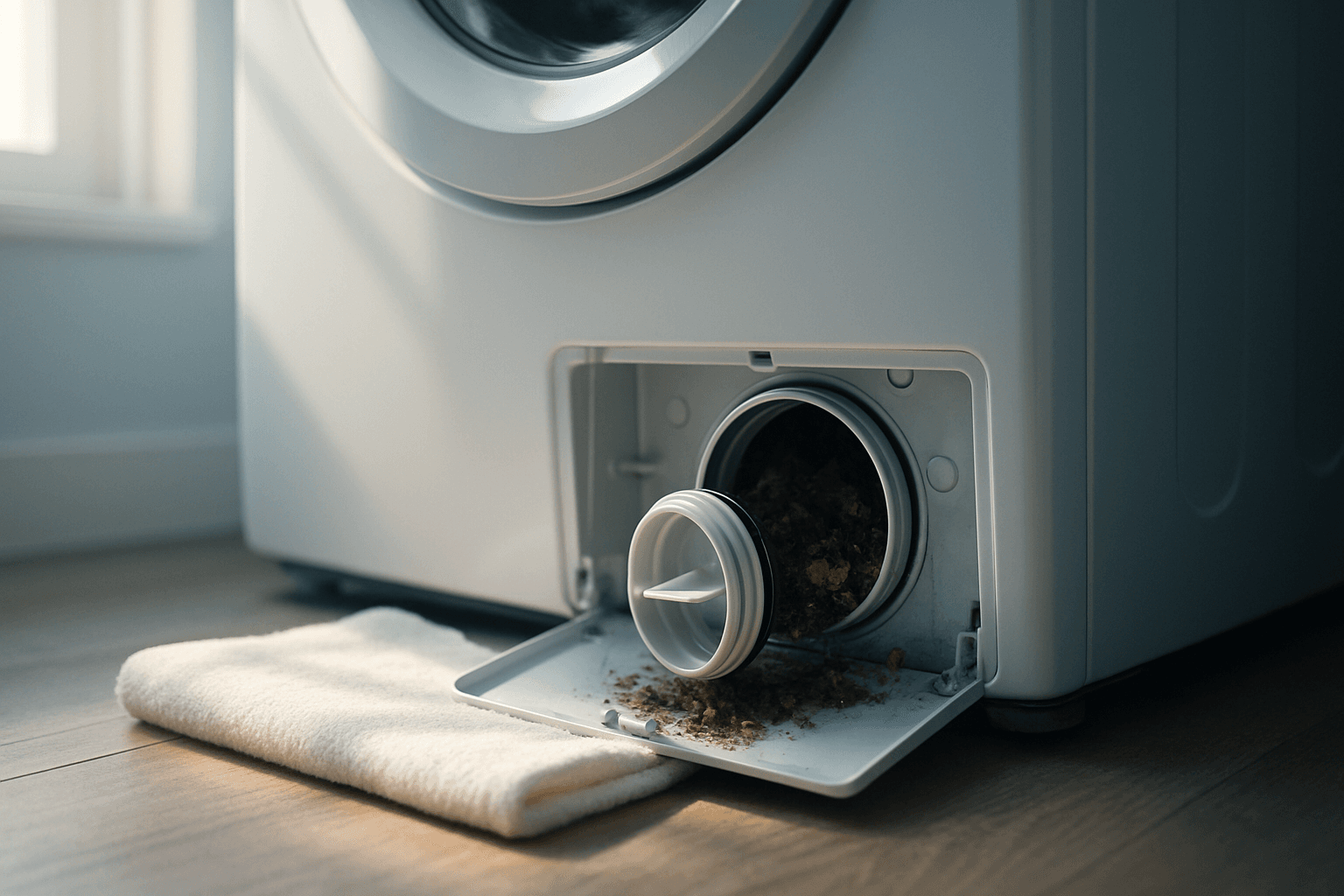
Most washers have an access panel at the bottom front (check your manual for the exact location). Behind it, you'll find a small cylindrical filter—usually about three inches long. Before you open it, place a towel on the floor; residual water will spill out.
Unscrew the filter by hand (turn counterclockwise) and look inside the cavity. You'll likely see a small amount of lint and debris—that's normal. But if you see clumps of leaves, hair, or mud-coloured sludge, your pump is working overtime. Rinse the filter under warm running water and use a soft brush to clear stubborn buildup. Screw it back in firmly but don't force it.
Check the drain hose too
While you're down there, visually inspect the rubber drain hose that connects the washer to your drain or standpipe. Look for kinks, cracks, or water stains that suggest a slow leak. If the hose is kinked, straighten it. If it's cracked, it needs replacing—a small hose failure now beats a flooded laundry room during Thanksgiving prep.
When to call a technician
If the filter is clear but your washer still drains slowly, the clog is deeper in the pump housing and you'll need professional help. Same goes if you notice water pooling under the machine or smell a burnt odour during the drain cycle. Those signs mean the pump motor is failing and needs replacement before it leaves you without a washer mid-holiday.
Make it part of your autumn routine
Given Metro Vancouver's rainy season and the amount of outdoor gear and work clothes North Vancouver households wash this time of year, a monthly pump-filter check from September through November is smart maintenance. It takes five minutes and costs nothing. Ignoring it can cost $300–$600 in repairs.
Need a hand from a real technician?
Our licensed pros repair washers and dryers across Metro Vancouver — same-day and next-day, with 90-day parts warranty + 7-day satisfaction guarantee.
Keep reading
Why your washer's detergent dispenser clogs in fall—and how to prevent it
Autumn's cooler water and heavy fabrics create the perfect storm for detergent buildup. Here's how Coquitlam homeowners can keep their dispensers flowing freely.
Why your washer's water inlet hoses fail in autumn—and how to prevent it
Surrey's fall temperature swings stress washing machine hoses. Here's what to check before Thanksgiving hosting season hits.