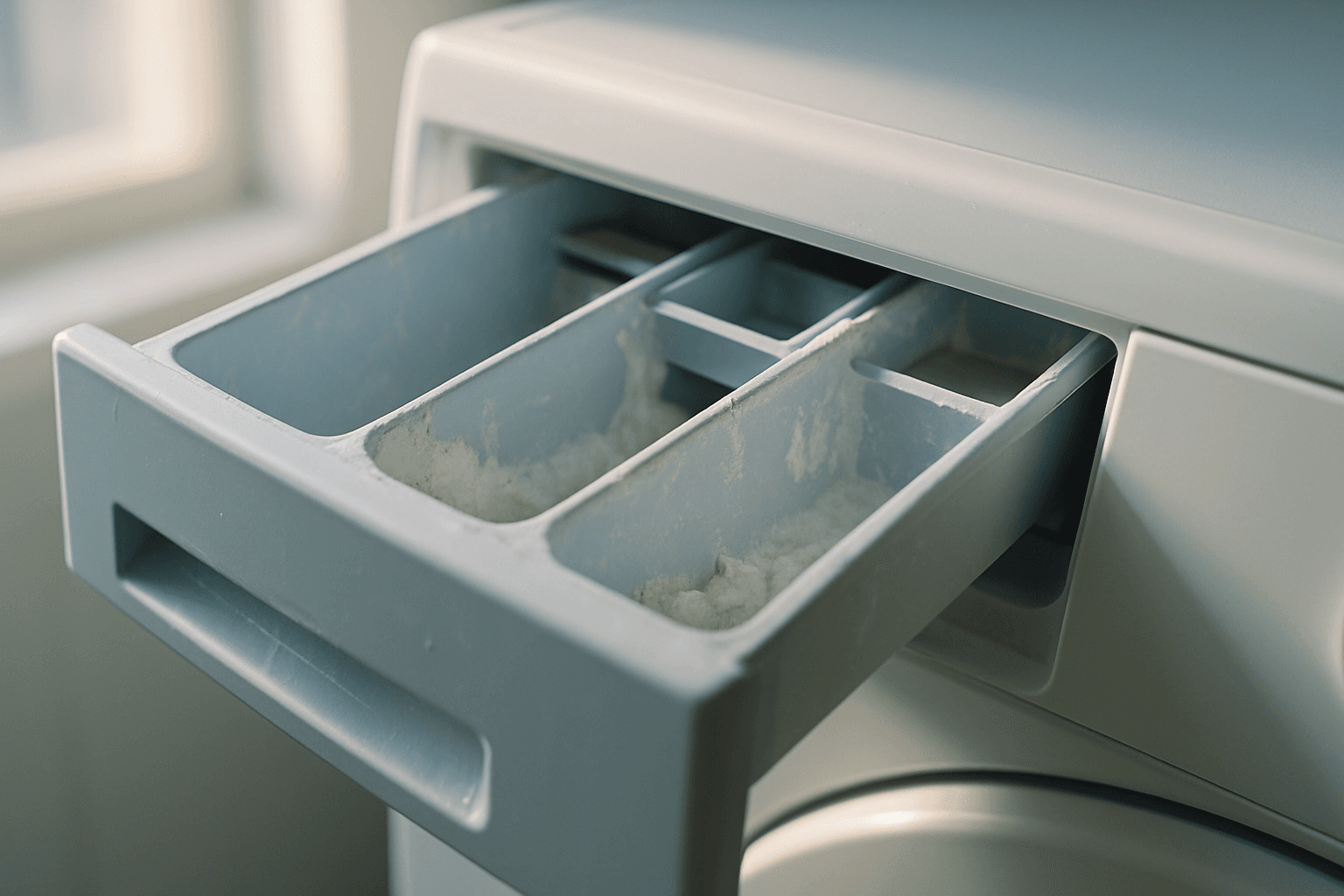
Why your washer's detergent dispenser clogs in fall—and how to prevent it
Autumn's cooler water and heavy fabrics create the perfect storm for detergent buildup. Here's how Coquitlam homeowners can keep their dispensers flowing freely.
Key takeaways
- Cooler autumn water dissolves detergent slowly, leaving sticky residue in dispenser compartments.
- Liquid detergent is more prone to buildup than powder in Metro Vancouver's fall temperatures.
- Monthly hot-water flushes keep dispensers clear and prevent mould growth.
- Over-measuring detergent accelerates clogs—use less, not more, in autumn.
- Dispenser blockages reduce wash quality and strain your washer's pump.
The autumn detergent problem
As September rolls into October across the Lower Mainland, your washing machine's detergent dispenser faces a hidden challenge. Water temperatures drop, fabrics get heavier, and the cycle that worked perfectly in summer starts to struggle. The culprit? Detergent that refuses to dissolve properly in cool water, leaving behind a sticky, stubborn buildup that clogs your dispenser drawer.
Coquitlam's fall weather—mild but crisp—creates conditions where cold water cycles become the default for most loads. Unlike summer's warmer tap water, autumn water takes longer to activate detergent. If you're using liquid detergent, this is especially problematic. The concentrated formula sits in the dispenser compartment, thickens, and gradually blocks the small jets that rinse it into the drum.
Why liquid detergent struggles most
Liquid detergents are convenient, but they're also more viscous than powders. In cooler water, they don't flow as freely through the narrow dispenser channels. Over time—sometimes within just a few weeks—you'll notice your clothes aren't coming clean, or suds appear unevenly in the drum. That's the dispenser struggling to release detergent at all.
Powder detergents dissolve faster in any temperature, which is why many Metro Vancouver households switch back to powder when autumn hits. If you prefer liquid, look for formulas labelled "works in cold water" or consider using the drum dispenser (pouring directly into the wash basket) instead of the drawer.
Preventing clogs before Thanksgiving
With Thanksgiving just around the corner and heavy linens and guest bedding about to cycle through, now is the time to maintain your dispenser. Run an empty hot-water wash once a month—no clothes, no detergent—to flush out residue. This simple step dissolves any buildup before it hardens.
Also, resist the temptation to pour extra detergent into the dispenser. More soap doesn't mean cleaner clothes; it means faster clogging. Most modern washers require far less detergent than we think, especially high-efficiency models common in BC homes.
Cleaning a blocked dispenser
If your dispenser is already clogged, don't ignore it. Remove the drawer (most pull straight out) and soak it in hot water for 15 minutes. Use an old toothbrush to gently clear the jets and channels. Rinse thoroughly and replace. For stubborn buildup inside the washer's dispenser housing, run a hot-water cycle with white vinegar (half a cup in the dispenser) to dissolve mineral deposits and old detergent.
A quick seasonal shift
Think of autumn maintenance like switching your home's heating on—it's a seasonal adjustment. One monthly hot-water flush, a mindful eye on detergent quantity, and perhaps a switch to powder or cold-water liquid formula will keep your washer performing smoothly through Thanksgiving and beyond. Your clothes will thank you, and your machine won't have to work harder than it should.
Need a hand from a real technician?
Our licensed pros repair washers and dryers across Metro Vancouver — same-day and next-day, with 90-day parts warranty + 7-day satisfaction guarantee.
Keep reading
Why your washer's water inlet hoses fail in autumn—and how to prevent it
Surrey's fall temperature swings stress washing machine hoses. Here's what to check before Thanksgiving hosting season hits.
Why your washer smells before Thanksgiving—and how to fix it in one cycle
Autumn humidity and heavy laundry loads create the perfect storm for washer odour. Here's how Richmond families can freshen their machine before the big cook.