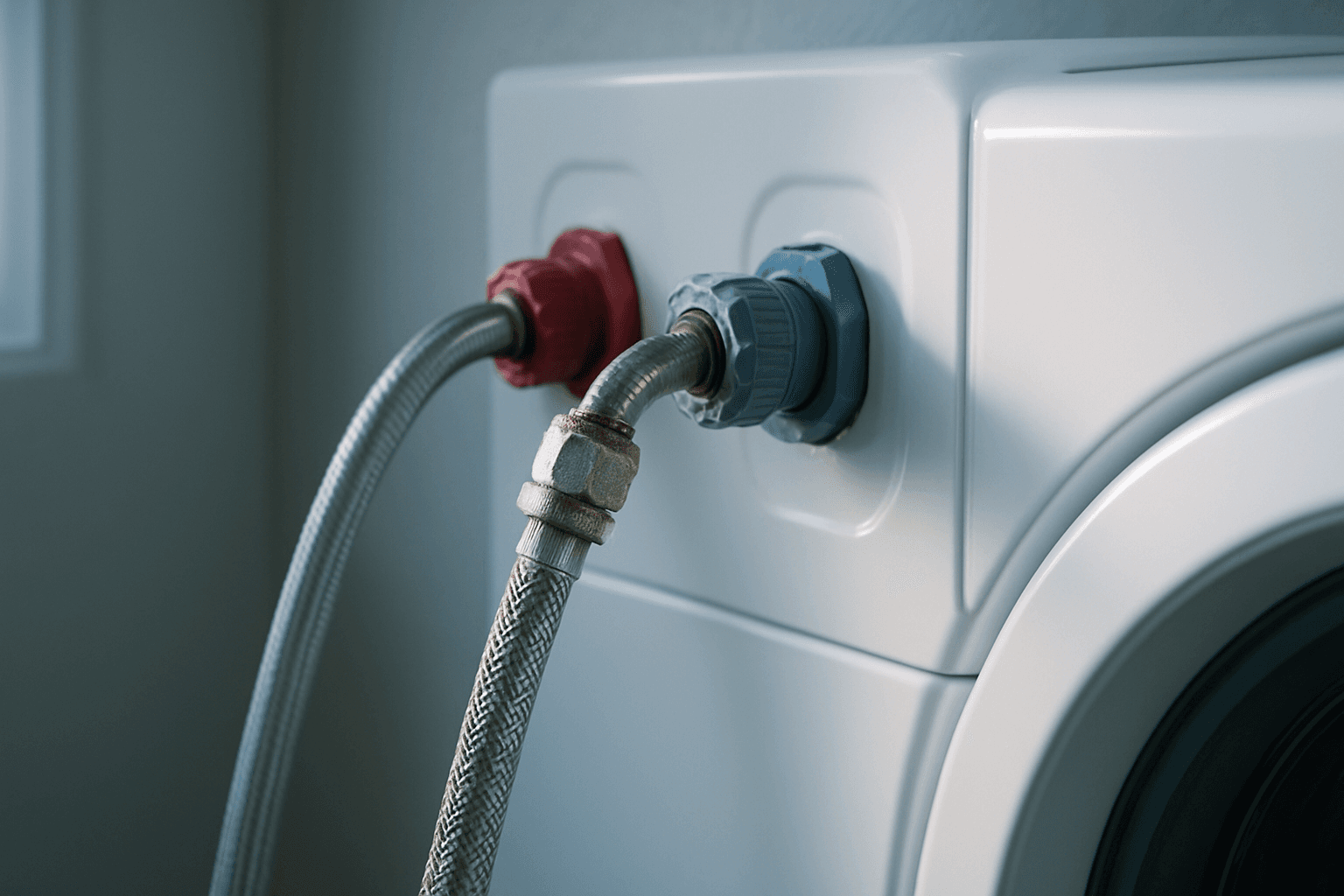
Autumn rain and your washing machine: why West Vancouver homes need a hose inspection now
As September rains arrive in Metro Vancouver, the water pressure and mineral content in your supply lines change—and your washer's inlet hoses may not handle it. Here's what to check.
Key takeaways
- Check inlet hoses monthly for cracks, bulges, discoloration, or mineral crusting.
- Replace hoses every 5–7 years, even if they look fine—rubber degrades invisibly.
- Use stainless-steel braided hoses instead of rubber for better durability in Metro Vancouver.
- Turn off the water supply valve when your washer isn't in use for extended periods.
- Keep a small bucket nearby to catch slow leaks and spot problems early.
September marks the start of autumn rain season in Metro Vancouver, and with it comes a subtle but real shift in your home's water supply. The increased precipitation, combined with cooler temperatures and mineral-rich runoff, changes both the pressure and composition of the water flowing into your washing machine—and that stress lands directly on your inlet hoses.
Most homeowners in West Vancouver and across the Lower Mainland don't think about their washer's inlet hoses until they fail. But these two rubber or braided tubes are the first line of defence against leaks that can cause thousands of dollars in water damage. Autumn is the ideal time to inspect them, before the heavy rains of October and November arrive.
Why autumn water changes matter
During the dry summer months, water pressure in Metro Vancouver's supply lines is relatively stable and consistent. But as September rains increase, utility companies often adjust pressure to manage the higher demand, and mineral-laden runoff can accumulate in pipes. Older hoses—especially rubber ones—become brittle and less flexible in cooler temperatures. The combination of higher pressure and temperature fluctuation can cause small cracks or weak spots to fail without warning.
West Vancouver's older homes are particularly vulnerable, as are any properties with original (or very old) inlet hoses. If your washer came with the house or hasn't been serviced in years, the hoses are likely near the end of their lifespan.
What to inspect right now
Turn off the water supply to your washing machine and look closely at both inlet hoses—the one bringing in hot water and the one bringing in cold. Check for:
**Visible cracks or splits.** Even a hairline crack will leak, especially under pressure. Shine a light and run your fingers along the length of the hose.
**Bulges or soft spots.** These indicate the rubber is weakening and failure is imminent.
**Mineral buildup or white, chalky crusting.** This is a sign that the hose interior is corroding and may be close to rupturing.
**Discoloration or brittleness.** If the rubber feels hard or looks faded, it's degrading.
**Leaks or drips at the connections.** Even slow weeping means the seal is compromised.
If you spot any of these, replace the hoses immediately. If they look clean but are more than five years old, replace them anyway—rubber degrades invisibly, and the cost of a hose replacement (typically $30–$80 per hose) is a bargain compared to water damage repair.
The upgrade that pays for itself
When you replace your inlet hoses, consider upgrading to stainless-steel braided hoses. They cost a bit more (usually $50–$100 per hose) but last 10+ years and are far more resistant to pressure spikes and mineral corrosion. In Metro Vancouver's climate, they're a worthwhile investment.
Prevention going forward
Once you've inspected or replaced your hoses, adopt two simple habits. First, turn off the water supply valve behind your washer when you're away for more than a few days or not using the machine regularly. This removes pressure from the hoses during idle periods and gives you peace of mind. Second, keep a small bucket under the connection points for a few days after any heavy rain—slow leaks often announce themselves this way, before they become emergencies.
Autumn rain is part of living in the Lower Mainland, and your washing machine is built to handle it. But its inlet hoses are the weakest link. A few minutes of inspection now can save you a flooded laundry room and thousands in repairs later.
Need a hand from a real technician?
Our licensed pros repair washers and dryers across Metro Vancouver — same-day and next-day, with 90-day parts warranty + 7-day satisfaction guarantee.
Keep reading
Autumn humidity is clogging your washer's drain—here's why and how to fix it
As North Vancouver's fall rains arrive, moisture buildup in your washing machine's drain system can trap lint and debris. A quick seasonal flush prevents costly blockages.
Why your dryer takes twice as long in Vancouver's fall—and how to fix it
Autumn humidity in Metro Vancouver slows dryer cycles dramatically. Here's what's actually happening and the maintenance steps that make a real difference.