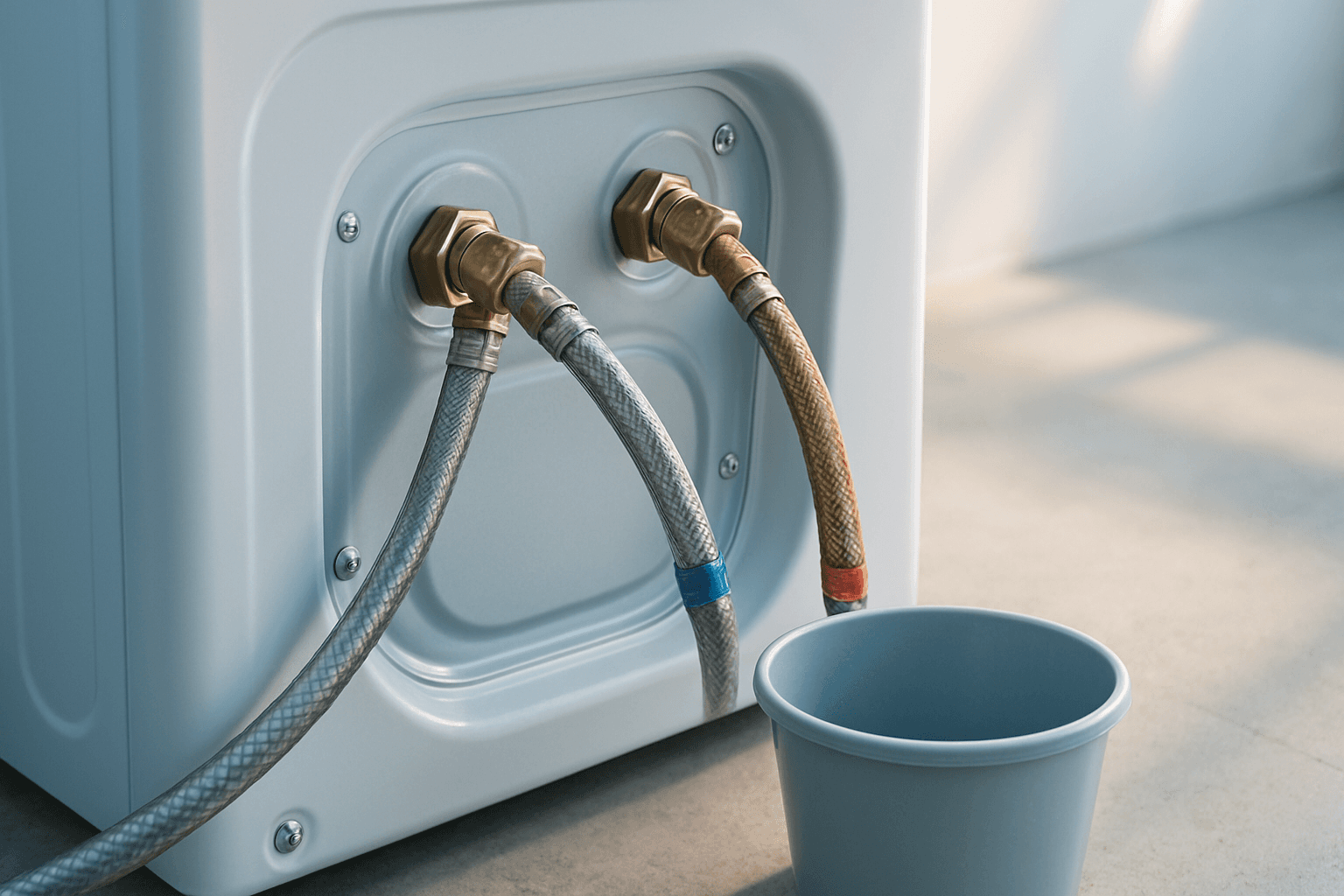
Before Labour Day: why your washer's hot-water line needs a flush
August's heavy laundry load can leave mineral deposits and sediment in your washer's hot-water inlet. A simple flush now prevents costly repairs before the holiday rush.
Key takeaways
- Hot-water inlet lines collect mineral deposits faster in summer due to increased laundry volume and temperature cycling.
- Reduced water pressure, slow fill times, or uneven washing signal a clogged inlet line that needs immediate attention.
- Flushing takes 15 minutes and costs nothing; ignoring it can lead to $300+ inlet valve replacements.
- Delta's hard water makes inlet maintenance even more critical than other Lower Mainland areas.
- Do this flush in early September, not during Labour Day weekend when repair calls spike.
Why August is peak season for inlet-line buildup
August in Metro Vancouver means back-from-vacation laundry loads, kids' sports gear, and bedding washes. Your washer runs harder and hotter than any other month. That combination—high volume plus elevated water temperature—accelerates mineral and sediment accumulation inside the hot-water inlet line.
Delta residents especially notice this. The Lower Mainland's water hardness varies by municipality, and Delta's supply tends toward the mineral-heavy side. Over eight weeks of peak summer use, invisible calcium and magnesium deposits can narrow the inlet line by up to 40 percent.
What a clogged inlet line looks like
You don't need a technician to spot the warning signs. If your washer fills slowly on the hot-water cycle, takes longer than usual to start washing, or fills unevenly (one side of the drum wetter than the other), the inlet line is likely restricted.
Some washers will display an error code—usually something like "F21" or "E21"—which specifically flags slow water entry. Don't ignore it. Running the washer with restricted water flow forces the pump and motor to work harder, shortening their lifespan.
How to flush your inlet lines in 15 minutes
Turn off both the hot and cold water taps behind your washer. Locate the inlet hoses—usually braided steel lines connected to the back of the machine. Unscrew the hose from the hot-water tap first (turn counterclockwise by hand or with pliers).
Place a bucket underneath and turn the tap back on briefly—30 seconds is enough. You'll see sediment, mineral flakes, or discoloured water pour out. That's what was headed into your machine. Repeat with the cold-water hose for good measure, though the buildup is heaviest on the hot side.
Reattach both hoses, hand-tighten firmly, then give each a quarter-turn with pliers to ensure a seal. Run a test cycle on hot water with no clothes inside.
Why timing matters before Labour Day
Labour Day weekend is when repair companies across Metro Vancouver see their busiest call volume. If your washer fails mid-cycle on Saturday morning, you could wait until Tuesday for a service visit—and emergency weekend rates apply.
A 15-minute flush now eliminates that risk entirely. You'll also extend the life of your inlet valves, which can cost $200–$400 to replace if they fail from prolonged mineral exposure.
When to call a professional
If you flush both lines and water still dribbles slowly, the restriction may be inside the inlet valve itself, not just the hose. That's when you need a technician. Similarly, if you see corrosion, cracks, or pinhole leaks in the hose during inspection, replace the hose immediately—a burst inlet line can flood your laundry room in seconds.
A preventative flush every 12 months keeps your inlet system healthy. In Delta and across the Lower Mainland, adding this to your Labour Day prep checklist—right alongside cleaning the dryer vent—pays dividends all year.
Need a hand from a real technician?
Our licensed pros repair washers and dryers across Metro Vancouver — same-day and next-day, with 90-day parts warranty + 7-day satisfaction guarantee.
Keep reading
Your washer's water temperature dial: why Thanksgiving prep starts here
As Vancouver's damp autumn arrives, your washer's temperature settings matter more than you think—especially before hosting. Here's what to check.
Your washer's cold-water cycle isn't enough for autumn stains—here's why
October's mud, wine, and cranberry spills need warmer water than you think. Here's how to tackle stubborn fall stains before Thanksgiving guests arrive.