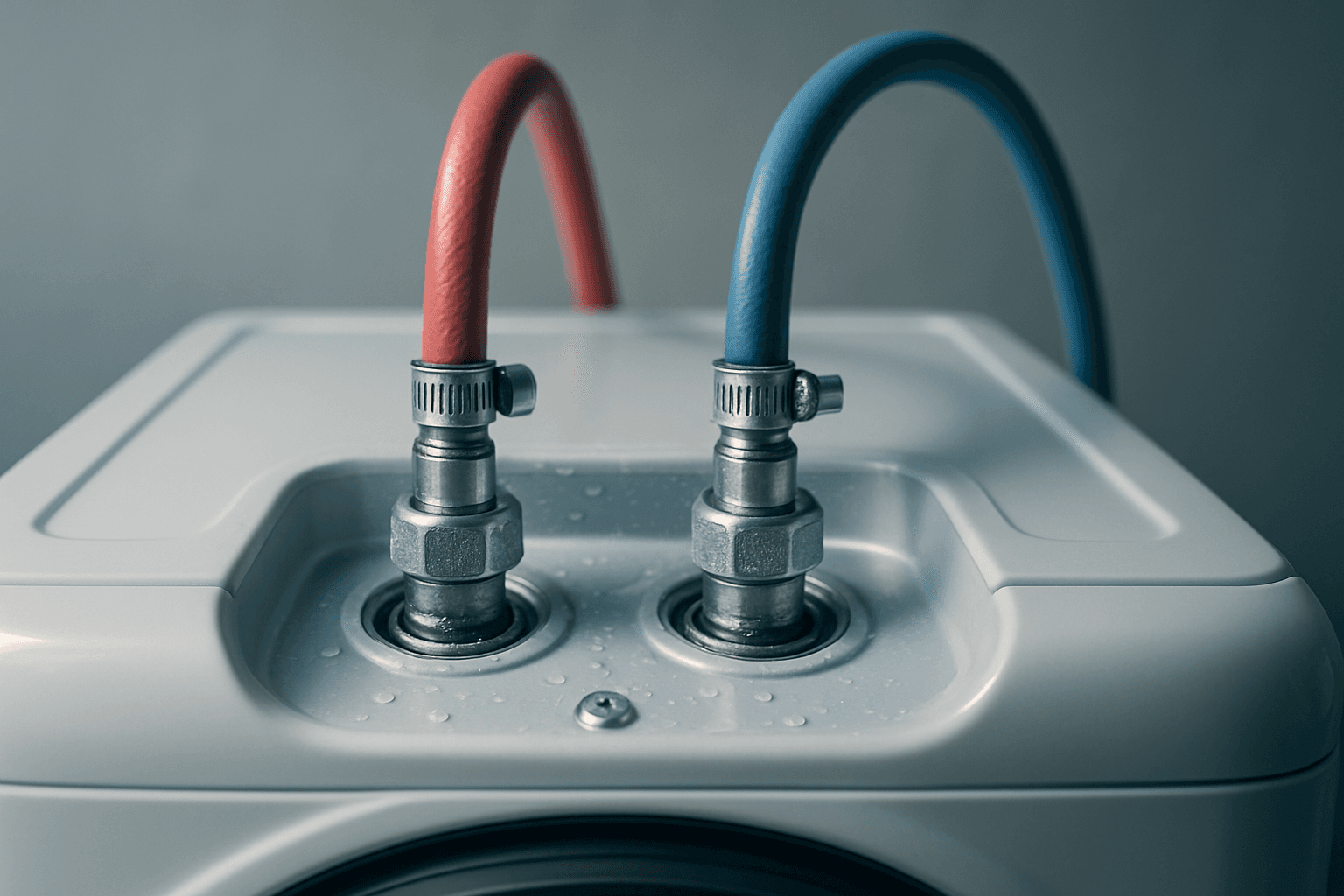
Before Labour Day: why your washer's water inlet valves need inspection now
Summer's hard water and heat stress your washer's inlet valves. A quick inspection before the holiday rush can prevent costly leaks and mid-cycle failures.
Key takeaways
- Inlet valve failure is the leading cause of washer leaks in summer—often silent until water reaches your floor.
- Hard water minerals clog valve screens faster in warm weather; West Vancouver's water quality makes this common.
- A five-minute visual inspection now catches loose hose clamps and corrosion before they cause damage.
- Solenoid valves (which open/close water flow) wear out faster under sustained heat and high water pressure.
- Professional valve cleaning takes 30–45 minutes and costs far less than water damage repair or a full replacement.
What are water inlet valves, and why do they fail in summer?
Your washer has two solenoid inlet valves—one for hot water, one for cold. These electromagnetic gatekeepers open and close thousands of times per year, letting precise amounts of water into the drum. In summer, when you're running laundry daily (or twice daily), those valves work overtime. Combined with Metro Vancouver's mineral-rich tap water and the heat that comes with August, the valve screens get clogged and the solenoid coils weaken. By late August, many West Vancouver homeowners notice their washer won't fill, fills too slowly, or worse—leaks water during the cycle.
The summer stress on your inlet system
Here's the mechanics: hard water deposits build up inside the valve screens. Heat accelerates this process. Add a heavy summer laundry load (beach towels, gym clothes, garden gear), and your washer cycles hard and fast. The solenoid coils—which are essentially electromagnets—degrade faster in sustained warmth. Water pressure fluctuations, common during summer when neighbourhoods like West Vancouver see peak residential water use, can also jar loose the hose clamps that hold inlet hoses to the washer's back panel.
When an inlet valve starts to fail, you might notice:
- The washer takes longer to fill, or fills unevenly (one temperature fills, the other doesn't).
- You hear a loud buzzing or humming from the back of the machine.
- Water drips from the hose connections even when the washer isn't running.
- A small puddle appears under or behind the washer after a cycle.
A five-minute inspection you can do yourself
Before Labour Day, unplug your washer and pull it away from the wall slightly. Look behind the machine where the inlet hoses connect. You're checking for three things:
**Hose clamps:** They should be tight and show no rust. If a clamp is loose or corroded, tighten it or note it for a service call.
**Hose condition:** The rubber hoses themselves should be firm, not soft or bulging. Cracks or discoloration mean they're aging and could burst.
**Water pooling:** Any moisture pooling suggests a slow leak at the valve or connection.
Listen, too. Plug the washer back in and run a fill cycle (no load). A loud buzzing or clicking that doesn't stop after the drum fills is a sign the solenoid is struggling.
When to call for professional service
If your inspection reveals loose clamps, mineral buildup visible on the hose ends, or any of the symptoms above, schedule a valve inspection before the long weekend. A professional flush of the inlet valve screens takes 30–45 minutes and clears mineral deposits before they cause a complete failure. In September, when everyone returns from vacation and laundry piles up, a broken inlet valve becomes an emergency—and emergency service costs more.
Valve replacement (if needed) is a straightforward job, but prevention is always cheaper and faster. A quick service call now keeps your washer running smoothly through fall and winter, when heavy loads return with back-to-school and holiday laundry.
Keep your inlet system healthy year-round
After service, run your washer with a cleaning cycle monthly, use the correct detergent amount (excess suds stress the system), and check hose connections seasonally. Metro Vancouver's water quality is generally good, but mineral buildup is inevitable in any climate. Summer is when it accelerates most, so now is the time to act.
Need a hand from a real technician?
Our licensed pros repair washers and dryers across Metro Vancouver — same-day and next-day, with 90-day parts warranty + 7-day satisfaction guarantee.
Keep reading
Your washer's water temperature dial: why Thanksgiving prep starts here
As Vancouver's damp autumn arrives, your washer's temperature settings matter more than you think—especially before hosting. Here's what to check.
Your washer's cold-water cycle isn't enough for autumn stains—here's why
October's mud, wine, and cranberry spills need warmer water than you think. Here's how to tackle stubborn fall stains before Thanksgiving guests arrive.