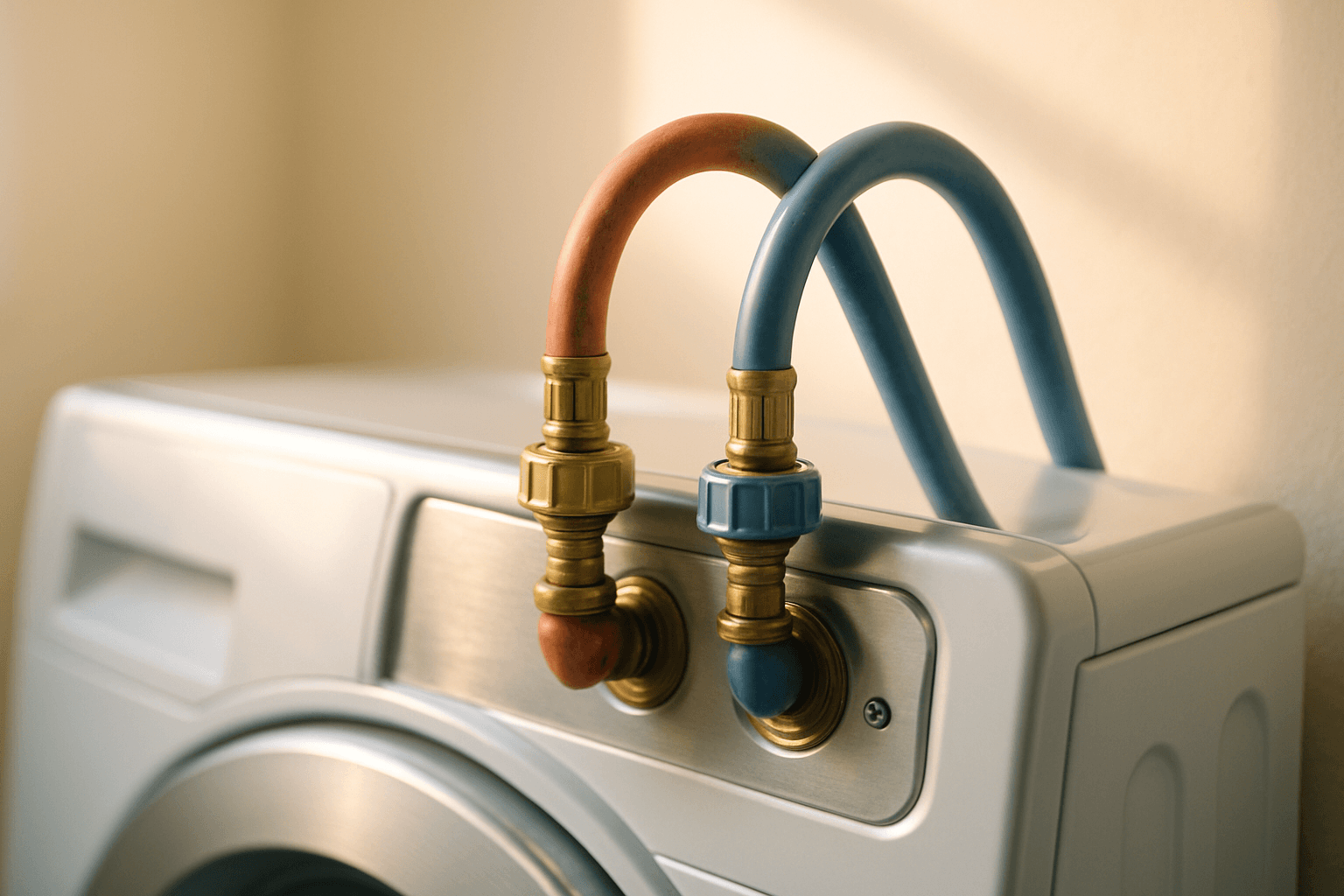
Why your washer's inlet hoses fail in summer—and how to prevent it
Summer heat and water pressure spikes can weaken your washer's hoses faster than you'd expect. Here's what Maple Ridge homeowners should watch for.
Key takeaways
- Rubber inlet hoses fail silently; inspect both hot and cold lines monthly for bulges, cracks, or discoloration.
- Summer heat accelerates hose degradation even inside laundry rooms; UV light speeds the process if hoses are near windows.
- High water pressure during summer demand stresses older hoses; a regulator costs $40–80 and extends hose life significantly.
- Replace hoses every 5–7 years, or immediately if you spot damage; braided steel hoses last longer than rubber.
- Shut off water supply valves when your washer isn't in use; this eliminates standing pressure that weakens hoses over time.
The silent threat in your laundry room
Most Maple Ridge homeowners don't think about their washing machine's inlet hoses until water starts pooling beneath the appliance. By then, damage is done. These two rubber (or braided) tubes—one hot, one cold—are under constant pressure, and summer conditions in the Lower Mainland accelerate their breakdown in ways many people miss.
Unlike dramatic failures, hose failure often starts small: a hairline crack, a slight bulge, or internal degradation you can't see. The hose looks fine on the outside but fails catastrophically when pressure spikes or temperature swings strain the rubber.
Why summer is peak failure season
During dry, warm months, Metro Vancouver's water systems experience higher demand. Your municipal water pressure can climb to 80–100 PSI (pounds per square inch)—well above the safe range for older hoses. Simultaneously, laundry room temperatures rise, especially if your washer sits near a window or in a room with poor ventilation. Heat softens rubber and weakens the bond between the hose's inner and outer layers.
Add mineral deposits from our region's moderately hard water, and the hose's interior becomes brittle and prone to pinhole leaks. A small leak in July can become a flood by August.
What to inspect this month
Turn off the water supply to your washer and pull it forward slightly. Examine both inlet hoses—the hot and cold lines running from the wall to the back of the machine.
Look for:
- Visible cracks, splits, or fraying at the ends
- Soft spots or bulges (a sign the hose is weakening internally)
- Discoloration or a chalky appearance (UV damage or mineral buildup)
- Kinks or crimping that restricts water flow
- Any hose that feels mushy or loses its firmness when squeezed gently
If you find any of these, replacement is urgent—not next month, but this week.
Prevention: the affordable fix
The best defence is a two-part strategy:
**Install a water-pressure regulator.** This device, installed where the main water line enters your home (or at the washer supply line), maintains pressure between 40–60 PSI. It costs $40–80 and adds 2–3 years to your hose lifespan. Many Maple Ridge homes built before 2005 don't have one; it's a worthwhile upgrade.
**Replace hoses every 5–7 years.** Don't wait for failure. Mark your calendar. Rubber hoses degrade predictably; braided steel hoses (rubber-lined with a steel mesh exterior) last 10+ years and cost only slightly more. They're worth the investment if you want peace of mind.
**Shut off the water supply valves when your washer isn't in use.** This single habit eliminates standing pressure that quietly stresses hoses 24/7. Turn the valves back on before washing. It takes 10 seconds and removes constant strain.
What failure actually costs
A burst inlet hose can flood your laundry room, basement, or adjacent rooms in minutes. Water damage claims often exceed $10,000—far more than the $50–150 cost of new hoses or the $80 regulator. Summer is the worst time for this to happen; contractors are booked solid, and emergency water damage restoration fees spike.
The takeaway
Your washer's inlet hoses are invisible infrastructure, easy to forget. But they're also one of the most common sources of preventable water damage in Lower Mainland homes. This August, take 10 minutes to inspect them. If they're more than 5 years old, replace them now—before the pressure and heat of summer finish the job.
Need a hand from a real technician?
Our licensed pros repair washers and dryers across Metro Vancouver — same-day and next-day, with 90-day parts warranty + 7-day satisfaction guarantee.
Keep reading
Before Thanksgiving guests arrive: why your washer's filter needs cleaning now
Burnaby's autumn rain brings sediment and minerals into your home—and your washing machine. A clogged filter is silently reducing wash quality just when you need it most.
Thanksgiving hosting? Your washer's drain hose needs a pre-holiday inspection
With houseguests arriving in three weeks, a blocked or weakened drain hose can turn laundry day into a flooded basement. Here's what Vancouver homeowners should check now.