Summer heat is shrinking your dryer's airflow—here's why and what to do
High August temperatures can actually reduce your dryer's efficiency by restricting air circulation through the vent system. Here's what West Vancouver homeowners should check.
Key takeaways
- Hot outdoor air reduces the dryer's ability to exhaust moisture efficiently, not the appliance itself
- Lint buildup in the vent becomes more problematic in summer when heat is already working against airflow
- Check your exterior vent hood monthly—West Vancouver's dry summers can hide lint accumulation
- A partially blocked vent can cause clothes to stay damp and increase energy use by 10–15 per cent
- Straighten kinked ducts and ensure the vent hood opens freely; even small obstructions matter in heat
Why summer changes how your dryer works
Your dryer relies on a simple principle: push hot, damp air out of the drum and out of the house through the vent. In summer, that task becomes harder than most homeowners realise. When outdoor air temperatures climb into the high 20s or low 30s Celsius—as they regularly do in West Vancouver in August—the air density drops. Your dryer has to work harder to push that exhaust out against warmer, less dense ambient air. It's thermodynamics, not a broken appliance.
Add lint buildup or a partially blocked vent into that equation, and you've got a dryer that takes 50–60 minutes to dry what normally takes 35 minutes.
The hidden summer culprit: your vent system
Most dryer efficiency complaints we hear in August aren't about the machine itself—they're about what's blocking the vent. During West Vancouver's dry summer months, lint can accumulate in the duct or around the exterior hood without the moisture that might otherwise make it obvious. You won't see water pooling or smell mildew; you'll just notice damp clothes and longer cycle times.
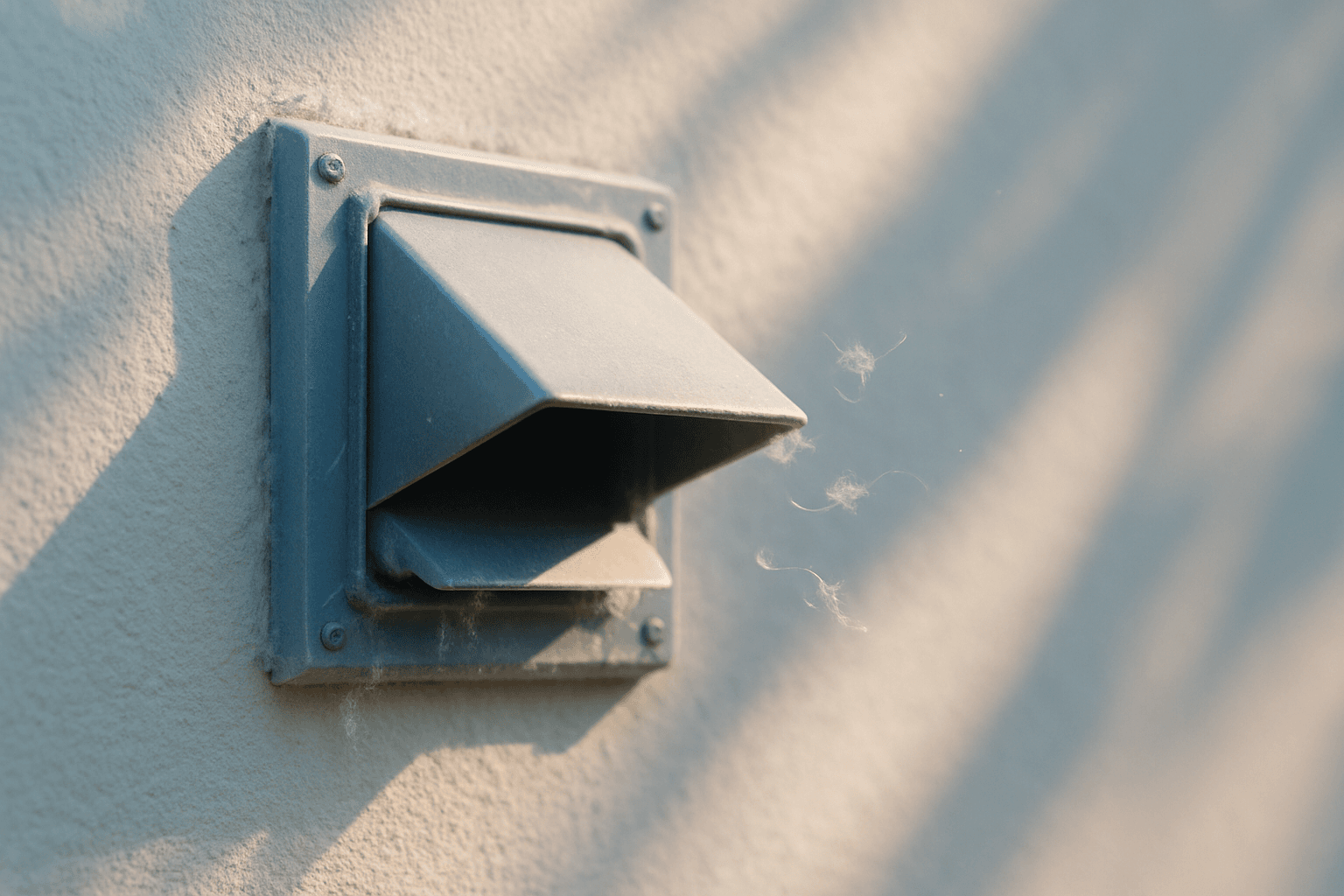
The exterior vent hood is the biggest offender. Lint gets trapped around the flapper, dust settles on the screen, or small debris from the yard blocks the opening. If the hood is partially closed or the flapper isn't moving freely, your dryer is fighting a losing battle.
What to check this month
Start inside: pull out the lint trap before every load and wipe it clean. A thin film of detergent residue can actually reduce airflow, so rinse the trap monthly with warm water and let it dry completely.
Next, go outside. Walk around to your dryer vent hood. Does the flapper open and close freely when you hold your hand in front of it? Is lint packed around the edges? Look for any visible blockages—pet hair, cobwebs, or debris from nearby shrubs. West Vancouver's proximity to natural areas means vegetation can drift near vents more easily than in denser neighbourhoods.
Finally, if you have access, inspect the vent duct itself. Get down behind or beside the dryer and check that the flexible duct isn't kinked, crushed, or pinched. Even a small kink reduces airflow significantly and becomes worse when summer heat is already working against you.
When to call for help
If you've cleared the lint trap, cleaned the exterior hood, and straightened any visible kinks but your dryer still takes 50+ minutes for a normal load, the blockage is likely deeper in the duct system. A professional can use a vent cleaning brush or compressed air to clear the entire run from the dryer to the outside—something you can't safely do yourself without the right tools.
Clogged vents don't just slow drying; they reduce airflow to the point where heat builds up inside the drum, which can damage fabrics and, in rare cases, create a fire risk. In summer, when you're using the dryer more frequently and outdoor conditions are already challenging, keeping the vent clear is worth the peace of mind.
Need a hand from a real technician?
Our licensed pros repair washers and dryers across Metro Vancouver — same-day and next-day, with 90-day parts warranty + 7-day satisfaction guarantee.
Keep reading
Autumn mud and grass stains: why your Langley washer needs a pre-wash rinse now
As fall rain turns yards muddy, pre-wash rinsing prevents stains from setting permanently in your machine's drum. Here's what Langley families should do.
Washing machine odour after Labour Day? Here's why Delta humidity triggers it now
As autumn rain returns to Metro Vancouver, trapped moisture in your washer creates the perfect breeding ground for mould and bacteria. Here's how to stop the smell before it sets in.