Why your washer won't drain before the long weekend—and how to fix it fast
A clogged drain pump can wreck your BC Day plans. Here's how to clear it in under an hour.
Key takeaways
- Filter traps collect coins, buttons, and lint; clean it every 2–3 months.
- Kinked or crushed drain hoses are the second-most common cause of poor drainage.
- A faulty drain pump makes a grinding noise; it usually needs professional replacement.
- Clogged standpipes (the wall outlet where hose connects) can mimic pump failure.
- Never ignore standing water—mildew and odours develop fast in summer heat.
Nothing derails a long weekend faster than a washer full of soapy water. BC Day is just around the corner, and if your machine won't drain, you're facing a scramble for clean clothes—or worse, a flooded laundry room. The good news: most drain problems are simple enough to diagnose and fix yourself in 30 minutes.
Start with the filter trap
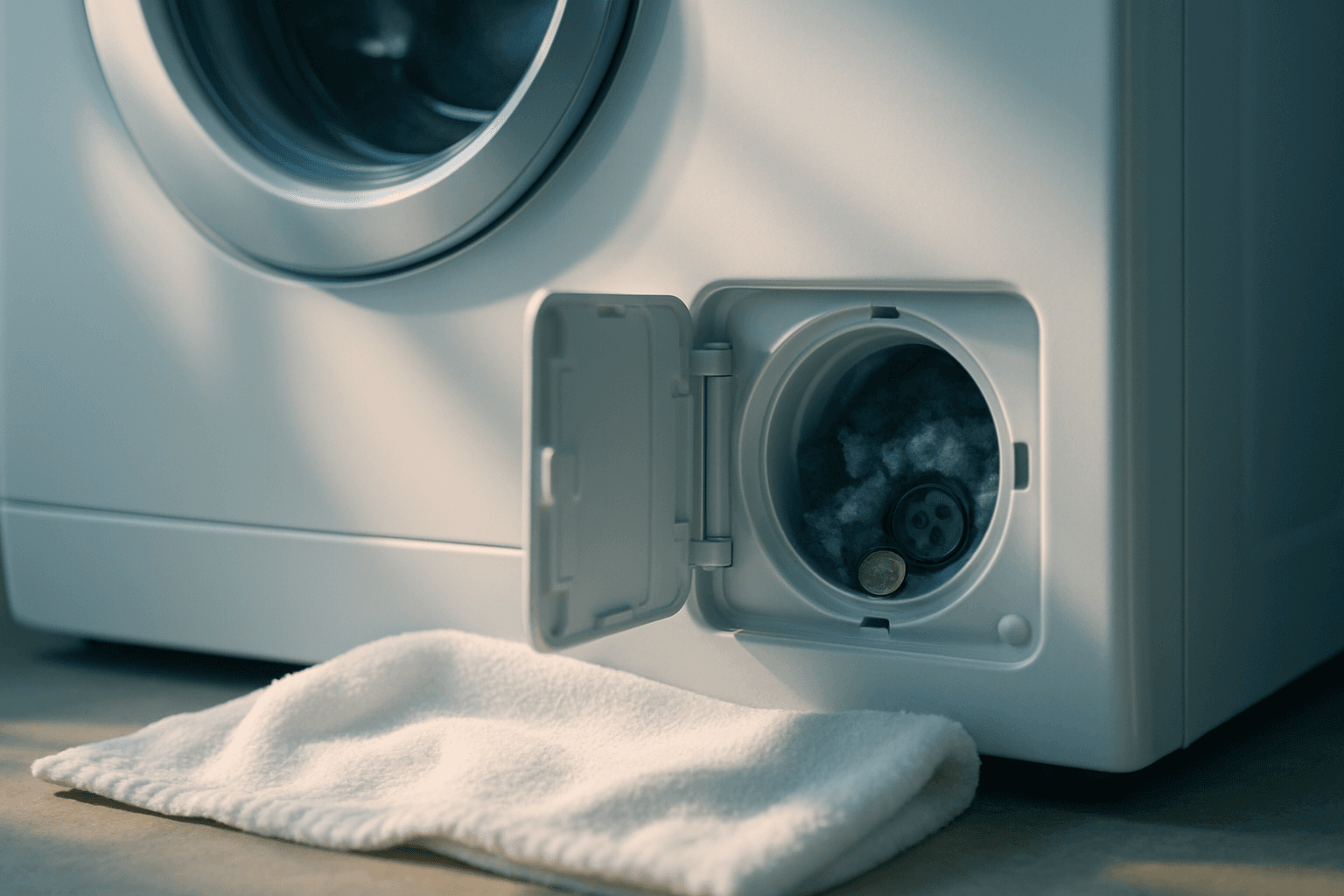
Nearly every front-load and many top-load washers have a filter trap at the front or bottom of the machine. This small, coin-sized chamber catches lint, buttons, loose change, and bits of fabric that the pump can't handle. In summer, when we're doing more laundry and wearing lighter clothes with loose threads, the trap fills faster.
Locate your trap (check your manual if unsure), place a towel underneath, and unscrew it slowly—water will spill out. Empty everything into the bin and rinse the trap under the sink. While you're there, shine a torch into the opening and look for debris lodged inside the port. A quick flush with warm water often solves the problem.
Check the drain hose next
Your washer's drain hose is a rubber tube that carries water from the machine to your standpipe (the wall outlet) or sink. In Coquitlam's summer heat, hoses can become brittle or develop weak spots. More often, they get kinked behind the machine or crushed under its weight.
Unplug the washer and carefully pull it away from the wall. Trace the hose from the machine to the standpipe. Look for bends, cracks, or places where it's been pinched. Straighten any kinks and make sure the hose isn't cracked. If you see a hole or significant damage, the hose needs replacing—but that's still a 20-minute job and much cheaper than a service call.
Also check where the hose connects to the standpipe. Sometimes debris or mineral buildup clogs the standpipe opening itself, making it look like the washer won't drain when the hose is actually fine.
Listen for pump trouble
If the filter is clean and the hose is clear, the problem might be the drain pump. A failing pump often makes a grinding, squealing, or clicking noise during the drain cycle. If your washer is silent when it should be draining, or if it makes an odd sound, the pump likely needs replacement.
Drain pumps are not a DIY fix—they're buried inside the machine and require partial disassembly. This is when you call for help, but at least you'll know exactly what's wrong.
Prevent future clogs
Clean the filter trap every 2–3 months, even if it looks empty. Turn pockets inside out before washing, and use a mesh laundry bag for small items like coins and buttons. In Metro Vancouver's humid summer, standing water breeds mildew fast, so deal with blockages the same day you notice them.
If you're heading into the long weekend and your washer is draining slowly (not completely stopped), run it empty with hot water and a commercial washing-machine cleaner. This clears minor buildup and buys you time if you need to book a repair.
Need a hand from a real technician?
Our licensed pros repair washers and dryers across Metro Vancouver — same-day and next-day, with 90-day parts warranty + 7-day satisfaction guarantee.
Keep reading
Autumn allergens in your washer: why New Westminster families need a rinse-cycle check now
As fall arrives in Metro Vancouver, pollen and mould spores cling to clothes—and can build up inside your machine. A simple maintenance step prevents odours and keeps allergies at bay.
Autumn rain and your washing machine: why West Vancouver homes need a hose inspection now
As September rains arrive in Metro Vancouver, the water pressure and mineral content in your supply lines change—and your washer's inlet hoses may not handle it. Here's what to check.