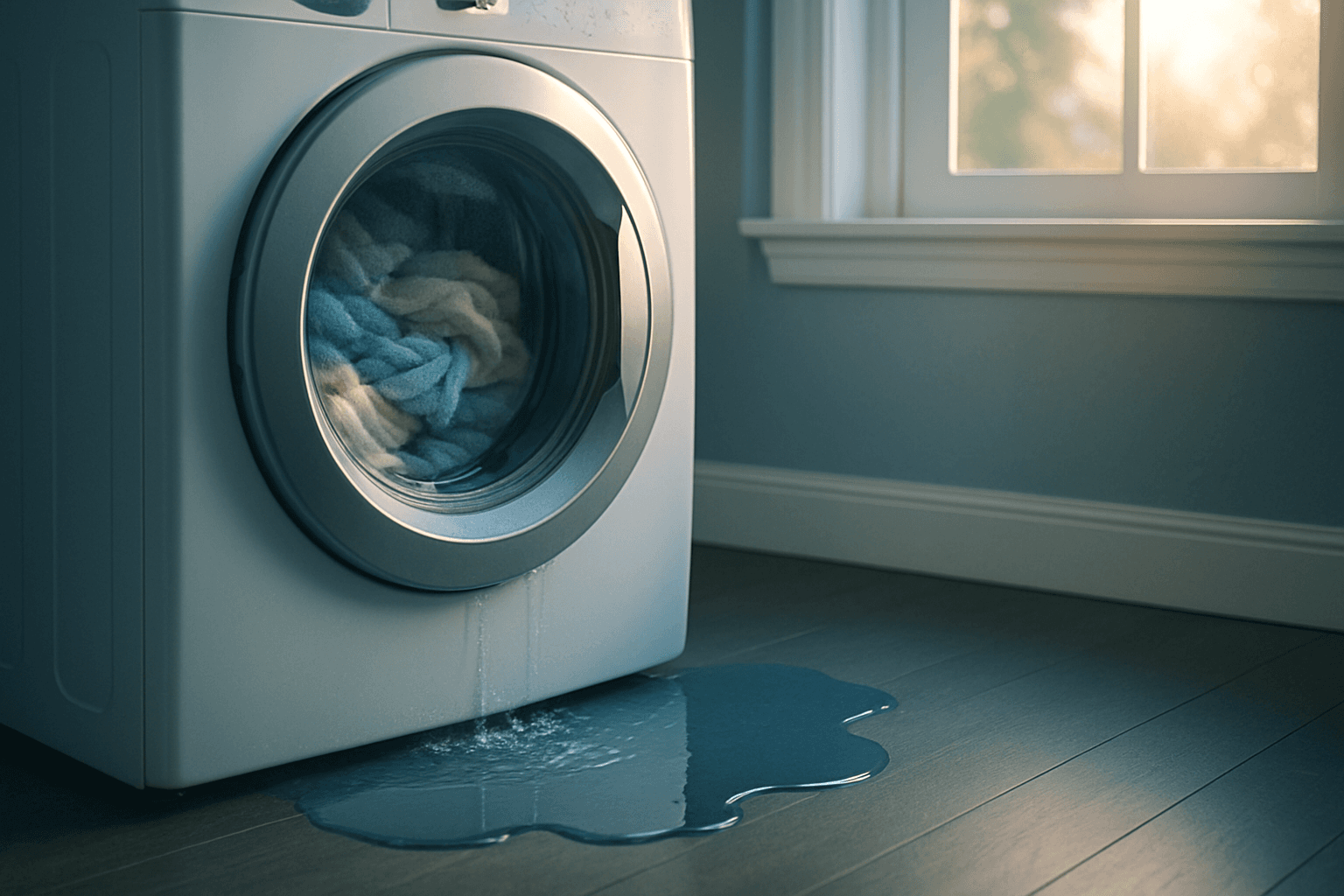
Why your washer leaks during the spin cycle—and how to fix it before guests arrive
A leaking washing machine during spin is often fixable at home. Here's what causes it and when you need professional help.
Key takeaways
- Drain filter clogs are the most common cause and cost nothing to clean.
- A cracked drum or worn door seal requires professional replacement.
- Leaks during spin only (not fill) point to internal drum damage.
- Front-loaders are more prone to seal wear in humid Metro Vancouver summers.
- Don't ignore leaks—water damage spreads quickly to your flooring and subfloor.
With BC Day weekend just around the corner, the last thing you need is a washing machine pooling water across your laundry room. Spin-cycle leaks are frustratingly common in Surrey and across Metro Vancouver during summer, when humidity and heavier laundry loads push machines harder. The good news: many are fixable without calling for repair.
Check the drain filter first
Your washer's drain filter traps lint, coins, and debris before water leaves the tub. In summer, when you're washing more loads—beach towels, gym gear, garden clothes—this filter clogs faster than you'd expect. A blocked filter forces water to back up and escape through the door seal or drum cracks.
Locate the filter (usually a small panel near the bottom front of front-loaders). Place a towel underneath, unscrew it slowly, and empty the contents into a bin. Rinse it under the tap. This takes five minutes and costs nothing. Run a test cycle on delicate with no clothes to see if the leak stops.
Water spraying from the door during spin
If water shoots out around the door seal when the drum spins, the rubber gasket has likely cracked or warped. Metro Vancouver's summer heat and humidity age rubber seals faster than you'd think. The seal can't compress properly, so pressurized water escapes. This isn't a DIY fix—the door seal sits behind the inner drum and requires partial disassembly. Professional replacement typically takes 1–2 hours.
Water leaking from under the tub
A slow drip from beneath the machine during spin usually means the drum itself has developed a small crack or perforation. This is more serious. The drum's outer wall can corrode or crack from repeated stress, especially if you've had hard-water buildup. Water leaks into the space between the outer tub and the drum, then finds its way to the floor. You'll need a technician to assess whether the drum can be sealed or needs replacement.
Why summer makes it worse
Longer daylight hours mean more laundry loads. Heavy summer fabrics—thick towels, denim, wet swimwear—put extra strain on the spin cycle. If your machine was already borderline, the increased workload tips it into leaking. Humidity also accelerates rubber seal degradation and encourages mould growth inside the drum, which weakens seals further.
What you should do now
Don't wait until the holiday weekend. A small leak can soak your subflooring and cause mould within days, especially in our damp climate. Run a test cycle with the filter cleaned. If water still appears, take a photo of where it's coming from—this helps a technician diagnose quickly. A door seal or filter replacement is far cheaper than water damage remediation.
If you're hosting guests over BC Day, a broken washer creates real stress. A quick professional inspection costs less than a weekend of laundromat trips and gives you peace of mind for the rest of summer.
Need a hand from a real technician?
Our licensed pros repair washers and dryers across Metro Vancouver — same-day and next-day, with 90-day parts warranty + 7-day satisfaction guarantee.
Keep reading
Autumn rain and your washing machine: why West Vancouver homes need a hose inspection now
As September rains arrive in Metro Vancouver, the water pressure and mineral content in your supply lines change—and your washer's inlet hoses may not handle it. Here's what to check.
Autumn humidity is clogging your washer's drain—here's why and how to fix it
As North Vancouver's fall rains arrive, moisture buildup in your washing machine's drain system can trap lint and debris. A quick seasonal flush prevents costly blockages.