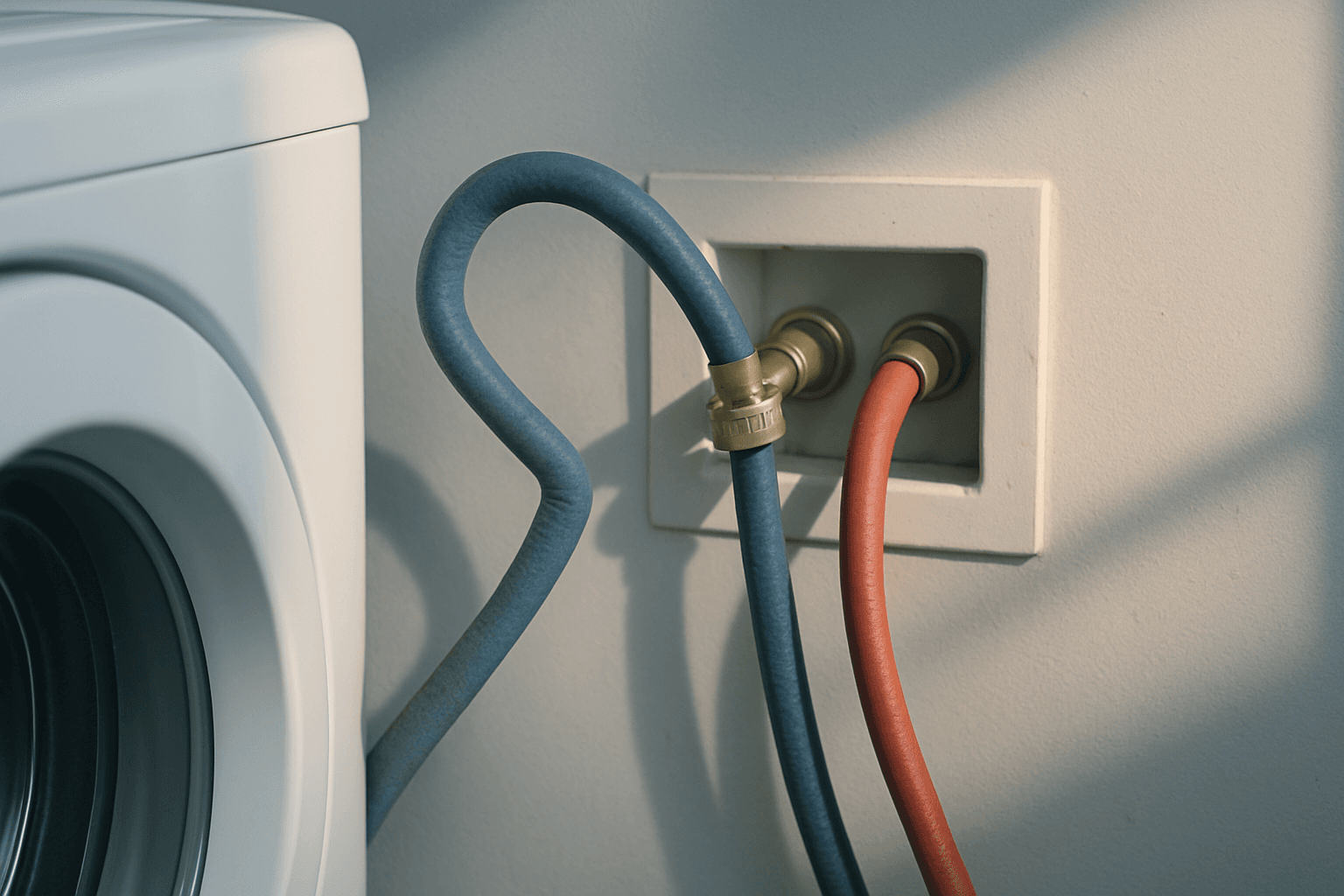
Why your washer's cold-water line gets air-locked in summer—and how to fix it
Summer heat in Metro Vancouver can trap air in your washing machine's cold-water supply, leaving you with weak flow or no water at all. Here's why it happens and what to do.
Key takeaways
- Summer heat causes water in supply pipes to cool unevenly, trapping air bubbles in cold-water lines.
- Kinked or pinched inlet hoses worsen air-lock by restricting flow and creating pressure drops.
- Running hot water through your system first can help purge trapped air before washing.
- A clogged fill valve or faulty inlet screen prevents proper water pressure recovery.
- Persistent low pressure after simple fixes signals a deeper line issue requiring professional diagnosis.
What causes air-lock in summer?
During Burnaby's hot July days, the temperature difference between your outdoor water main and indoor pipes creates ideal conditions for air pockets to form. When water sits in exposed or poorly insulated supply lines—especially in crawl spaces or under decks—it warms, then cools unevenly as it travels toward your washer. This temperature swing causes dissolved air to separate from the water and accumulate at high points in the line, restricting flow to your machine.
Unlike winter freeze-ups, summer air-lock sneaks up quietly. You'll notice your washer fills slowly on the cold-water cycle, or the drum doesn't fill at all despite the cycle running. The hot-water inlet usually works fine because hot-water pipes run through warmer parts of your home.
Check your inlet hoses first
Before you assume the problem is in your walls, inspect both inlet hoses behind your washer. Look for kinks, bends, or pinches where the hose connects to the machine or the wall. Even a subtle crimp can trap air and reduce pressure dramatically. Straighten any kinked sections gently—don't force it, as older rubber hoses can crack.
While you're back there, confirm both hoses are screwed on hand-tight at the wall and the washer inlet. Loose connections allow air to enter the system.
Run hot water to clear the line
A simple first step: before running a wash cycle, turn on a hot-water tap elsewhere in your home (a kitchen or bathroom sink) and let it run for 30–60 seconds. This flushes trapped air out of the supply line and re-pressurizes the system. Then try your washer's cold-water cycle. Often, this clears minor air-locks.
When to call for help
If cold water still trickles in after you've checked hoses and cleared the line, the problem likely lives in your fill valve—the mechanism inside the washer that controls water entry. Sediment or mineral buildup (common in Metro Vancouver's hard water) can clog the inlet screen, which sits between the hose and the valve. A technician can remove, clean, and reinstall the screen, or replace the valve if it's worn.
If every cold-water tap in your home runs weak, the issue is your main water supply, not the washer. Contact your local water authority or a plumber.
Prevention for the rest of summer
Insulate exposed inlet hoses with foam pipe wrap, especially if they run through an unheated space. Keep hoses straight and away from sharp edges. Before the next heat wave, run your washer's rinse cycle (which uses cold water) to keep the line active and less prone to air pockets.
Need a hand from a real technician?
Our licensed pros repair washers and dryers across Metro Vancouver — same-day and next-day, with 90-day parts warranty + 7-day satisfaction guarantee.
Keep reading
Autumn humidity is clogging your washer's drain—here's why and how to fix it
As North Vancouver's fall rains arrive, moisture buildup in your washing machine's drain system can trap lint and debris. A quick seasonal flush prevents costly blockages.
Why your dryer takes twice as long in Vancouver's fall—and how to fix it
Autumn humidity in Metro Vancouver slows dryer cycles dramatically. Here's what's actually happening and the maintenance steps that make a real difference.