Before BC Day guests arrive: why your washer needs a pre-party drain flush
A clogged drain line can turn laundry day into a disaster. Here's how to flush yours before the long weekend.
Key takeaways
- Drain clogs often hide inside the hose, not visible until water backs up into the tub.
- Locate your drain hose behind or beneath your washer; pull gently and listen for gurgling sounds.
- Flush with hot water and a wet/dry vacuum to dislodge lint, soap residue, and summer debris.
- Check the drain filter (if your model has one) and clean it monthly during peak laundry season.
- If water still drains slowly after flushing, a professional drain snake may be needed.
BC Day weekend is coming, and if you're hosting or heading out of town, the last thing you need is a washing machine that won't drain. In Metro Vancouver's humid summer, lint, detergent buildup, and fabric fibres accumulate silently inside drain hoses—and by late July, many machines are running on the edge. A 15-minute drain flush now could save you from a flooded laundry room or a backed-up tub full of grey water.
Why summer drain clogs happen
Vancouver's moisture-heavy air doesn't just affect your dryer; it softens lint and soap residue, making them stick to the inside of drain hoses. Add in higher laundry volumes (extra bedding, towels, summer clothes), and you've got a recipe for slow drainage. Most people don't notice until water pools in the tub after the spin cycle—by which point the clog is already serious.
How to flush your drain line
Start by locating your drain hose. For front-loaders, it's usually behind the machine, coiled or clipped to the back panel. For top-loaders, check underneath or at the rear. Listen carefully: if you hear a faint gurgling or bubbling sound when the machine drains, that's your first warning.
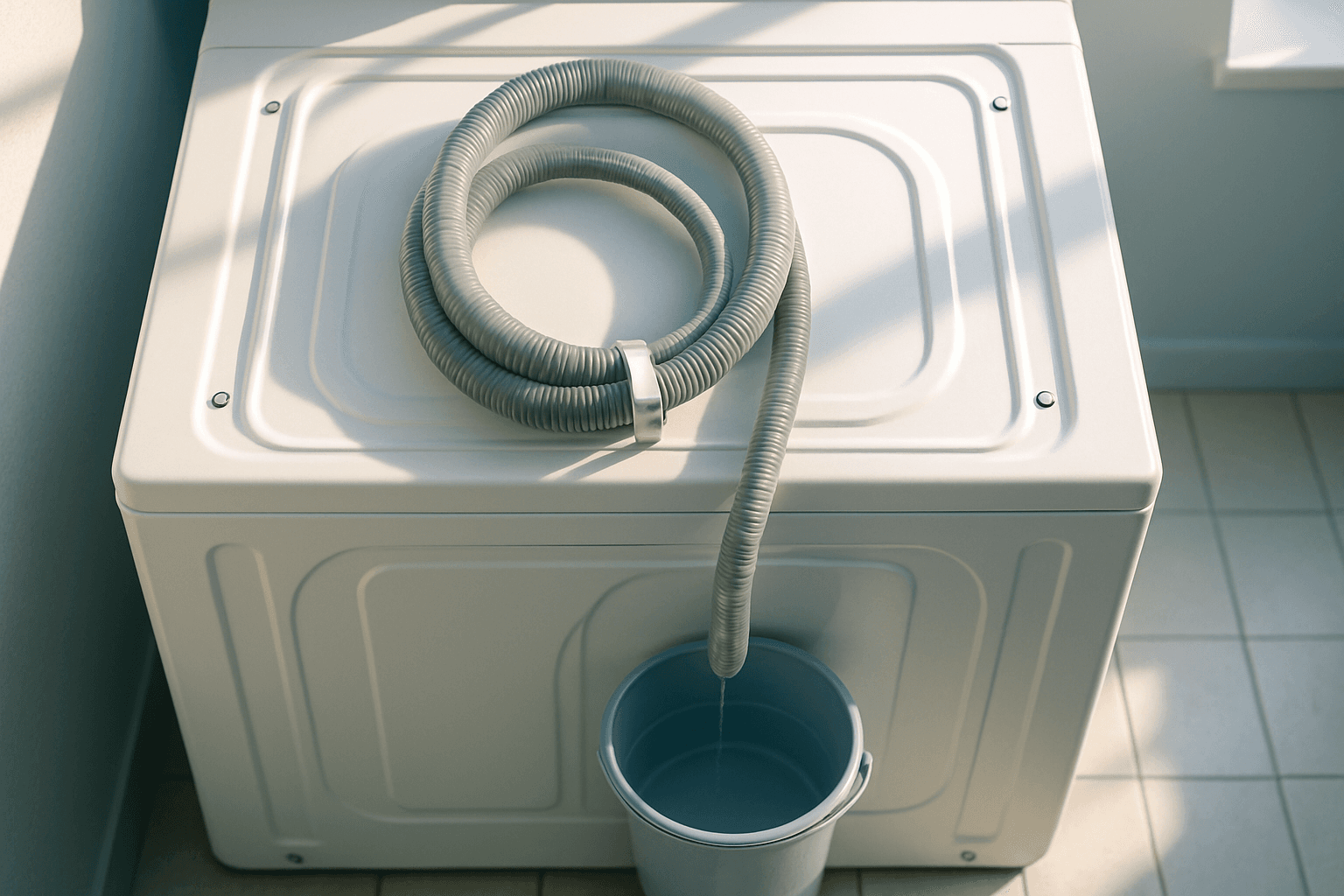
With the power off, gently pull the hose into a bucket or bathtub. If water trickles out slowly or not at all, you've found your clog. Use a wet/dry shop vacuum to suction from both ends of the hose, or flush it with hot water from a kettle (work over a tub). You should feel resistance break, then hear a sudden rush of water. That's the clog clearing.
Check your drain filter
Many machines have a small drain filter at the bottom front. Pop the access panel, unscrew the filter cap, and pull out the filter. Rinse it under hot running water—you'll be amazed at what comes out. Hair, coins, bits of tissue, lint balls the size of walnuts. Clean it thoroughly and screw it back in. If your machine doesn't have a filter, you're still good; just focus on the hose.
When to call for help
If water still drains sluggishly after flushing, or if you hear gurgling from other drains in your home when the washer runs, you may have a clog deeper in your home's drain line. That's where a professional drain snake comes in. It's worth doing before guests arrive—a backed-up laundry room is not the impression you want to leave.
Make it routine
Once you've flushed, set a calendar reminder for the first of each month during summer and early fall. A quick visual check of the drain hose and filter takes five minutes and catches problems before they become emergencies. With BC Day just around the corner and laundry season in full swing, a clean drain is one less thing to worry about.
Need a hand from a real technician?
Our licensed pros repair washers and dryers across Metro Vancouver — same-day and next-day, with 90-day parts warranty + 7-day satisfaction guarantee.
Keep reading
Why your dryer takes twice as long in Surrey's damp fall weather
As humidity climbs in autumn, your dryer has to work harder. Here's how to spot the problem and fix it before your energy bill spikes.
Why your washer's water intake slows in autumn—and how to fix it
As September rains arrive in Richmond and across Metro Vancouver, sediment in our water supply can clog inlet filters. Here's what to check before the wet season peaks.