Before Canada Day guests arrive: why your washing machine's water inlet valve needs checking now
Summer entertaining means more laundry—and more strain on your machine. A failing inlet valve can flood your Langley laundry room without warning.
Key takeaways
- Inlet valves fail silently; a slow leak can damage flooring before you notice.
- Hard water mineral buildup is common in Langley and clogs valve screens.
- Hose connections loosen over time—tighten them hand-tight before summer guests.
- Test your machine on a hot-water cycle; listen for clicking or humming sounds.
- Replace inlet hoses every 5–7 years, even if they look fine.
Canada Day is five days away, and if you're hosting in Langley or anywhere across Metro Vancouver, your washing machine is about to earn its keep. Between guest towels, extra bedding, and post-barbecue cleanup, summer entertaining puts real demand on your laundry setup. One component that often fails under that pressure—and can flood your laundry room in minutes—is the water inlet valve. It's easy to overlook until it's too late.
What the inlet valve does (and why it matters)
Your washing machine's inlet valve is a simple but critical component: it opens to let hot and cold water into the tub, then closes when you've got the right amount. If it sticks open, water keeps flowing. If it fails to open, your machine fills slowly or not at all. Either way, your Canada Day laundry plans derail fast.
Why summer is high-risk season
Heat doesn't directly damage the valve, but it accelerates wear on rubber seals and hoses. In Langley's summer humidity, mineral deposits from our hard water accumulate inside the valve screens, restricting flow. If you've noticed your machine filling more slowly over the past few months, that's often the culprit. The valve is working harder and wearing faster.
Check these three things before guests arrive
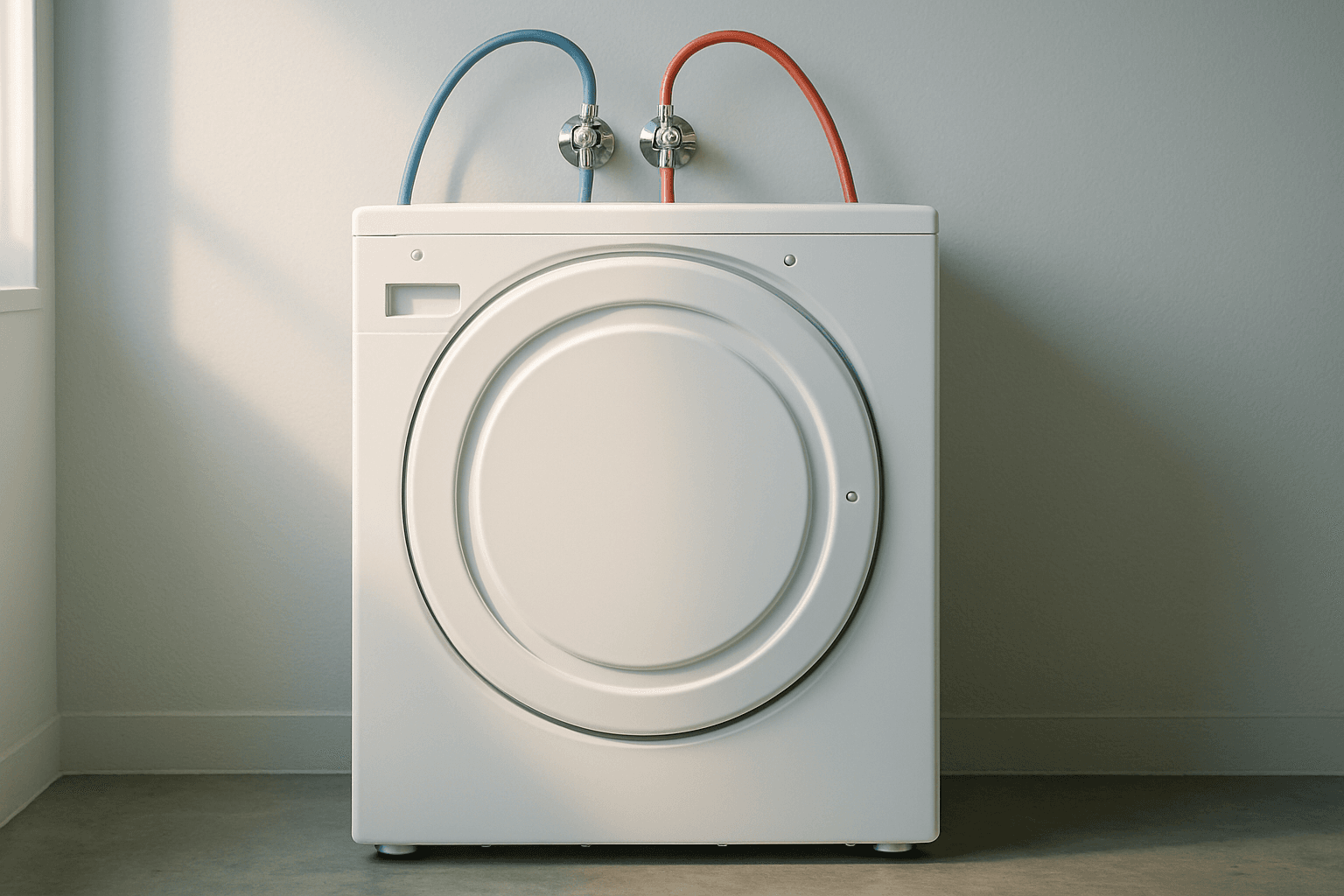
**Inspect both hose connections.** Turn off the water supply valves behind your machine (they're usually chrome knobs on the wall). Unscrew both the hot and cold inlet hoses where they connect to the back of the machine. Look inside each hose connection—you should see a small mesh screen. If it's clogged with white or tan sediment, soak the screens in white vinegar for 30 minutes, rinse, and reattach. Hand-tighten the hoses firmly; don't over-torque them.
**Listen during a test cycle.** Turn the water valves back on and run a hot-water wash cycle with no clothes inside. Listen for a rapid clicking sound from behind the machine—that's the valve solenoid (the electromagnetic switch) firing repeatedly, which means it's struggling. A healthy inlet valve hums briefly when water starts flowing, then goes silent.
**Check for slow filling.** Watch how quickly the tub fills. If it takes more than three minutes to fill on a normal wash cycle, the valve screens are likely blocked or the valve itself is weakening. This is your warning sign.
When to replace, not just clean
If the screens are clean but your machine still fills slowly, or if you spot any water pooling under the machine during a cycle, the valve itself needs replacement. This isn't a DIY repair—the valve is threaded into the machine body and requires the right tools and experience to avoid water damage.
The simple insurance policy
Inlet hose replacement is cheap insurance. If your hoses are more than five years old—or you can't remember when they were last replaced—swap them out now for braided stainless steel hoses. They resist bursting and last longer than standard rubber. It's a 15-minute job that costs less than a single plumber callout.
With guests arriving in five days, a quick 20-minute inspection of your inlet valve and hoses takes pressure off your machine and keeps your laundry room dry. That peace of mind is worth the effort.
Need a hand from a real technician?
Our licensed pros repair washers and dryers across Metro Vancouver — same-day and next-day, with 90-day parts warranty + 7-day satisfaction guarantee.
Keep reading
Before Thanksgiving guests arrive: why your washer's filter needs cleaning now
Burnaby's autumn rain brings sediment and minerals into your home—and your washing machine. A clogged filter is silently reducing wash quality just when you need it most.
Thanksgiving hosting? Your washer's drain hose needs a pre-holiday inspection
With houseguests arriving in three weeks, a blocked or weakened drain hose can turn laundry day into a flooded basement. Here's what Vancouver homeowners should check now.