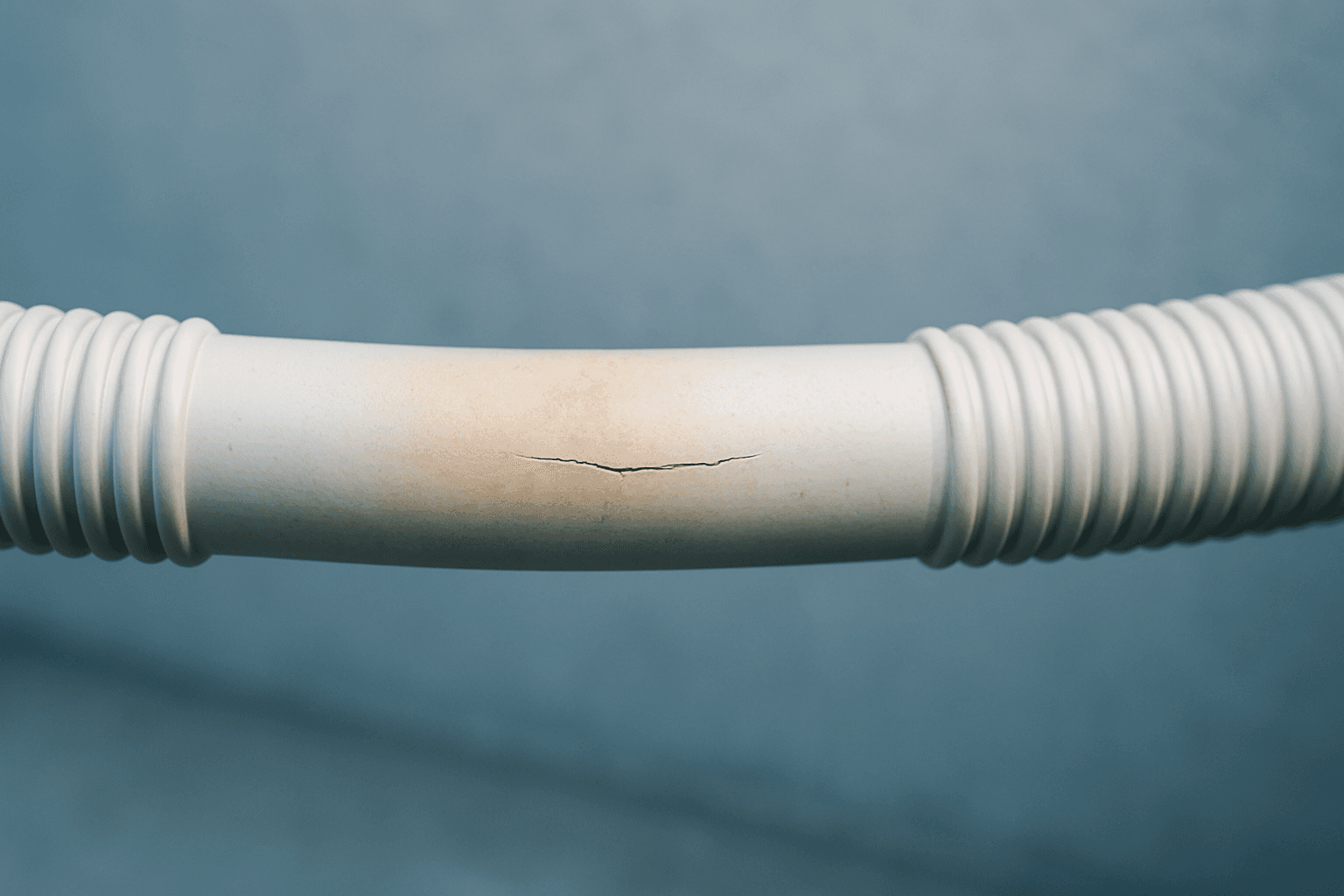
Why your washing machine's drain hose fails in summer heat
Summer temperatures and UV exposure weaken rubber drain hoses faster than you'd think. Here's what Surrey homeowners need to check before it's too late.
Key takeaways
- Summer heat accelerates rubber hose degradation and increases burst risk.
- Check for discolouration, brittleness, or visible cracks every few months.
- UV exposure behind or near windows weakens hoses faster than indoor placement.
- A burst drain hose can cause hundreds in water damage within minutes.
- Replace hoses every 5–7 years, or sooner if you notice deterioration.
The hidden danger in your laundry room
Most Surrey homeowners don't think about their washing machine's drain hose until water starts pooling on the floor. By then, it's too late. That rubber hose running from the back of your machine to the standpipe or utility sink is under constant pressure, and summer heat—combined with the intense UV light we get here in Metro Vancouver—turns it into a ticking time bomb.
Rubber naturally hardens and becomes brittle when exposed to sustained warmth and sunlight. In June through September, when your laundry room temperature climbs and sunlight streams through basement windows, your drain hose ages faster than at any other time of year.
Why this matters right now
Father's Day weekend often brings family gatherings, which means extra laundry loads. The combination of frequent washing cycles and heat-weakened hoses creates the perfect storm for a failure. A burst drain hose doesn't leak slowly—it floods. Water can escape at high velocity, saturating your floor, drywall, and anything stored nearby in minutes.
The cost of replacing a hose? Around $50 to $150 if you catch it early and call for service. The cost of water damage remediation? Thousands.
What to inspect
Look at the entire length of your drain hose, especially the sections that aren't hidden behind the machine. Here's what to check for:
**Discolouration or fading.** If the hose has turned white, chalky, or bleached-looking, UV damage is already underway.
**Brittleness or stiffness.** Gently squeeze the hose. A healthy hose flexes easily. A degraded one feels hard and inflexible, like an old garden hose left in the sun.
**Visible cracks, splits, or bulges.** Even tiny cracks will expand under water pressure.
**Kinks or permanent bends.** These concentrate stress and are failure points.
Prevention and replacement
If your machine is in a basement or laundry room with south- or west-facing windows, move the hose out of direct sunlight if possible. Drape it behind the machine or use a cardboard box to shade it.
Most washing machine drain hoses last 5 to 7 years. If yours is older than that or showing any of the signs above, replace it now rather than gambling through the busy summer season. Braided stainless-steel hoses cost a bit more upfront but resist UV damage and last significantly longer than rubber.
A simple summer check
Before you host guests or tackle a heavy laundry rotation this Father's Day weekend, spend five minutes inspecting your drain hose. It's the easiest, cheapest insurance against a flooded laundry room. Summer heat won't wait, and neither will water damage.
Need a hand from a real technician?
Our licensed pros repair washers and dryers across Metro Vancouver — same-day and next-day, with 90-day parts warranty + 7-day satisfaction guarantee.
Keep reading
Autumn mud and grass stains: why your Langley washer needs a pre-wash rinse now
As fall rain turns yards muddy, pre-wash rinsing prevents stains from setting permanently in your machine's drum. Here's what Langley families should do.
Washing machine odour after Labour Day? Here's why Delta humidity triggers it now
As autumn rain returns to Metro Vancouver, trapped moisture in your washer creates the perfect breeding ground for mould and bacteria. Here's how to stop the smell before it sets in.