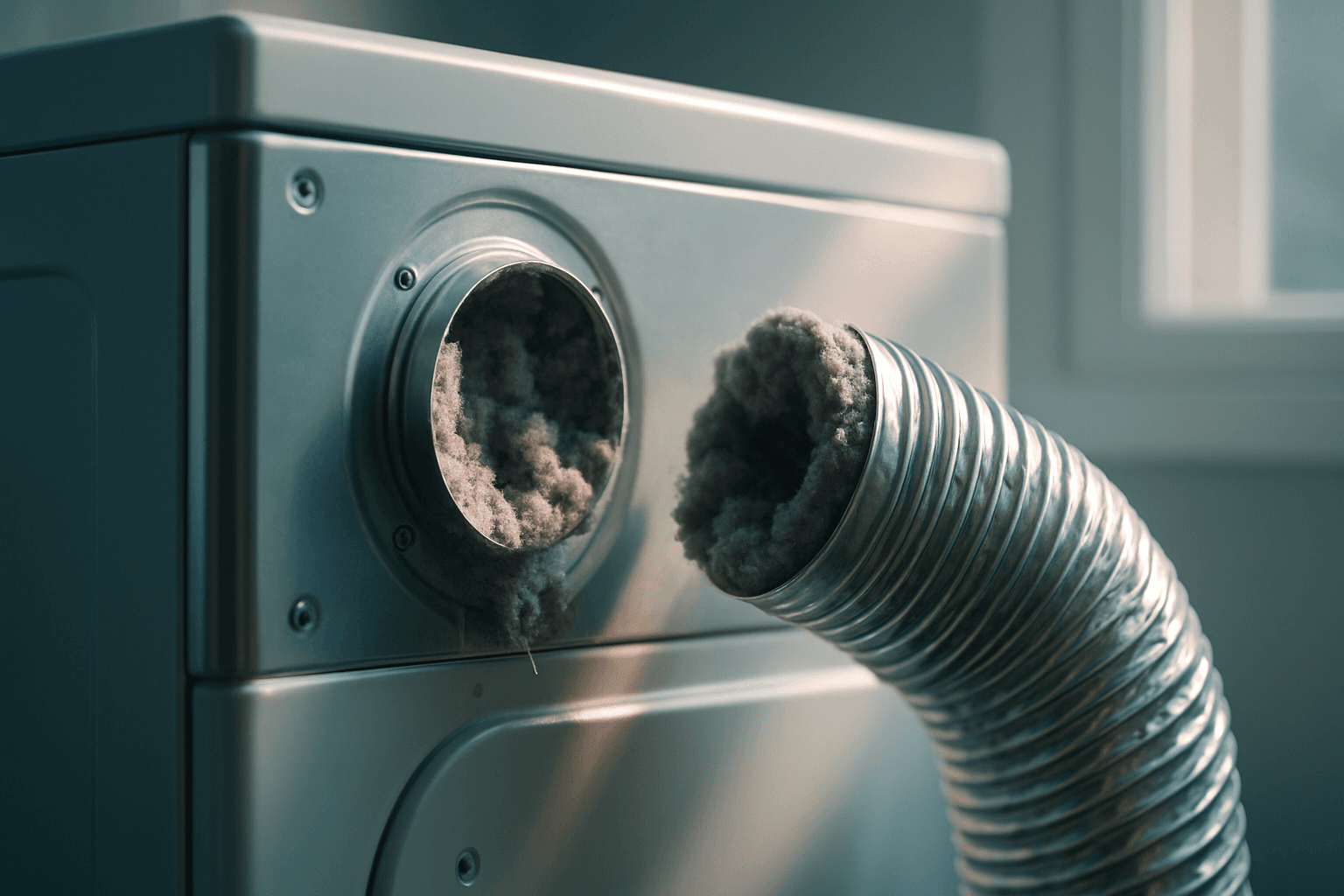
Why your dryer needs a deep clean before Father's Day gatherings
Summer entertaining means more laundry—and a clogged dryer vent. Here's how to prep yours safely before the long weekend.
Key takeaways
- Lint accumulation doubles during heavy-use periods like family gatherings.
- Burnaby's summer humidity slows moisture evaporation—your dryer works harder to compensate.
- A blocked vent hose can overheat and ignite lint; inspect it monthly during peak season.
- Clean the vent transition hose and exhaust duct before hosting weekend guests.
- If your dryer takes 60+ minutes to dry a normal load, the vent likely needs attention.
Father's Day weekend is prime entertaining season across Metro Vancouver, and that means extra bedding, towels, and guest laundry. Your dryer is about to earn its keep—but if you haven't given it a second look since spring, it's working with a handicap.
Unlike winter, when Burnaby's damp air slows drying times, summer heat actually masks a common problem: lint buildup in your vent system. Your dryer may seem to be performing fine because ambient warmth helps moisture escape. But inside, lint is accumulating in places you can't see, and that's where the risk lives.
Why summer is when dryer fires happen
Lint is highly flammable. The Canada Safety Council reports that clothes dryer fires peak in summer and early autumn—exactly when households run the most loads. Burnaby Fire Department responds to preventable dryer incidents every year, many of them in June and July.
The culprit is almost always a clogged vent hose. When lint blocks the exhaust path, heat has nowhere to go. Temperatures inside the dryer can exceed safe limits, and a spark from the heating element is all it takes. You won't smell smoke until it's already a problem.
The three-part check every homeowner can do
Start by unplugging your dryer and moving it slightly away from the wall. Locate where the vent hose connects to the back of the unit—you'll see a flexible metal or plastic tube, usually 4 inches in diameter.
Disconnect it gently. Look inside both the hose and the opening on the dryer itself. You'll likely find a felt plug of lint. Remove it by hand or with a straightened wire coat hanger. This accumulation happens even in well-maintained machines; it's not a sign of neglect, just the nature of the appliance.
Next, follow the hose to where it exits your home—usually through a side wall or roof vent in Burnaby townhouses and bungalows. Check that the exterior flapper opens freely and isn't blocked by lint, spider webs, or bird nesting material. Summer pests are active, and they love warm, dark spaces.
Finally, reconnect everything firmly. A loose hose connection lets lint escape into your wall cavity, where it becomes a hidden fire hazard.
What to watch for if you're uncertain
If your dryer now takes longer than 45–50 minutes to dry a regular load, or if the drum feels hot to the touch after a cycle, the vent system needs professional inspection. Burnaby's humidity means longer drying times are normal, but a dramatic change signals a blockage.
Also listen: a dryer that's struggling to vent will sound louder and may emit a faint burning smell. Never ignore either sign.
Before guests arrive
A 10-minute vent cleaning takes the guesswork out of your laundry weekend. You'll dry faster, use less energy, and eliminate a genuine fire risk. It's the kind of practical maintenance that feels invisible when it works—until the moment you realise how much peace of mind it buys.
Need a hand from a real technician?
Our licensed pros repair washers and dryers across Metro Vancouver — same-day and next-day, with 90-day parts warranty + 7-day satisfaction guarantee.
Keep reading
Autumn allergens in your washer: why New Westminster families need a rinse-cycle check now
As fall arrives in Metro Vancouver, pollen and mould spores cling to clothes—and can build up inside your machine. A simple maintenance step prevents odours and keeps allergies at bay.
Autumn rain and your washing machine: why West Vancouver homes need a hose inspection now
As September rains arrive in Metro Vancouver, the water pressure and mineral content in your supply lines change—and your washer's inlet hoses may not handle it. Here's what to check.