Why your washing machine's water inlet hoses need replacing every five years—especially in North Vancouver
Rubber inlet hoses degrade silently. A burst can flood your laundry room in minutes. Here's when to replace them, and why spring is the ideal time.
Key takeaways
- Replace inlet hoses every five years, regardless of visible wear.
- Look for cracks, bulges, discolouration, or mineral deposits on the outside.
- Burst hoses can release 10+ gallons per minute into your laundry room.
- Spring replacement means you avoid summer flooding season and guest emergencies.
- Braided steel hoses last longer than rubber-only hoses in Metro Vancouver homes.
The silent risk in your laundry room
Your washing machine's inlet hoses are among the hardest-working parts of the appliance—and among the most overlooked. Every time you run a load, pressurised water forces its way through these tubes. Over time, the rubber degrades from the inside out, often without any visible sign. A rupture can happen without warning, releasing gallons of water into your laundry room in minutes.
In North Vancouver, where water pressure fluctuates seasonally and mineral content varies by neighbourhood, this degradation happens faster than you might expect. Spring is the ideal moment to replace them before the heavier laundry loads of summer arrive.
How old are your hoses, really?
Most washing machine inlet hoses are rated for five to seven years of use. If you've lived in your North Vancouver home for more than five years and have never replaced them, they're overdue—even if they look fine. The damage happens internally, where you can't see it.
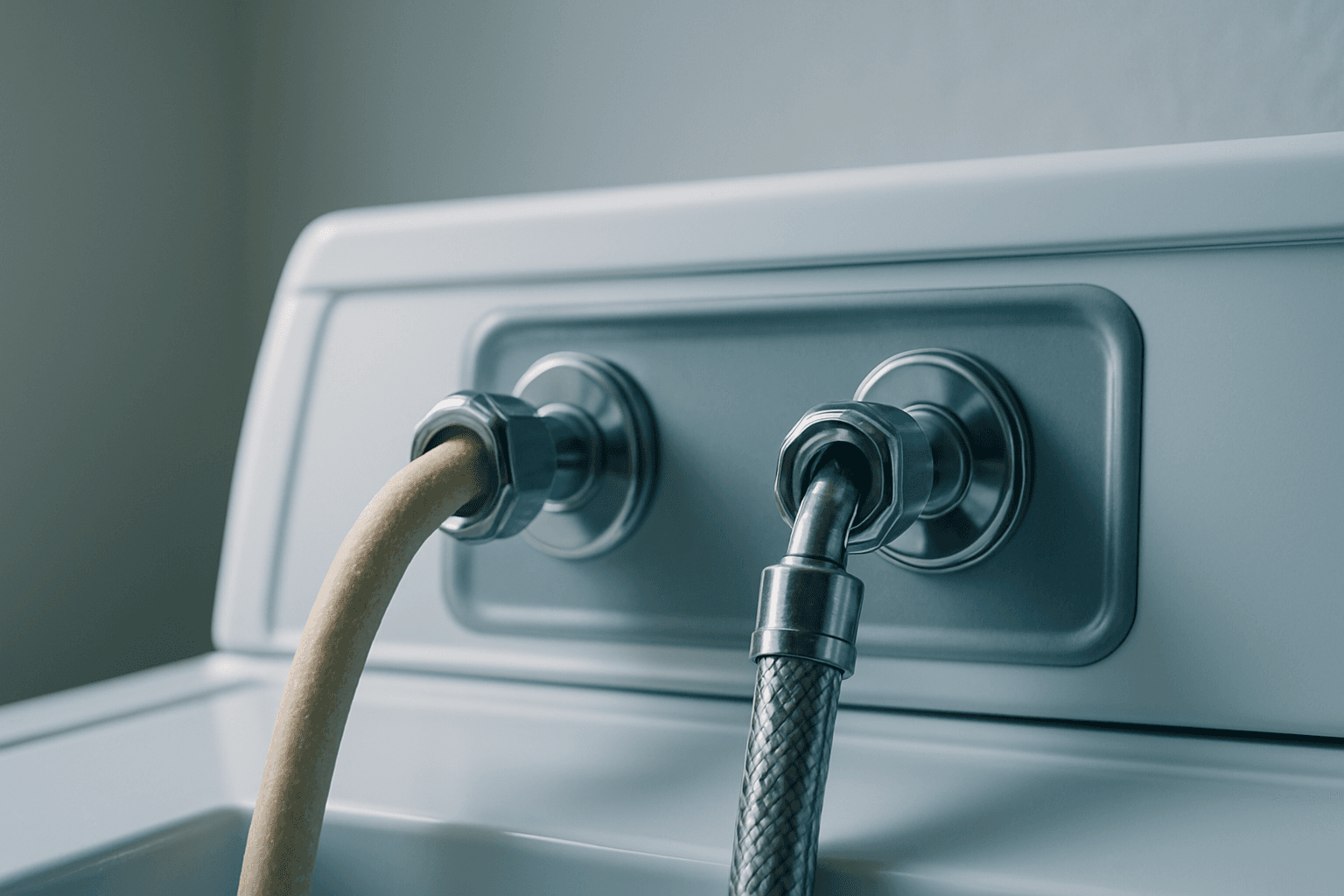
Check the hoses now. You'll find them behind your washing machine, usually one hot and one cold inlet, screwed onto the machine's back panel and connected to your home's water supply. If you can't remember when they were last replaced, assume they need attention.
What to look for
Before you call a technician, do a quick visual inspection. Look for cracks, bulges, or soft spots in the rubber. Check where the hose meets the fitting—mineral deposits or discolouration indicate water stress. If the hose feels brittle or the rubber has become stiff, replacement is urgent.
North Vancouver's water quality means mineral buildup is common, especially on the outside of older hoses. This is a sign that internal corrosion is likely underway.
Why spring matters
May and June are traditionally when household water use spikes. Guests arrive for long weekends, kids are home from school, and outdoor projects mean more laundry. A burst hose during this season is catastrophic—it floods your laundry room, damages flooring, and can seep into adjacent rooms or basements.
Replacing hoses now, before the rush, gives you peace of mind. It also means you're not scrambling for an emergency repair call during a holiday weekend when availability is tight.
Upgrade to braided steel
When you replace them, consider braided steel inlet hoses instead of standard rubber. They cost more upfront but last significantly longer and are far less prone to rupture. In Metro Vancouver's climate—where temperature swings and water pressure variations are common—the upgrade pays for itself in reduced risk.
If your washing machine is more than ten years old, this is also a good time to have the entire appliance inspected. Older machines often have older hoses, and a burst can damage other components.
The DIY question
Replacing inlet hoses is straightforward if you're comfortable with basic plumbing: turn off the water supply, unscrew the old hoses from both the machine and the wall, and screw on the new ones hand-tight. However, if you're uncertain about water shutoff location or connection tightness, a technician can do it in under an hour.
Don't wait until you hear water pooling behind your appliance. Replace your inlet hoses this spring, and you'll start summer with one less thing to worry about.
Need a hand from a real technician?
Our licensed pros repair washers and dryers across Metro Vancouver — same-day and next-day, with 90-day parts warranty + 7-day satisfaction guarantee.
Keep reading
Autumn humidity is clogging your washer's drain—here's why and how to fix it
As North Vancouver's fall rains arrive, moisture buildup in your washing machine's drain system can trap lint and debris. A quick seasonal flush prevents costly blockages.
Why your dryer takes twice as long in Vancouver's fall—and how to fix it
Autumn humidity in Metro Vancouver slows dryer cycles dramatically. Here's what's actually happening and the maintenance steps that make a real difference.