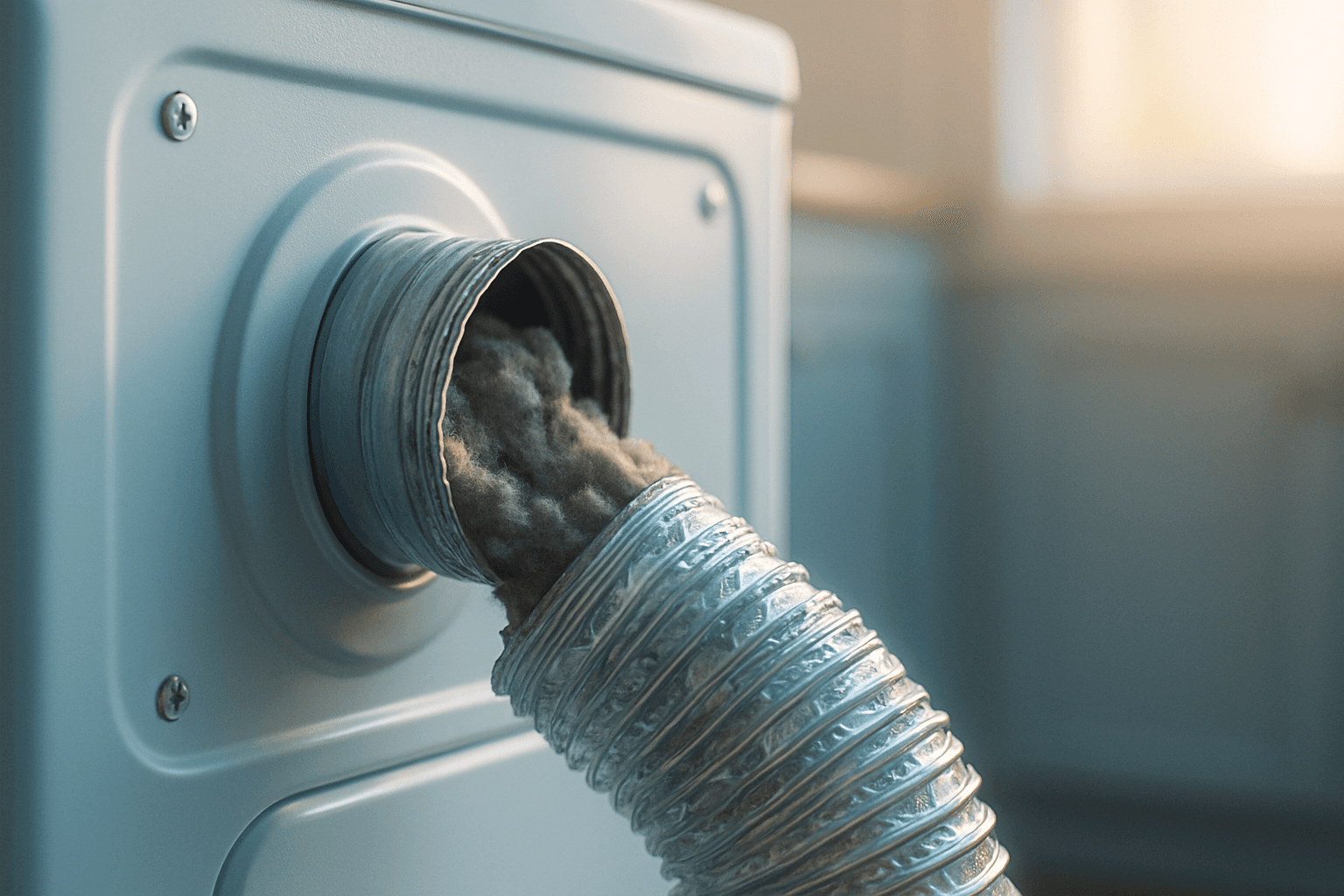
Before BC Day: why your dryer needs a vent inspection before summer heat peaks
Summer humidity and peak dryer use can mask a dangerous vent blockage. A quick July inspection could prevent a fire.
Key takeaways
- Lint buildup in dryer vents accelerates in summer when humidity traps moisture and heat.
- A blocked vent can reach dangerous temperatures—even without visible smoke or smell.
- Check your vent hose monthly during summer; replace it every 2–3 years minimum.
- Flexible foil hose is safer than plastic; rigid metal is best for long runs.
- Disconnecting and vacuuming the vent takes 15 minutes and cuts fire risk sharply.
Why summer is when dryer vents fail
July and August bring two conditions that make dryer vent failures more likely: sustained heat and high humidity. When Metro Vancouver's summer humidity rises, moisture lingers in warm lint, compacting it inside your vent hose and outdoor ductwork. That compressed lint chokes airflow. Your dryer then runs hotter and longer to dry the same load—and heat builds up inside the cabinet where lint accumulates. That's a fire waiting to happen.
With BC Day long-weekend barbecues and house guests on the horizon, many households run their dryers more frequently. More cycles mean more lint production, and more lint means a faster-narrowing vent. If your vent was already 60% blocked in June, it could be 90% blocked by mid-July.
What a blocked vent actually looks like (and what it hides)
You might not see smoke or smell burning. A vent blockage is often silent and invisible from inside the house. Instead, you'll notice:
- Clothes taking 45+ minutes to dry on a normal cycle
- The dryer exterior feeling very hot to touch
- Lint accumulating around the door seal or in the drum
- A slight burning smell when the dryer first starts
White Rock residents living near the waterfront or in older homes with longer vent runs are especially vulnerable—salt air and distance both slow airflow and trap moisture.
The 15-minute vent check you should do this week
You don't need a technician for a basic inspection.
First, unplug the dryer. Then pull it away from the wall and disconnect the vent hose from the back of the unit (it's usually held by a hose clamp). Look inside the hose with a flashlight. If you see a lint layer thicker than a quarter-inch, or if the hose is kinked, crushed, or discoloured, it needs attention now.
Next, check the outdoor vent hood (the flap where the hose vents outside). Push it open by hand—it should move freely. If it's stiff, stuck, or full of lint, clean it with a brush or old toothbrush.
Finally, use a shop vac to pull lint from inside the hose and the dryer's lint trap housing. Reconnect everything, make sure the hose has no kinks, and run a test cycle.
When to replace, not just clean
If your vent hose is plastic or foil-and-plastic, replace it now. Plastic degrades in heat and traps lint easily. Flexible foil hose is better; rigid metal ducting is best, especially for runs longer than 10 feet.
If you find heavy lint buildup despite regular filter cleaning, or if the hose is cracked or has a history of blockages, don't wait. A new hose costs £15–30 and takes 10 minutes to install. A dryer fire costs far more.
Make it a habit
During summer, inspect your vent monthly. Check the filter after every load (this is non-negotiable). And before entertaining over the long weekend, run the dryer vent check above. It takes less time than a load of laundry and gives you real peace of mind.
Need a hand from a real technician?
Our licensed pros repair washers and dryers across Metro Vancouver — same-day and next-day, with 90-day parts warranty + 7-day satisfaction guarantee.
Keep reading
Halloween candy wrappers and dryer fires: why your lint trap needs daily checks now
October's trick-or-treat season means sticky fingers, wrapper debris, and a hidden fire hazard in your dryer. Here's what Burnaby homeowners need to know.
Costume cleanup: why your washer's cold-water cycle needs a pre-rinse now
Halloween costumes bring mud, fake blood, and stubborn stains. Here's why a quick pre-rinse before the main wash saves your machine—and your clothes.