Why your dryer cycles are running longer this July—and what to do
Summer humidity in Metro Vancouver makes your dryer work harder. Here's how to spot the problem and fix it before your energy bill spikes.
Key takeaways
- Empty the lint trap before every load—humidity makes lint stick more readily.
- Inspect your exhaust vent outside for lint buildup or animal nests blocking airflow.
- Feel the air coming from your dryer's exterior vent; weak airflow means ductwork needs cleaning.
- Summer moisture can accelerate lint accumulation; clean ducts every 12 months instead of yearly.
- Longer cycles waste energy and generate unnecessary heat—a sign your vent needs attention.
July humidity makes dryer cycles longer
If your dryer is running an extra 20 or 30 minutes this July to dry a load that normally finishes faster, humidity is likely the culprit. Metro Vancouver's summer air carries moisture that interferes with your dryer's ability to expel wet air efficiently. When outside humidity is high, the moisture-saturated air your dryer is trying to push out meets resistance—and your machine compensates by running longer cycles.
This isn't just annoying; it's expensive. Longer cycles mean higher energy consumption, and they also generate unnecessary heat inside your dryer drum and ductwork. Over time, that extra strain wears components faster.
Check your lint trap first
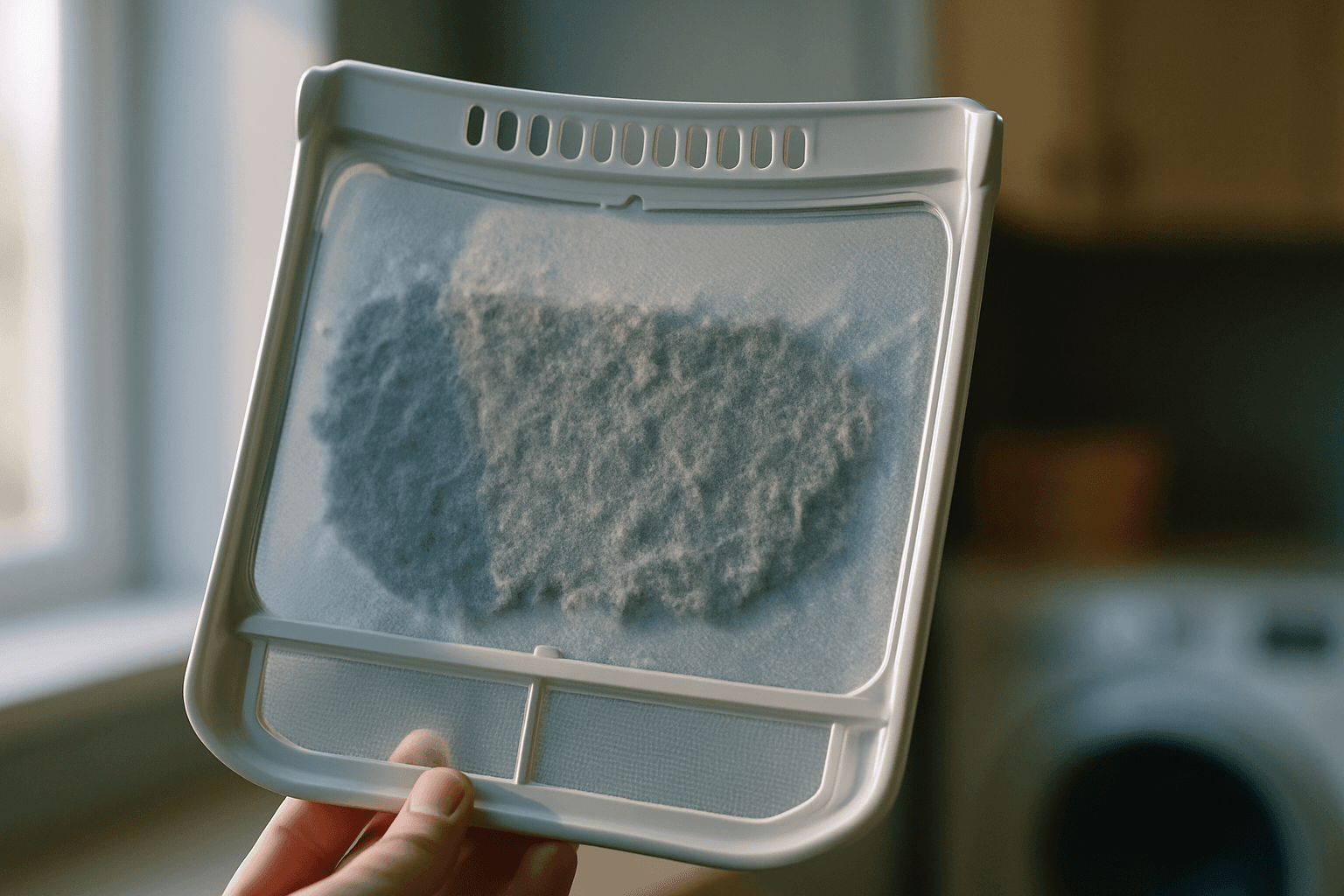
Your lint trap is the easiest place to start. In July, when the air is thick with moisture, lint clings to the filter more stubbornly than it does in drier months. A lint trap that looks "clean enough" in winter may be reducing airflow significantly in summer.
Empty the trap before every single load, not just when you remember. Run your hand across the mesh—if you feel any fuzz at all, wipe it down with a damp cloth and let it dry completely before reinstalling. Once a month, soak the trap in warm water for 15 minutes to dissolve any detergent residue that traps moisture and lint.
Inspect your exterior vent
Walk outside and locate your dryer's exhaust vent on the wall of your New Westminster home. Look for lint accumulation around the opening. In summer, when insects and spiders are active, check for webs or nesting material blocking the vent flap.
Try this: turn on your dryer and hold your hand near the exterior vent opening. You should feel a strong, steady stream of warm air. If the airflow is weak or intermittent, your ductwork is partially blocked.
Clean your ductwork
The flexible duct running from your dryer to the exterior wall accumulates lint year-round, but summer humidity can make the problem worse. Lint absorbs moisture and compacts more densely, creating a nearly solid blockage over time.
Disconnect the duct from the dryer (most models have a simple metal clamp). Use a dryer vent brush—a long, flexible brush designed for this job—to scrub the inside of the duct. Push the brush all the way to the exterior vent and back several times. Vacuum up any lint that falls out.
If you've never cleaned your ductwork before, or it's been more than 12 months, this single step can cut your dryer cycle times by 15–20 minutes.
When to call for help
If your cycles are still running long after you've cleaned the lint trap and ductwork, the problem may be deeper: a kinked or crushed duct behind the wall, a faulty moisture sensor, or a failing heating element. These aren't DIY fixes.
A professional inspection will identify whether your dryer's internal components are working properly or whether the ductwork itself needs replacing. In humid Metro Vancouver summers, this can be the difference between a dryer that works efficiently and one that costs you money every time you do laundry.
Need a hand from a real technician?
Our licensed pros repair washers and dryers across Metro Vancouver — same-day and next-day, with 90-day parts warranty + 7-day satisfaction guarantee.
Keep reading
Your washer's water temperature dial: why Thanksgiving prep starts here
As Vancouver's damp autumn arrives, your washer's temperature settings matter more than you think—especially before hosting. Here's what to check.
Your washer's cold-water cycle isn't enough for autumn stains—here's why
October's mud, wine, and cranberry spills need warmer water than you think. Here's how to tackle stubborn fall stains before Thanksgiving guests arrive.