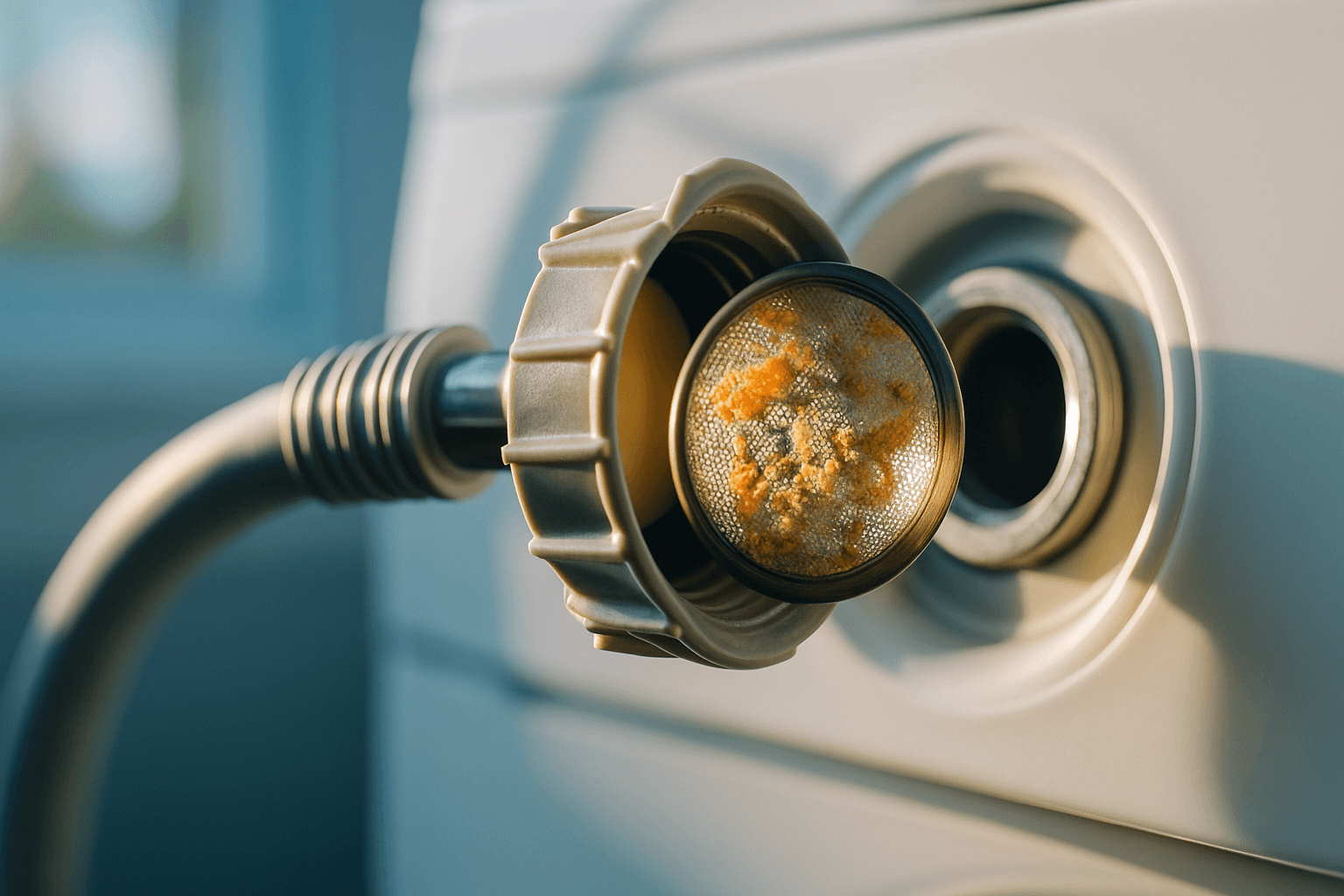
Why your washing machine needs a mid-summer filter check (and what to look for)
Summer laundry runs deeper than usual—and your washer's inlet filters are working overtime. Here's why July is the perfect time to inspect them.
Key takeaways
- Warm summer water carries more sediment and mineral buildup than winter water.
- Clogged inlet filters reduce water flow and force your washer to cycle longer.
- Inspection takes 10 minutes and requires only a flathead screwdriver.
- West Vancouver's older pipe infrastructure benefits from quarterly filter checks.
- Clean filters extend washer life and prevent mid-cycle failures.
What are inlet filters, and why do they matter in summer?
Your washing machine has two small mesh screens—one on the hot water inlet and one on the cold water inlet—where water enters the machine. These filters catch sediment, mineral particles, and debris before they reach the drum and internal components. In summer, when water temperatures rise and flow through our Lower Mainland pipes increases, these filters work harder and accumulate buildup faster.
Why summer is peak season for filter clogs
During July and August, warmer water moves through Metro Vancouver's distribution pipes more quickly, stirring up sediment that's been settled during cooler months. If your home has older plumbing—common in West Vancouver neighbourhoods built before the 1990s—this effect is even more pronounced. The result: your inlet filters can become partially blocked in just a few weeks of regular use.
When filters clog, your washer takes longer to fill, cycles don't complete properly, and the machine works harder than it should. You might notice clothes staying wetter, longer wash times, or water trickling in slowly.
How to inspect your inlet filters (it's easier than you think)
Start by turning off both the hot and cold water taps behind your washing machine. Locate the inlet hoses where they connect to the machine—you'll see a small mesh screen inside each connection. Using a flathead screwdriver, gently remove the filter screen (they typically unscrew or pull straight out). Hold it up to the light.
You're looking for sediment, sand, mineral deposits, or visible discolouration. If the screen looks grey, brown, or cloudy instead of shiny silver, it's time to clean. Rinse the screen under running water, using an old toothbrush to gently scrub away buildup. If debris is heavily embedded, soak the screen in white vinegar for 15 minutes, then scrub again.
Reinserting is simple: screw or push the screen back in, turn the water taps back on, and run a short cycle to confirm normal water flow.
When to call for professional help
If your inlet screens look clean but water still flows slowly into the machine, the clog may be inside the inlet valve itself—a job best left to a technician. Similarly, if you notice rust or corrosion on the screens, or if water is leaking from the inlet connections, professional inspection is worth the investment.
Make it a summer habit
Consider a mid-summer filter check part of your seasonal maintenance routine, just like checking your air conditioner. For West Vancouver residents relying on older municipal water lines, a quarterly check—summer, fall, winter, and spring—can prevent surprise breakdowns and keep your washer running efficiently through peak laundry season.
Need a hand from a real technician?
Our licensed pros repair washers and dryers across Metro Vancouver — same-day and next-day, with 90-day parts warranty + 7-day satisfaction guarantee.
Keep reading
Your washer's water temperature dial: why Thanksgiving prep starts here
As Vancouver's damp autumn arrives, your washer's temperature settings matter more than you think—especially before hosting. Here's what to check.
Your washer's cold-water cycle isn't enough for autumn stains—here's why
October's mud, wine, and cranberry spills need warmer water than you think. Here's how to tackle stubborn fall stains before Thanksgiving guests arrive.