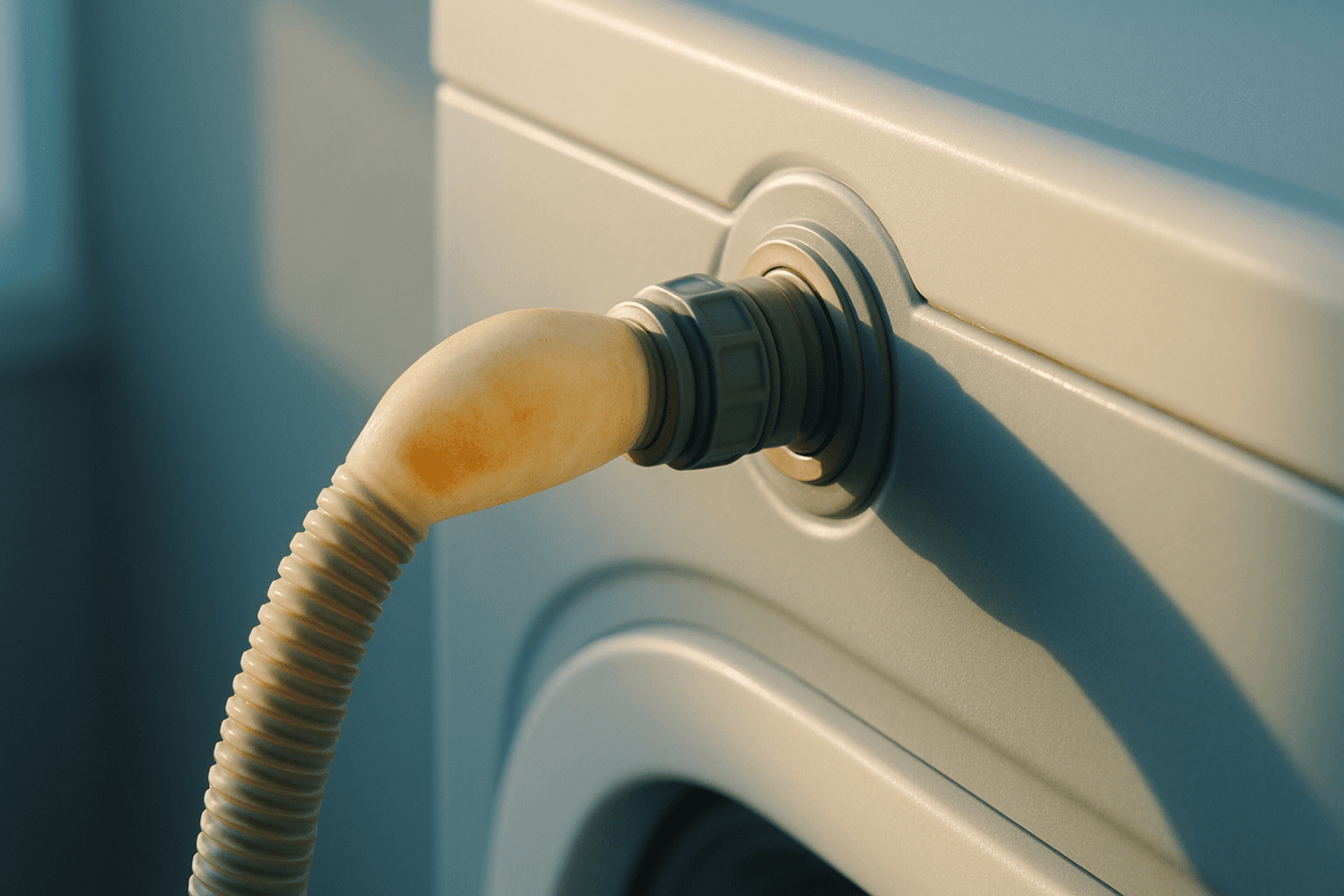
Why your washing machine's drain hose fails in summer heat
Summer temperatures in Coquitlam can warp plastic drain hoses, causing leaks and water damage. Here's what to check before the heat peaks.
Key takeaways
- Plastic drain hoses weaken and warp when exposed to sustained heat above 27°C.
- Check your hose monthly for bulges, cracks, kinks, or white mineral buildup.
- Reinforce sharp bends with a hose guide or reposition the washer to reduce stress.
- Replace standard hoses every 5–7 years; reinforced hoses last longer and resist heat better.
- A burst hose can cause $500+ in water damage—prevention costs far less.
The summer drain hose problem
Your washing machine's drain hose is under constant pressure—literally and figuratively. During summer, when Coquitlam temperatures regularly climb into the high 20s, the plastic that makes up most standard hoses begins to soften and lose its structural integrity. This isn't dramatic, but it's relentless. Over weeks, the hose weakens, and a small leak becomes inevitable.
Unlike winter, when a burst hose might go unnoticed for a few days, summer means you're running the washer more often—beach towels, gym clothes, garden gear. Each cycle stresses an already-compromised hose.
What to look for
Inspect your drain hose right now, before mid-summer. Look for these warning signs:
**Bulges or soft spots.** Run your hand along the entire length. A hose that feels puffy or has a visible bulge is failing. The plastic has lost its rigidity.
**Cracks or pinhole leaks.** Check the connection points at both the washer and the standpipe or drain. Hairline cracks often start here. If you see water pooling beneath the washer after a cycle, the hose is already leaking.
**Kinks or sharp bends.** Hoses that double back on themselves or are pinched behind the washer experience accelerated wear. The plastic creases and splits under pressure.
**Discolouration or brittleness.** If the hose looks dull, chalky, or snaps when you gently flex it, heat has already damaged the material.
Why replacement matters
A standard plastic drain hose costs $15–40 and takes 10 minutes to replace. A water leak from a burst hose can cost $500 to $2,000 in damage to flooring, subflooring, and drywall—especially if your laundry room is on an upper floor.
In summer, when you're using your washer most, the risk is highest.
Upgrade options
If your hose is original to the machine or more than five years old, replace it now with a **reinforced rubber or braided stainless-steel hose**. These cost $40–80 but last 10–15 years and resist heat far better than plastic.
Also check that your hose isn't kinked or pinched. If it is, reposition the washer slightly or install a **hose guide**—a simple plastic clip that keeps the hose from bending sharply. These cost under $10.
A simple summer check
Before the heat intensifies further, walk to your laundry room and spend two minutes inspecting. Feel the hose. Look underneath the washer for moisture. If anything feels off, replace the hose today. It's the cheapest insurance you can buy.
Metro Vancouver's summer heat is mild compared to other parts of Canada, but it's enough to age a plastic hose. Don't wait for a leak to remind you.
Need a hand from a real technician?
Our licensed pros repair washers and dryers across Metro Vancouver — same-day and next-day, with 90-day parts warranty + 7-day satisfaction guarantee.
Keep reading
Your washer's water temperature dial: why Thanksgiving prep starts here
As Vancouver's damp autumn arrives, your washer's temperature settings matter more than you think—especially before hosting. Here's what to check.
Your washer's cold-water cycle isn't enough for autumn stains—here's why
October's mud, wine, and cranberry spills need warmer water than you think. Here's how to tackle stubborn fall stains before Thanksgiving guests arrive.