Summer barbecue season: why your washing machine needs a cooldown cycle
Father's Day gatherings and summer entertaining mean extra laundry—and heat stress on your machine. Here's how to keep it running smoothly.
Key takeaways
- Let your washing machine rest 15–20 minutes between heavy loads to cool its motor.
- Inspect inlet hoses monthly for cracks or bulges—heat and pressure damage them faster in summer.
- Run a cleaning cycle (hot water, no clothes) monthly to flush detergent buildup and prevent overheating.
- Check that your laundry room has adequate airflow; poor ventilation traps heat around the machine.
- Avoid running the dryer immediately after the washer; stagger cycles to reduce electrical strain.
Summer entertaining in New Westminster means barbecues, family gatherings, and—inevitably—mountains of laundry. Towels, aprons, tablecloths, and guest linens pile up faster than you can wash them. While that's normal, the combination of heavy use and Metro Vancouver's June warmth can stress your washing machine in ways you might not expect.
Why summer heat matters
Your washing machine's motor generates heat during every cycle. In winter, that heat dissipates into a cooler laundry room. In summer, especially if your utility room lacks good airflow, heat builds up inside the machine and around it. Run back-to-back loads on a warm day, and you're asking the motor to work continuously without a proper cool-down period. This accelerates wear on internal components and can trigger thermal shutdowns—where the machine stops mid-cycle to protect itself.
The inlet hose problem nobody talks about
Summer heat doesn't just stress the motor. It also weakens the rubber inlet hoses that feed water into your machine. Hot water lines and ambient heat cause the rubber to become brittle and less flexible. If water pressure spikes (common in older Lower Mainland homes during peak summer demand), a weakened hose can crack or even burst. A burst inlet hose behind your washer can flood your laundry room in minutes.
Check both inlet hoses—hot and cold—for visible cracks, bulges, or soft spots. If you spot damage, replace them now, before a gathering turns into a water damage claim.
A simple monthly ritual
Detergent, fabric softener, and mineral deposits from our local water build up inside the drum and pump during heavy-use months. This buildup traps heat and forces the motor to work harder. Once a month during summer, run a cleaning cycle: fill the drum with nothing but hot water, add a commercial washing machine cleaner (or white vinegar), and run a full cycle. This flushes the system and keeps cooling passages clear.
Airflow is your friend
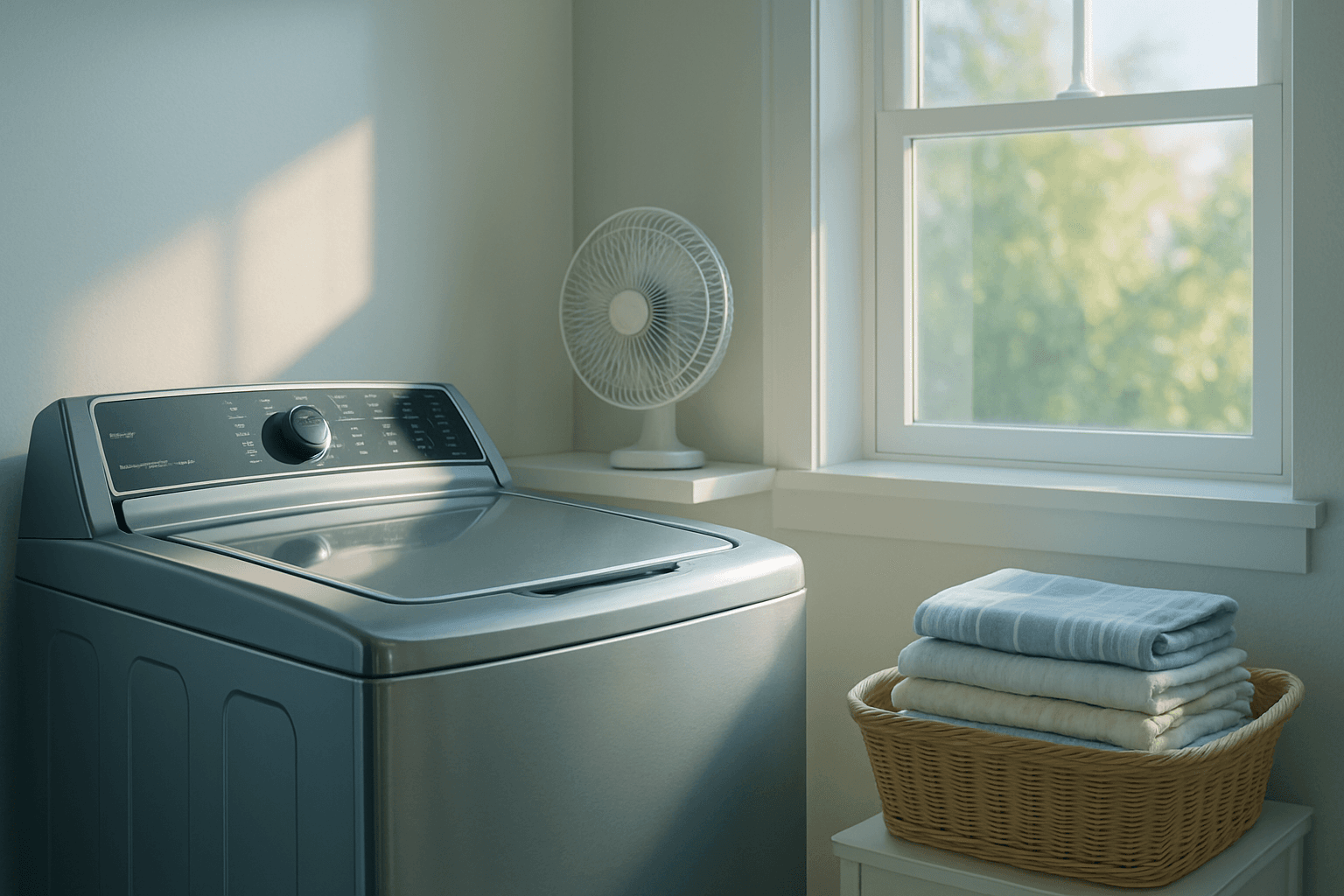
If your laundry room is cramped or has a closed door, air can't circulate around the machine. Even a small fan pointing at the back of the washer and dryer makes a difference. Good ventilation lets heat dissipate instead of accumulating. If you're planning summer renovations, consider cracking a window or installing a small exhaust vent in the laundry area.
Stagger your cycles
Running the washing machine and dryer back-to-back pulls a lot of current and generates combined heat. On hot days, wait 15–20 minutes between finishing the wash and starting the dry. This gives the motor time to cool and reduces electrical strain on your home's circuit.
When to call for help
If your machine is making unusual noises, shutting off mid-cycle, or taking longer than normal to complete a wash, don't ignore it. These are signs of heat stress or motor fatigue. A pre-season check in early June—before the entertaining season peaks—can catch small issues before they become expensive repairs.
Need a hand from a real technician?
Our licensed pros repair washers and dryers across Metro Vancouver — same-day and next-day, with 90-day parts warranty + 7-day satisfaction guarantee.
Keep reading
Thanksgiving hosting? Your washer's drain hose needs a pre-holiday inspection
With houseguests arriving in three weeks, a blocked or weakened drain hose can turn laundry day into a flooded basement. Here's what Vancouver homeowners should check now.
Thanksgiving laundry prep: why your dryer's moisture sensor needs attention now
With family gatherings just around the corner, a sluggish dryer can derail your pre-holiday laundry plans. Here's what White Rock homeowners should check before the rush.