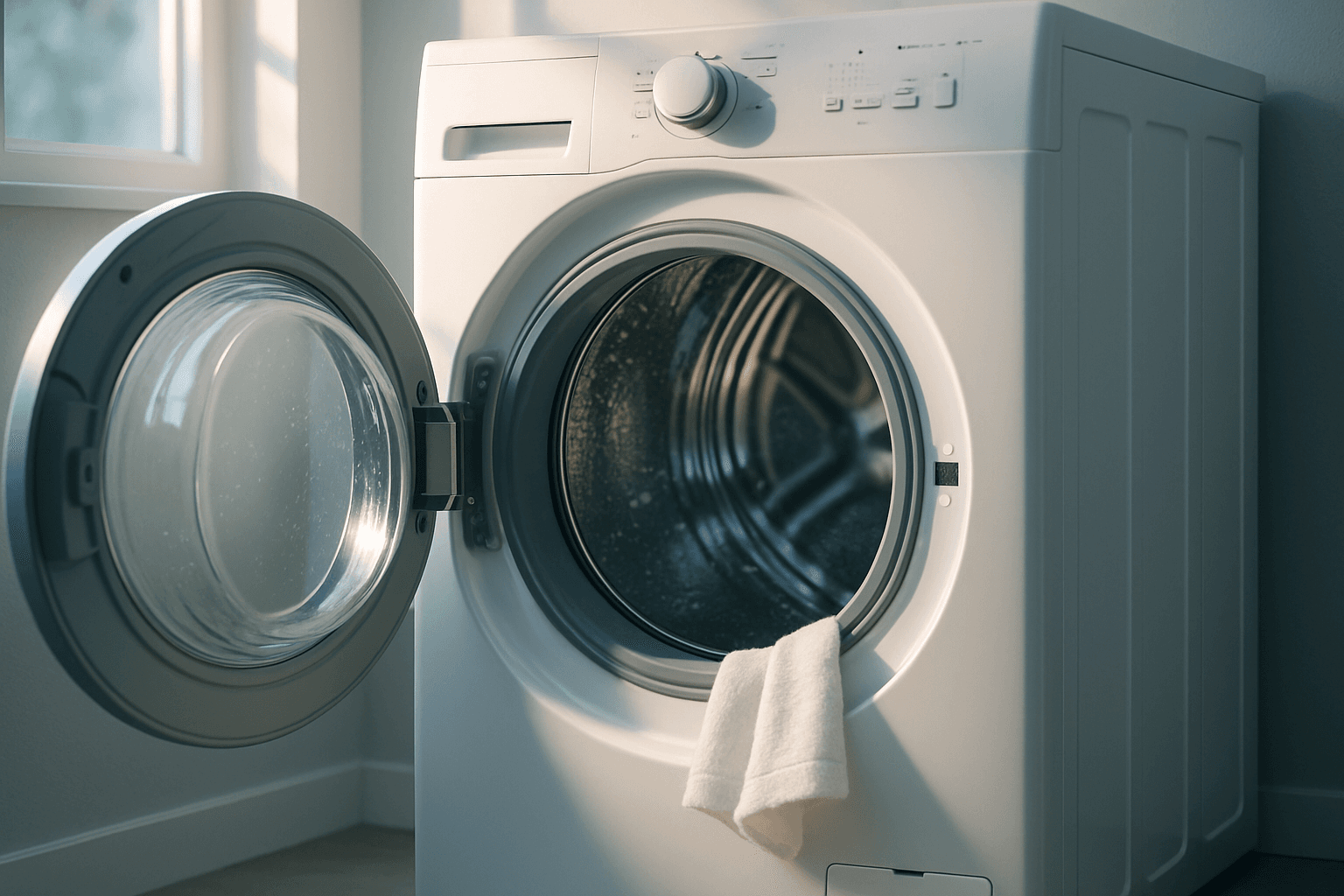
Summer sports and sweat: why your washing machine needs a refresh cycle now
Father's Day gift-giving often means new athletic gear—and that means more sweat-heavy loads. Here's how to keep your washer ready for summer's toughest laundry.
Key takeaways
- Sweat and salt accumulate in drum crevices and rubber seals, causing odours and mildew.
- Run a hot empty cycle with vinegar or a commercial cleaner monthly during summer.
- Inspect inlet hoses for mineral blockages—Metro Vancouver's hard water speeds buildup.
- Leave the door open between loads to prevent moisture and bacterial growth.
- Check the detergent dispenser for clogs that trap residue and harbour mould.
Father's Day weekend often marks the start of serious summer activity in North Vancouver—hiking trips, backyard projects, neighbourhood runs. If Dad received new athletic gear or the family's gearing up for a season of outdoor pursuits, your washing machine is about to work harder than it has all year. That's not a problem—unless you're not prepared for what sweat-heavy laundry does to the machine itself.
Why summer sweat is different from everyday washing
Sweat isn't just water. It contains salt, urea, oils, and bacteria that don't fully rinse away in a standard cycle. When you're running multiple loads of gym wear, sports jerseys, or post-hike clothes each week, these compounds accumulate inside your drum, rubber seal, and hose connections. Metro Vancouver's warm, humid summers create the perfect environment for mildew and odour-causing bacteria to thrive in those damp spaces between cycles.
You'll notice it first as a subtle smell when you open the door—that sour, musty scent that clings to clean laundry. If ignored, it worsens, and eventually no amount of fabric softener masks it.
The monthly maintenance cycle: your washer's summer essential
The simplest fix is a hot, empty maintenance wash once a month (or every two to three weeks if you're doing heavy athletic loads). Run your machine on the hottest water setting with no clothes inside. Add either one cup of white vinegar or a commercial washing machine cleaner—both dissolve mineral buildup and kill odour-causing bacteria.
This cycle reaches every corner of the drum, hoses, and spray jets. It's not glamorous, but it's the difference between a fresh-smelling machine and one that slowly taints every load you wash.
Check your rubber seal and inlet hoses
The rubber gasket around your drum door traps moisture and debris. Pull it back gently and wipe the interior with a damp cloth—you'll often find a black, grimy film. That's mildew. Remove it with a cloth and a mild vinegar solution.
While you're at it, inspect your inlet hoses (the ones bringing water from the wall into the machine). Metro Vancouver's harder water means mineral deposits build up faster than in softer-water regions. If the hose feels stiff or you notice reduced water flow, it's time to replace it. Inlet hoses typically last 5–7 years; if yours is older and you're seeing performance issues, don't wait.
Leave the door open
After each load, prop the door open for 30 minutes to an hour. This simple habit lets moisture evaporate instead of pooling, which dramatically slows bacterial growth. It's especially important in summer when humidity is high and airflow is limited in most laundry rooms.
When to call for help
If you're running maintenance cycles and the smell persists, or if you notice water isn't draining properly after a hot cycle, there may be a blockage deeper in the drain system or a failing seal. That's when a professional inspection catches problems before they become expensive repairs.
Summer sports season is here. A few minutes of preventative care now keeps your washing machine—and your laundry—fresh all season long.
Need a hand from a real technician?
Our licensed pros repair washers and dryers across Metro Vancouver — same-day and next-day, with 90-day parts warranty + 7-day satisfaction guarantee.
Keep reading
Your washing machine's inlet screens need cleaning—here's why Port Moody's fall water matters
As autumn rains arrive in Metro Vancouver, mineral deposits and sediment clog your washer's water inlet screens. A five-minute cleaning prevents poor fill cycles and costly repairs.
Autumn fabric buildup is clogging your washer—here's why Port Coquitlam homes need a cleaning cycle now
As Metro Vancouver enters fall, lint, detergent residue, and fabric fibres accumulate inside your washing machine. A simple monthly clean prevents odour, slow drains, and costly repairs.