Dad's laundry day: why summer heat stresses your washing machine's motor
Father's Day weekend often means heavier laundry loads—but Metro Vancouver's summer warmth can push your washer's motor beyond its comfort zone. Here's what to watch for.
Key takeaways
- Washing machine motors generate heat; summer ambient temperature reduces their cooling efficiency.
- A motor running too hot may cut out mid-cycle or fail permanently without warning.
- Blocked ventilation behind or below your washer traps heat and accelerates motor wear.
- Heavy loads and hot-water cycles compound motor stress during warm weather.
- Feel the rear panel after a cycle; it should be warm, not too hot to touch comfortably.
Why summer heat matters for your washer's motor
Your washing machine's motor works hard, especially during Father's Day weekends when laundry piles up. That motor generates its own heat as it tumbles and spins—and in June, when Metro Vancouver temperatures climb into the low 20s Celsius, your home's ambient temperature is already working against the motor's ability to cool itself down. The hotter the room, the harder the motor has to work to shed that excess heat.
Unlike your dryer, which has a dedicated vent to the outside, your washer relies on air circulation around its cabinet to keep internal components cool. Summer humidity and warm air in your laundry room can turn what's usually a reliable appliance into an overheating risk.
The signs your motor is struggling
If your washing machine suddenly stops mid-cycle and won't restart for 10–15 minutes, the motor's thermal overload switch has probably kicked in. This is a safety feature, but it's also a red flag. You might also notice the motor sounding slightly strained or the cycle taking longer than usual—the machine is running at reduced speed to generate less heat.
In worst cases, a motor pushed too hard in summer heat will fail entirely, and replacement isn't cheap. Prevention is far simpler.
How to keep your washer cool this season
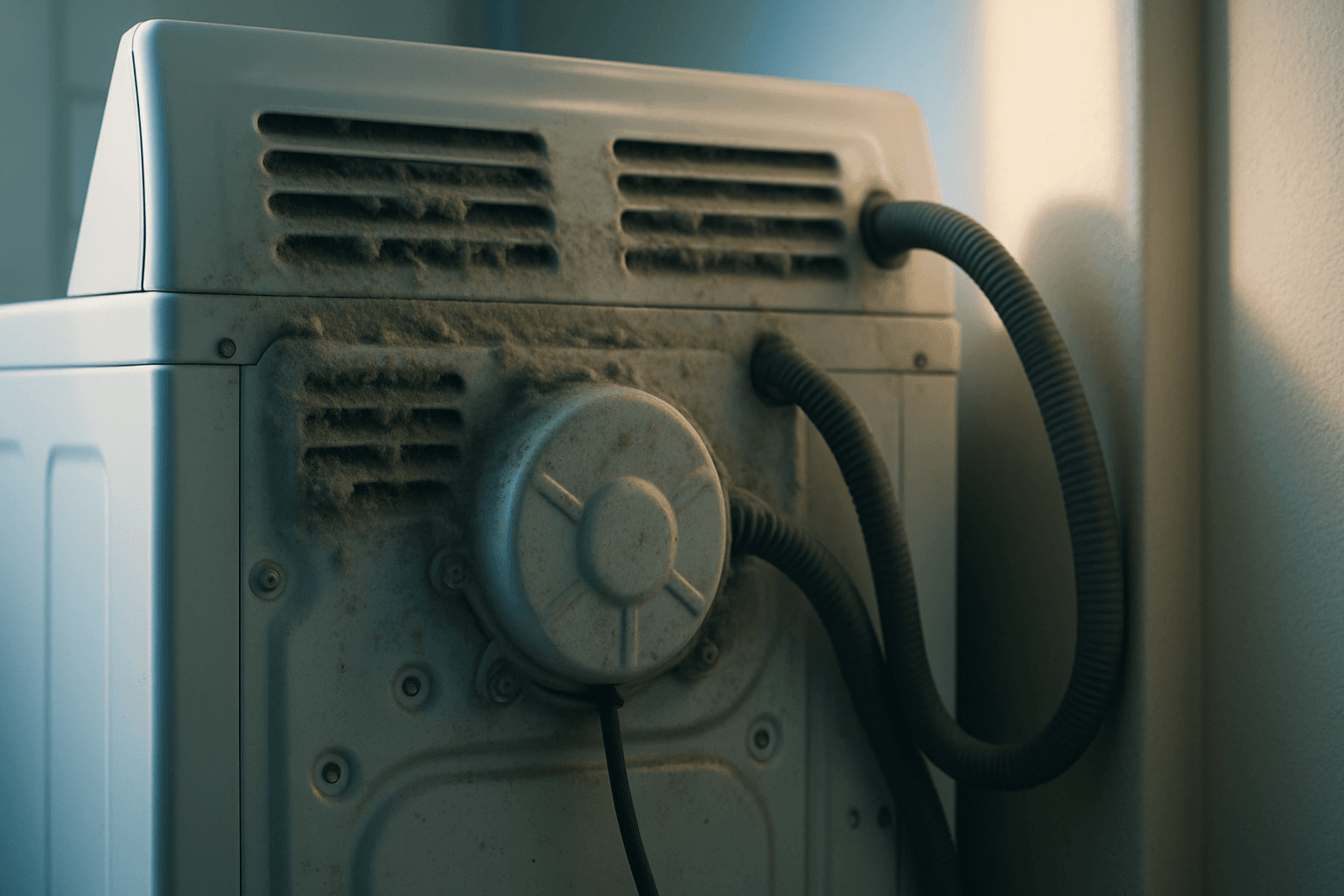
**Check ventilation around the unit.** Pull your washer away from the wall slightly (or at least check behind it). Dust and lint accumulate in the gap, blocking airflow. Vacuum the back panel and underneath. Make sure there's at least 10 centimetres of clearance on all sides if possible.
**Stagger your loads.** Instead of running three cycles back-to-back on Father's Day, spread them out over the afternoon and evening. Let the motor cool between heavy loads.
**Use cold water when you can.** Hot-water cycles demand more from the motor. Cold water cleans just as well for most loads and keeps the motor cooler.
**Feel the rear panel.** After a cycle, carefully touch the back of your washer (not the drum—the cabinet itself). It should feel warm but not hot. If you can't hold your hand there comfortably, the motor is running too hot.
**Avoid the hottest hours.** In late June, run your laundry early morning or after 7 p.m., when ambient temperature is lower.
When to call for help
If your washer keeps shutting down mid-cycle, or if the motor sounds laboured even on light loads, don't ignore it. A motor in thermal distress will eventually fail, and summer is the worst time to discover that mid-load. A technician can check whether the motor's cooling fins are clogged or whether the thermal switch itself is faulty.
Small maintenance now—clearing vents, ensuring proper spacing, and being mindful of load frequency during warm weather—keeps your washer running reliably through the rest of the season.
Need a hand from a real technician?
Our licensed pros repair washers and dryers across Metro Vancouver — same-day and next-day, with 90-day parts warranty + 7-day satisfaction guarantee.
Keep reading
Autumn rain and your washing machine: why West Vancouver homes need a hose inspection now
As September rains arrive in Metro Vancouver, the water pressure and mineral content in your supply lines change—and your washer's inlet hoses may not handle it. Here's what to check.
Autumn humidity is clogging your washer's drain—here's why and how to fix it
As North Vancouver's fall rains arrive, moisture buildup in your washing machine's drain system can trap lint and debris. A quick seasonal flush prevents costly blockages.