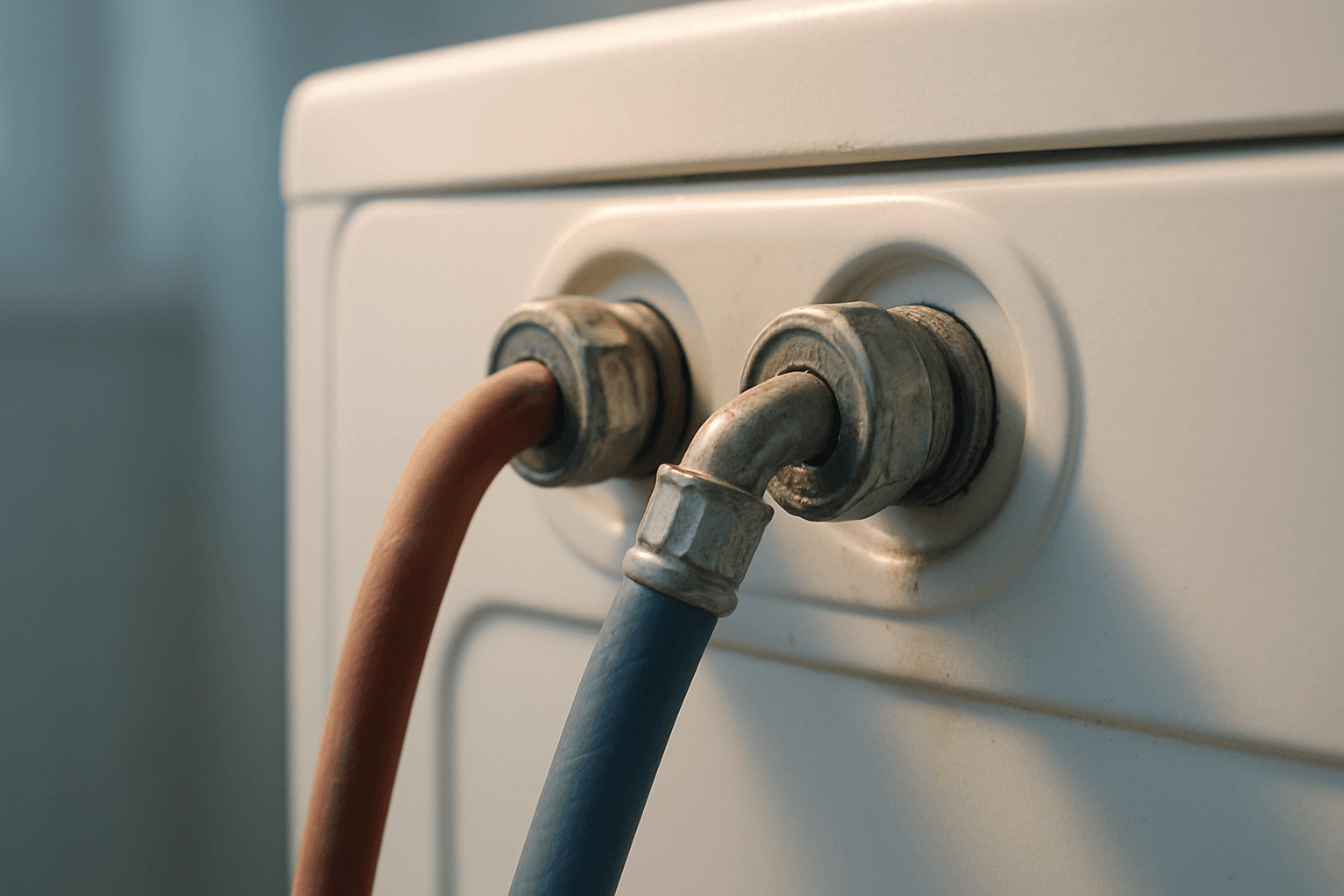
Summer entertaining? Why your washing machine's inlet hoses need inspection now
Before Father's Day gatherings fill your laundry basket, check the hoses bringing water into your machine—summer heat and pressure spikes make June the riskiest month for failure.
Key takeaways
- Rubber inlet hoses degrade faster in summer heat; inspect them monthly during June and July.
- Bulges, cracks, or discolouration signal imminent failure—replace immediately, don't wait.
- Braided steel hoses last 5–7 times longer than rubber and resist heat and pressure better.
- Turn off the water supply valve behind your washer if you'll be away for extended periods.
- A burst hose can flood your laundry room in minutes; the cost of prevention is minimal.
Why June matters for inlet hoses
Summer heat in Metro Vancouver may be gentler than inland regions, but it's still enough to stress the rubber inlet hoses on your washing machine. These hoses carry hot and cold water under pressure into your drum every cycle. Over time—especially in machines that are five years old or more—the rubber becomes brittle and loses flexibility. June's warmer temperatures accelerate that breakdown, and if you're hosting Father's Day gatherings or doing extra laundry for summer activities, the increased demand can be the final straw.
A failed inlet hose doesn't trickle—it floods. Water can pour into your laundry room, damage flooring, drywall, and anything stored nearby, and potentially seep into adjacent rooms. In Delta and across the Lower Mainland, many homes have laundry rooms in basements or tight spaces where water pooling goes unnoticed for hours.
What to look for
Inspect both the hot and cold inlet hoses where they connect to the back of your machine. Look for:
**Bulges or blisters** in the rubber—these are weak points about to rupture.
**Cracks or splits**, even hairline ones that weep slightly.
**Discolouration or hardening** of the rubber; it should feel slightly flexible, not stiff or chalky.
**Corrosion or rust** around the metal fittings at each end.
**Kinks or pinching** where the hose bends—this restricts water flow and creates pressure buildup.
If you spot any of these, replace the hose immediately. Don't assume a small crack will hold through the summer.
Rubber vs. braided steel
Standard rubber inlet hoses are inexpensive (often $15–30 each) but typically last 5–8 years before needing replacement. Braided steel hoses cost more upfront ($40–70 each) but last 25 years or longer, resist heat and UV better, and are far less likely to fail without warning. If your current hoses are original equipment or you're buying a used machine, upgrading to braided steel is one of the smartest preventive investments you can make.
A simple safeguard
If you're planning to be away during or after Father's Day—whether on a long weekend or extended trip—turn off the water supply valve behind your washing machine. It's the small oval knob on the wall where the supply lines connect. This takes two seconds and eliminates the risk of a hose bursting while you're gone. When you return, turn it back on and run a short cycle to confirm everything is working.
The cost of prevention
Replacing an inlet hose takes 10 minutes. Replacing water-damaged flooring, baseboards, and drywall takes weeks and costs thousands. In June, when entertaining season is in full swing and your machine is working overtime, a few minutes of inspection now pays for itself many times over.
Make this a Father's Day weekend task: grab a torch or your phone's light, get behind the washer, and give those hoses a careful look. Your laundry room—and your peace of mind—will thank you.
Need a hand from a real technician?
Our licensed pros repair washers and dryers across Metro Vancouver — same-day and next-day, with 90-day parts warranty + 7-day satisfaction guarantee.
Keep reading
Why your washer's inlet hoses weaken in autumn—and how to inspect them now
Metro Vancouver's damp fall weather puts pressure on washing machine hoses. A simple pre-winter inspection could save you thousands in water damage.
Why your washer floods in fall—and how Richmond's damp affects your drain hose
Autumn's moisture and cooler temperatures can cause hidden drain-line problems. Here's what to check before winter arrives.