Why your washer floods in fall—and how Richmond's damp affects your drain hose
Autumn's moisture and cooler temperatures can cause hidden drain-line problems. Here's what to check before winter arrives.
Key takeaways
- Drain hoses kink or sag in autumn as washers settle and humidity shifts the floor.
- Richmond's damp autumn weather slows evaporation in drain lines, trapping debris.
- A clogged drain filter causes 70% of slow-draining washers—inspect it monthly now.
- Ensure drain hose sits 60–90 cm high in the standpipe to prevent siphoning.
- Replace drain hoses every 5–7 years; autumn is ideal timing before winter stress.
Why autumn drainage problems happen now
October in Metro Vancouver brings cooler nights and persistent moisture—conditions that expose weaknesses in your washer's drain system. As your laundry room temperature drops and humidity lingers, water sits longer in drain lines instead of flowing freely. Combined with the heavier autumn laundry loads (think damp gym clothes, muddy outdoor gear, and costume cleanup), your drain system is working harder than it has in months.
Richmond's basement laundry rooms are especially vulnerable because of ground-level moisture seeping in during fall rains. If your washer drains slowly or backs up after a full cycle, the problem likely isn't the machine—it's the path the water takes to leave it.
Check your drain hose for kinks and sediment
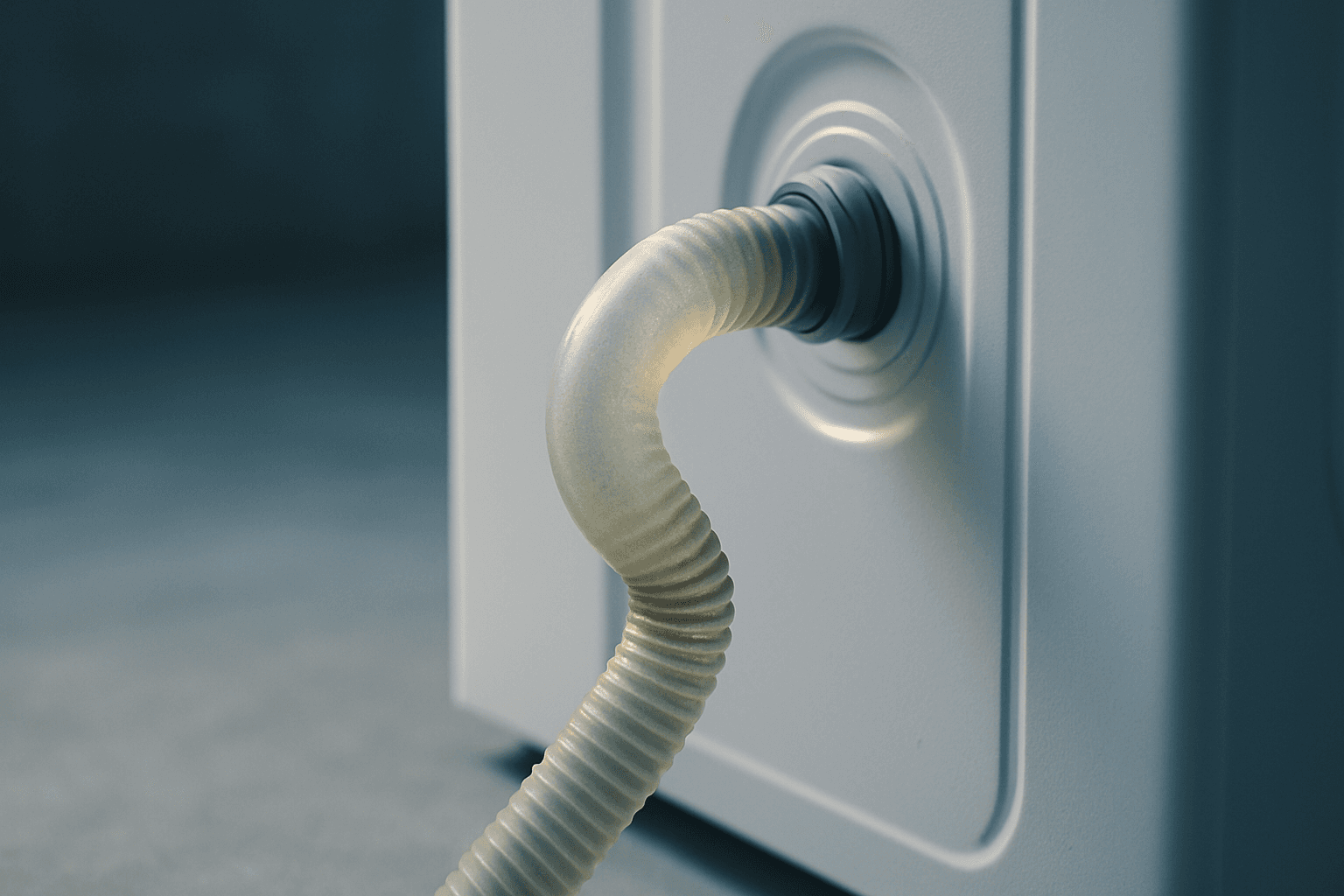
Pull your washer out gently and inspect the rubber drain hose running from the back. Look for:
- **Kinks or sharp bends** that restrict water flow (even small ones matter in autumn's cooler conditions).
- **Sagging sections** where water pools instead of flowing downhill.
- **Visible sediment or discoloration** inside the hose—a sign of mineral buildup and debris trapped by slower fall drainage.
If you find kinks, straighten them carefully. If the hose sags, reposition it so it slopes downward continuously toward the drain. A hose that's even slightly kinked will cause backups when your washer is working hard during heavy autumn laundry weeks.
Clean the drain filter—your first line of defense
Nearly every modern washer has a small drain filter (usually accessed from a panel at the bottom front). This filter catches lint, coins, and fabric debris before they clog the drain pump. In autumn, when damp air and heavier loads combine, this filter fills faster.
Set a timer to clean it once a month from now through March. Here's how:
1. Turn off the washer and unplug it.
2. Place a towel underneath the access panel—there's always residual water.
3. Unscrew the filter cap slowly and let water drain.
4. Rinse the filter under warm running water and wipe the cap.
5. Screw it back in firmly.
This 5-minute task prevents 90% of slow-drain complaints.
Position your standpipe correctly
Your drain hose should insert into a standpipe (the vertical PVC pipe that carries water away). The end of the hose needs to sit **60 to 90 centimetres high** inside that pipe—not resting at the bottom.
Why? If the hose end sits too low, backpressure from the main drain can siphon water back into the washer during the drain cycle. Richmond's older homes often have standpipes positioned too low or hoses that have slipped over time. Check yours now: if the hose is too deep, secure it higher using a hose clamp or by wrapping it around the standpipe with a rubber band.
When to replace the hose
Drain hoses last 5 to 7 years. If yours is older, autumn is the right time to replace it before winter adds freezing temperatures and ice to the mix. Rubber becomes brittle in cold, and a weak hose is likely to fail when you need your washer most.
New hoses are inexpensive (under $30) and simple to swap. Early action now saves you from a basement flood in January.
Need a hand from a real technician?
Our licensed pros repair washers and dryers across Metro Vancouver — same-day and next-day, with 90-day parts warranty + 7-day satisfaction guarantee.
Keep reading
Why your washer's inlet hoses weaken in autumn—and how to inspect them now
Metro Vancouver's damp fall weather puts pressure on washing machine hoses. A simple pre-winter inspection could save you thousands in water damage.
Halloween candy wrappers and dryer fires: why your lint trap needs daily checks now
October's trick-or-treat season means sticky fingers, wrapper debris, and a hidden fire hazard in your dryer. Here's what Burnaby homeowners need to know.