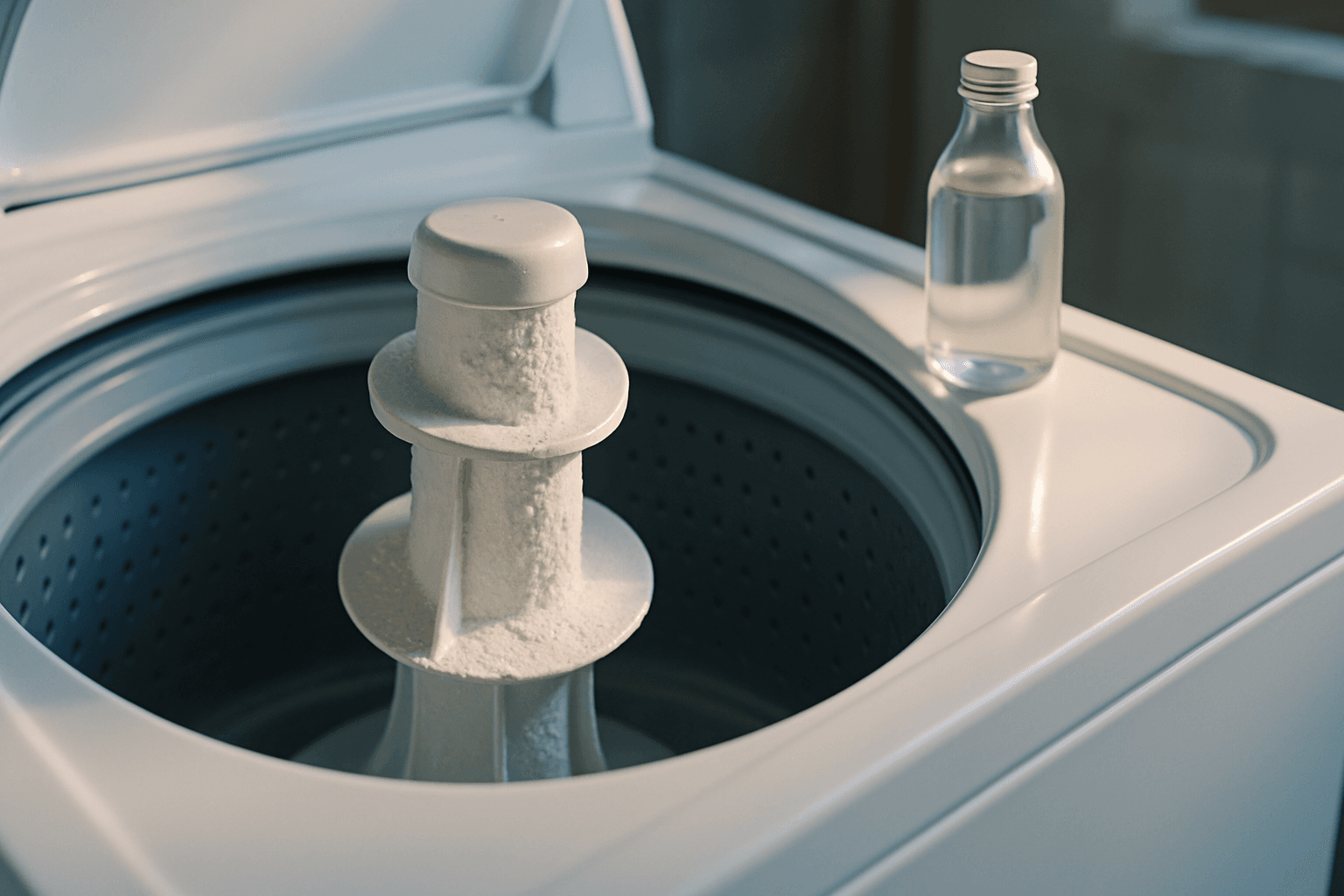
Why your washer's agitator gets stuck in autumn—and how to unstick it
Port Moody's damp fall weather creates the perfect conditions for mineral buildup and friction in your washer's agitator. Here's what to watch for.
Key takeaways
- Vancouver's hard water deposits accelerate agitator friction in autumn's damp conditions.
- Run a hot vinegar cycle monthly to dissolve mineral buildup before it locks the agitator.
- A stuck or grinding agitator signals a worn coupler—usually a $150–300 repair if caught early.
- Weekly visual checks (listen for grinding, watch for cycle stalls) catch problems before they worsen.
- Soft water or filtered fill lines reduce mineral stress year-round, especially in fall and winter.
Why autumn makes agitator problems worse
October in Port Moody brings rain, humidity, and cooler water temperatures—all of which slow evaporation inside your washer's drum. That standing moisture combines with Metro Vancouver's naturally hard water to create mineral deposits faster than in drier months. Your agitator, which moves back and forth hundreds of times per cycle, becomes the friction point where minerals accumulate most.
The result? A stiff, grinding, or completely stuck agitator that either won't turn or makes a loud scraping noise mid-cycle.
What a stuck agitator actually sounds like
You'll hear one of three things. A grinding or squeaking sound during the wash cycle means minerals are building up but the agitator is still moving. A loud clunk or bang followed by the cycle stopping entirely suggests the agitator has seized. A humming motor with a still drum means the coupler (the plastic coupling between the motor and agitator shaft) has worn through and can no longer transmit power.
Don't ignore these sounds. A stuck agitator forces your motor to work harder, which shortens its lifespan and can crack the pump or tub.
The monthly descaling routine that works
Run your washer empty on the hottest water setting with 2 litres of white vinegar in the drum once a month—more often if you live in a hard-water area of the Lower Mainland. Let it run through a full cycle. The acetic acid dissolves mineral deposits before they harden and restrict movement.
For stubborn buildup, fill the drum with hot water and vinegar, let it soak for 2–3 hours, then run the cycle. This costs nothing and takes 10 minutes of active time.
When it's time to call a repair technician
If your agitator won't turn at all, or if descaling doesn't restore smooth movement within two tries, the coupler has likely failed. A coupler replacement is straightforward—usually $150–300 parts and labour—but waiting too long risks damage to the motor or drum seal.
If you hear grinding that persists after descaling, the agitator shaft itself may be cracked or the drum bearing may be failing. Both are more expensive repairs ($400–700), but catching them now (in autumn, before the heavy winter laundry season) is far cheaper than a full tub replacement later.
Preventing agitator trouble through winter
Beyond monthly vinegar cycles, consider installing a water softener or inline filter if you notice white or orange buildup on your clothes or agitator. Port Moody's water is moderately hard, but homes with older pipes or well water often see faster mineral accumulation.
Also check your fill hose screens (the small mesh filters where water enters the washer) every three months. Clogged screens force your washer to work harder and can create pressure imbalances that strain the agitator.
Autumn is the ideal time to establish these habits before the rainy season fully sets in and your laundry load increases.
Need a hand from a real technician?
Our licensed pros repair washers and dryers across Metro Vancouver — same-day and next-day, with 90-day parts warranty + 7-day satisfaction guarantee.
Keep reading
Halloween candy wrappers and dryer fires: why your lint trap needs daily checks now
October's trick-or-treat season means sticky fingers, wrapper debris, and a hidden fire hazard in your dryer. Here's what Burnaby homeowners need to know.
Costume cleanup: why your washer's cold-water cycle needs a pre-rinse now
Halloween costumes bring mud, fake blood, and stubborn stains. Here's why a quick pre-rinse before the main wash saves your machine—and your clothes.