Post-Thanksgiving laundry pile? Your washer's fill valve needs attention now
After hosting, your washer works overtime—and autumn damp in New Westminster can slow drainage. Here's why your fill valve matters right now.
Key takeaways
- Fill valves slow down in autumn when humidity and mineral content in Metro Vancouver water spike.
- Clogged inlet screens are the most common cause—clean them yourself in under 10 minutes.
- A sluggish fill valve forces your washer to run longer cycles, wasting water and energy.
- If water trickles during fill, don't wait—a faulty valve can fail completely mid-cycle.
- New Westminster's older homes often have mineral-heavy water that clogs screens faster.
Thanksgiving was two days ago, and your laundry basket is probably overflowing. Your washer is about to work harder than it has in months. But here's what many New Westminster homeowners don't realise: autumn is when your washer's fill valve—the component that lets water into the drum—starts to struggle.
October's damp air and Metro Vancouver's mineral-rich water create the perfect storm for sluggish performance. If your washer is taking longer to fill, or if water trickles in slowly, your fill valve's inlet screens are likely clogged. This isn't just annoying; it's a sign you need to act before your post-holiday load becomes a real problem.
What does a fill valve do (and why it matters now)?
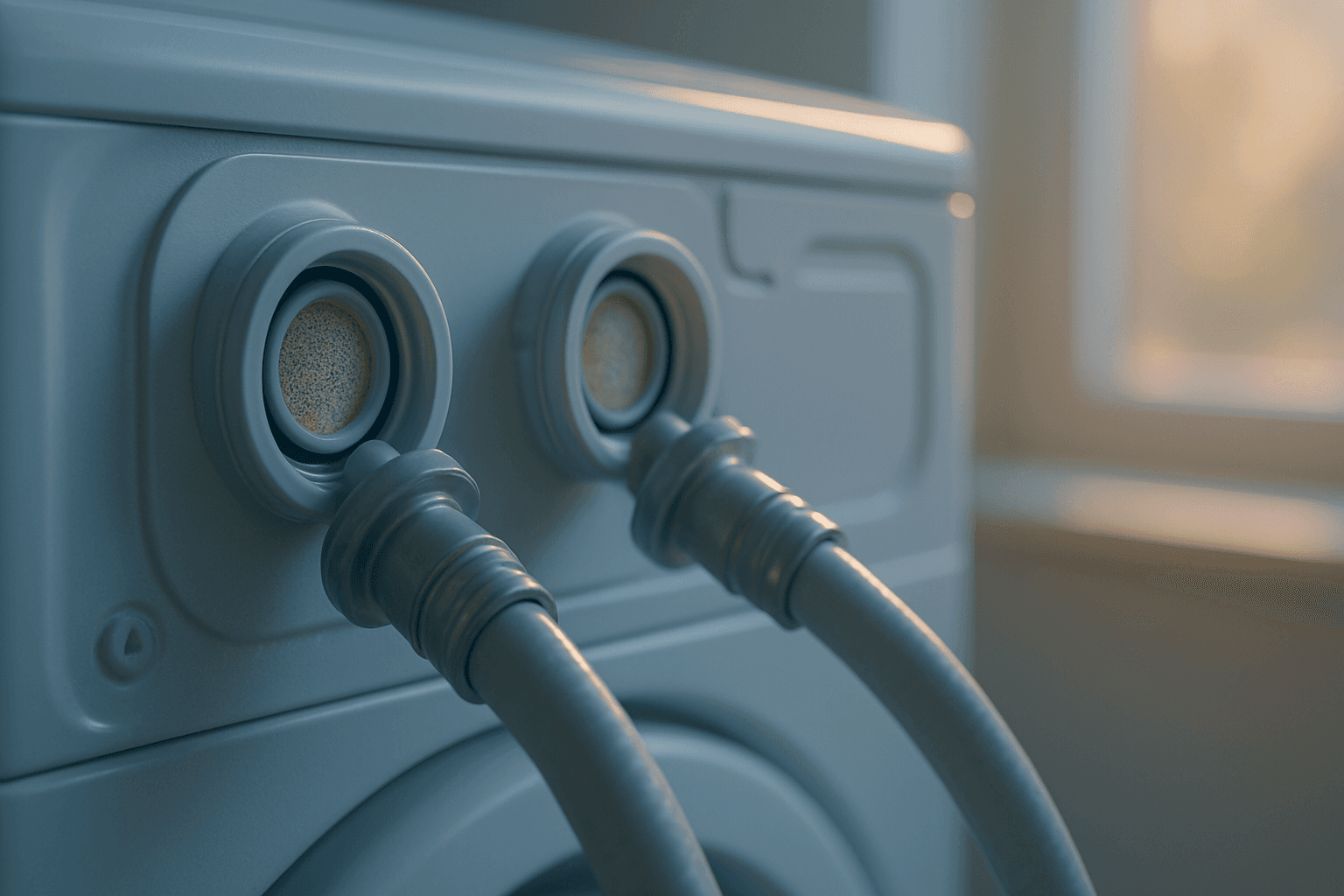
Your washer's fill valve is a solenoid-controlled gate that opens and closes to let hot and cold water into the drum. When it works properly, water rushes in within seconds. When inlet screens get clogged with minerals, sediment, or debris, water trickles instead. Your washer compensates by running the fill cycle longer, which wastes water and energy—and means your laundry takes longer overall.
In autumn, when humidity is high and water pipes are carrying more mineral-laden moisture through the Lower Mainland's older infrastructure, this happens faster.
Why autumn makes this worse
New Westminster's water supply—and much of Metro Vancouver's—contains dissolved minerals like calcium and magnesium. In autumn, when air moisture increases and water sits longer in pipes during cooler nights, these minerals precipitate onto the fine mesh screens inside your fill valve's inlet ports.
If your home was built before the 1980s, your pipes are even more likely to have accumulated sediment. That sediment ends up in your valve's screens, restricting water flow.
How to check and clean your inlet screens
This is a task you can do yourself in about 10 minutes, no tools needed (except possibly a flathead screwdriver).
**Step 1:** Unplug your washer and turn off both the hot and cold water taps behind it.
**Step 2:** Locate the inlet hoses where they connect to the washer (usually at the back, behind the machine). You'll see a small cone-shaped screen at the connection point on each hose.
**Step 3:** Carefully unscrew the hose from the washer. The screen will either stay in the hose or fall into your hand. If it's stuck, use a flathead screwdriver to gently pry it out.
**Step 4:** Hold the screen under running water and rinse it thoroughly. If it's heavily calcified, soak it in equal parts white vinegar and water for 15 minutes, then rinse again.
**Step 5:** Reinstall the screen and reattach the hose. Do this for both hot and cold inlets.
**Step 6:** Turn the taps back on slowly and run a short test cycle to confirm water flows normally.
When to call for help
If water still trickles after you've cleaned the screens, or if you hear a clicking sound when the valve tries to open, the solenoid itself may have failed. That's a job for a technician—a fill valve replacement usually takes under an hour and costs less than letting the problem worsen.
After a heavy holiday like Thanksgiving, your washer deserves a moment of attention. A clean inlet screen is a small investment that keeps your machine running efficiently through the wet months ahead.
Need a hand from a real technician?
Our licensed pros repair washers and dryers across Metro Vancouver — same-day and next-day, with 90-day parts warranty + 7-day satisfaction guarantee.
Keep reading
Halloween candy wrappers and dryer fires: why your lint trap needs daily checks now
October's trick-or-treat season means sticky fingers, wrapper debris, and a hidden fire hazard in your dryer. Here's what Burnaby homeowners need to know.
Costume cleanup: why your washer's cold-water cycle needs a pre-rinse now
Halloween costumes bring mud, fake blood, and stubborn stains. Here's why a quick pre-rinse before the main wash saves your machine—and your clothes.