Why your dryer's moisture sensor gets confused in Vancouver's autumn damp
As humidity climbs this fall, your dryer's moisture sensor may struggle to tell wet from dry—and waste energy (or leave clothes damp). Here's what's happening and how to fix it.
Key takeaways
- Moisture sensors detect moisture on clothes, not air humidity—but dust buildup blocks their readings.
- Clean your sensor every month during wet seasons using a soft cloth and white vinegar.
- North Vancouver's October–November damp makes timed cycles less reliable; use auto-sense settings instead.
- A clogged lint trap reduces air circulation and makes moisture sensors work harder.
- If clothes stay damp after a full cycle, the sensor likely needs cleaning before you call for repair.
The problem: humidity isn't what you think
When North Vancouver's autumn rains arrive and humidity climbs, your dryer's moisture sensor starts acting oddly. You might notice clothes coming out slightly damp, or the machine running longer than usual. The culprit isn't the weather outside—it's dust and lint buildup on the sensor itself.
Your dryer's moisture sensor works by detecting actual moisture on your clothes, not the humidity in the air. When lint or detergent residue coats the sensor, it sends false signals to the control board, telling it the load is wetter than it really is (or drier, depending on the buildup). In October, when Metro Vancouver's air is already saturated, a dirty sensor compounds the problem.
How the sensor actually works
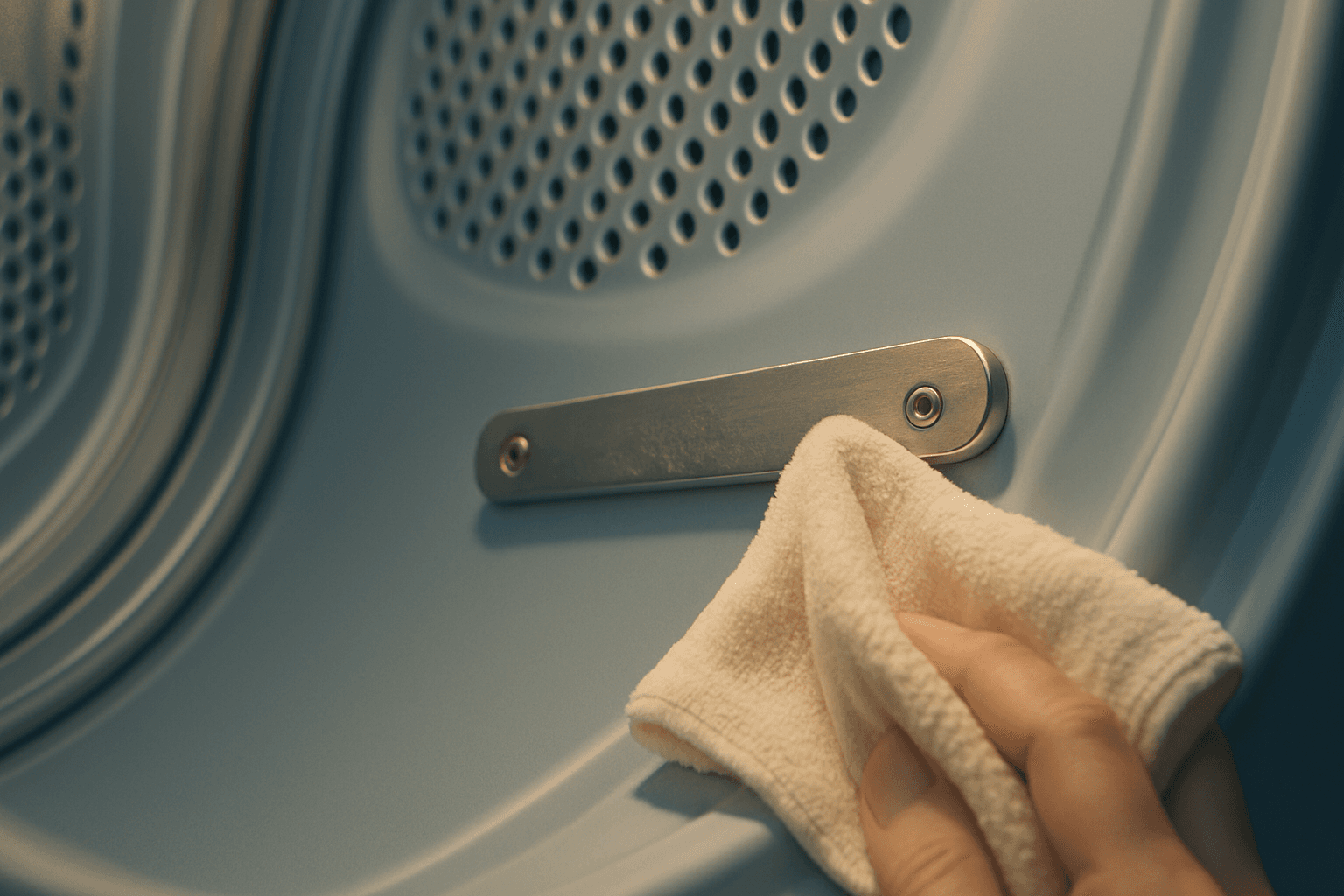
Most modern dryers have a metal rod or strip located inside the drum, near the lint trap area. When wet clothes tumble past it, moisture completes an electrical circuit. Once clothes dry enough, the circuit breaks, and the dryer stops. It's elegant—until dust gets in the way.
If the sensor is coated, it either stays "closed" (thinking clothes are wet when they're dry) or stays "open" (thinking clothes are dry when they're still damp). Either way, you're wasting energy or rewashing.
Cleaning your moisture sensor in three steps
**Step one: unplug the dryer.** Never work on an appliance while it's powered.
**Step two: locate the sensor.** Open your dryer door and look along the inside wall or near the lint trap housing. You'll see a metal rod or flat strip, usually about 4 inches long. Some sensors are easier to access than others; if yours is deeply recessed, a photo and quick call can confirm before you spend time.
**Step three: clean gently.** Use a soft, lint-free cloth (microfiber works well) slightly dampened with white vinegar. Wipe the sensor thoroughly, getting into any grooves. Dry it completely with a clean cloth. Vinegar dissolves detergent buildup and mineral deposits without scratching the metal.
Do this once a month during autumn and winter. In drier months, every two to three months is fine.
Why lint trap cleaning matters now
A clogged lint trap doesn't just slow drying—it also forces the moisture sensor to work harder. When air can't circulate freely, moisture lingers on clothes longer, and the sensor keeps the cycle running. In North Vancouver's damp season, a full lint trap is a compounding problem.
Remove lint after every load. Once weekly, rinse the trap itself under warm water to remove detergent film, then dry it completely before reinstalling.
Switch to auto-sense settings this season
Timed dry cycles ("40 minutes," for example) ignore your sensor entirely. During autumn, when ambient humidity is high, timed cycles often leave clothes damp or overheat lighter fabrics. Instead, use your dryer's moisture-sensing setting—labelled "Auto," "Sensor Dry," or "Smart Dry" depending on the brand.
These cycles stop when the sensor detects dryness, adapting to real conditions rather than a fixed clock. Paired with a clean sensor and lint trap, you'll save energy and get better results.
When to call for repair
If you've cleaned the sensor, cleared the lint trap, and clothes still come out damp, the sensor itself may be faulty or the control board may not be reading it correctly. That's a job for a technician. But nine times out of ten in autumn, a clean sensor solves the problem.
Need a hand from a real technician?
Our licensed pros repair washers and dryers across Metro Vancouver — same-day and next-day, with 90-day parts warranty + 7-day satisfaction guarantee.
Keep reading
Halloween candy wrappers and dryer fires: why your lint trap needs daily checks now
October's trick-or-treat season means sticky fingers, wrapper debris, and a hidden fire hazard in your dryer. Here's what Burnaby homeowners need to know.
Costume cleanup: why your washer's cold-water cycle needs a pre-rinse now
Halloween costumes bring mud, fake blood, and stubborn stains. Here's why a quick pre-rinse before the main wash saves your machine—and your clothes.