Why your washer's water pressure drops in October—and what to do about it
Autumn rain and temperature shifts can weaken your washer's water inlet performance. Here's how to spot the problem before Thanksgiving hosting gets hectic.
Key takeaways
- Low water pressure often starts outside your washer, not inside it—check your home's main supply first.
- Mineral deposits clog inlet screens in autumn when water temperature fluctuates; cleaning them takes five minutes.
- Kinked or pinched inlet hoses are the easiest culprit to spot and the quickest to fix yourself.
- If pressure is low at every tap, call your water utility; if only the washer struggles, the inlet valves may need professional service.
- Test water pressure now, before you're hosting and need the washer working at full strength.
Why October water pressure matters
When Thanksgiving hosting is three days away, the last thing you need is a washer that fills slowly or stops mid-cycle. October in Metro Vancouver—and Richmond especially—brings cooler temperatures, increased rainfall, and the kind of sudden weather swings that can stress your home's water delivery system. A washer that worked fine in September may suddenly struggle to fill, and most homeowners assume it's a broken valve inside the machine. Often, it's not.
Check your inlet hoses first
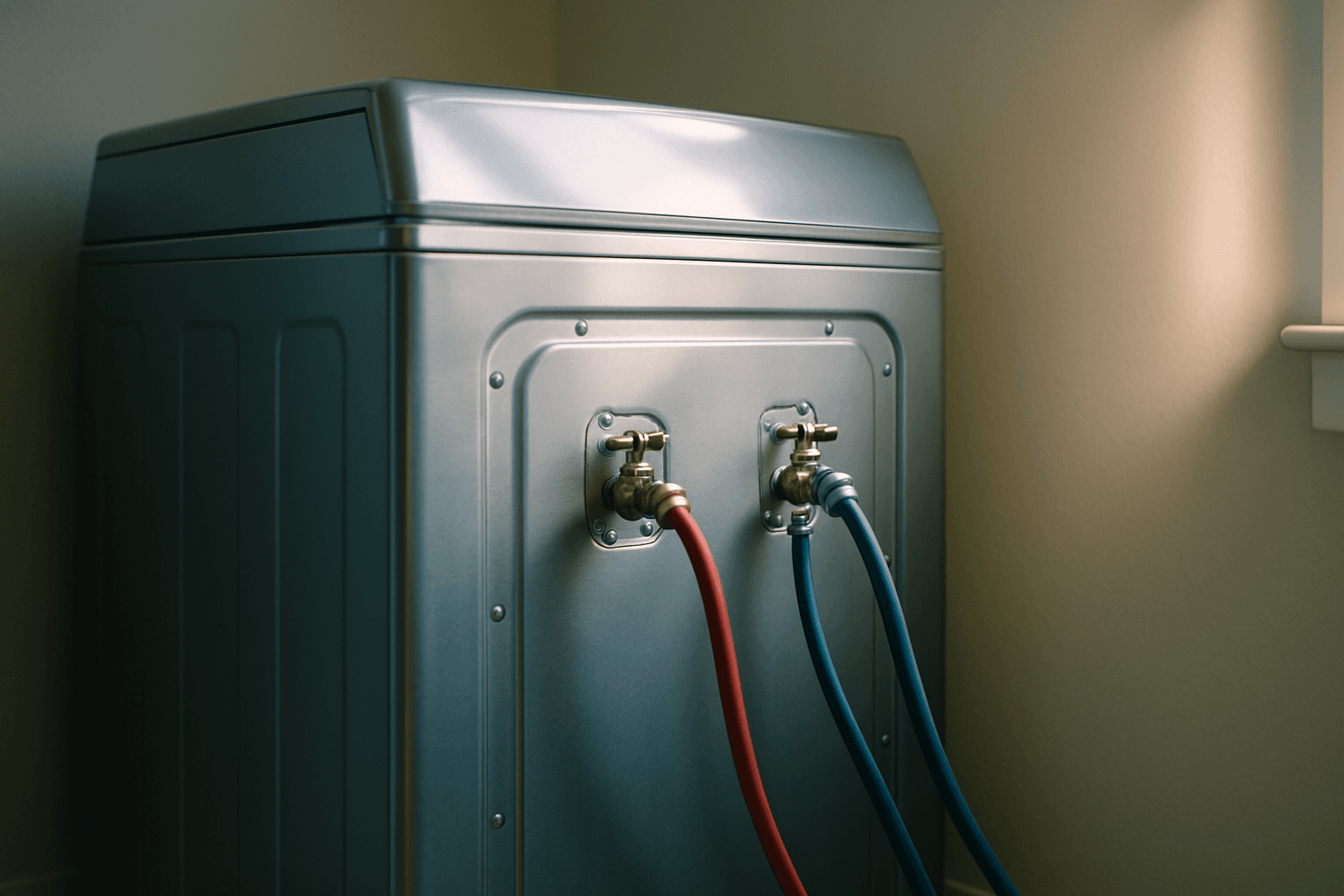
Your washer connects to the hot and cold water supply through two inlet hoses, usually located at the back. Start by pulling the washer away from the wall and inspecting both hoses along their entire length. Look for kinks, cracks, or pinches—autumn storage moves or shifting appliances can compress these hoses without you noticing. If a hose is kinked, straighten it gently. If it's cracked or leaking, it needs replacing before you run another load.
Next, check where the hoses connect to the wall. Make sure the shut-off valves (the small knobs on the water lines) are turned fully open. Homeowners sometimes partially close these during repairs and forget to reopen them. Turn them counterclockwise until they stop—don't force them.
Clean the inlet screens
Inside each inlet hose connection, where it attaches to the back of your washer, there's a small mesh screen designed to catch sediment and mineral buildup. In autumn, when water temperature fluctuates between warm days and cold nights, minerals can accumulate faster. These screens clog silently and reduce water flow to a trickle.
Turn off both inlet valves. Unscrew the hose connection (a wrench helps) and look for a tiny screen—it's usually brass-coloured and sits in the valve opening. Rinse it under warm tap water and use a soft brush or old toothbrush to gently remove deposits. Reinstall it, reattach the hose, and turn the valves back on. Repeat for the other inlet.
Test your home's water pressure
If the hoses and screens look clean, the problem may be your home's water supply. Turn on the kitchen tap and run water into a bucket for ten seconds, then measure how much you collected. A normal household supply delivers about 10–15 litres in that time. If you get noticeably less, your home's pressure is low.
Low pressure at all taps usually means your water utility is managing demand or there's a main-line issue in Richmond—contact them to check. Low pressure only at the washer inlet suggests the inlet valve inside the machine may be failing and needs professional inspection.
When to call for service
If you've cleaned the screens, straightened the hoses, and opened the shut-off valves, but water still fills slowly, the inlet valve assembly likely needs replacement. This is a quick job for a technician and costs far less than an emergency repair on Thanksgiving Eve.
Don't wait until you're hosting. Test your washer's fill speed this week—run a short cycle and listen. A normal fill takes 2–3 minutes. If it's taking 5+ minutes or stopping mid-cycle, one of these checks will usually reveal the cause.
Need a hand from a real technician?
Our licensed pros repair washers and dryers across Metro Vancouver — same-day and next-day, with 90-day parts warranty + 7-day satisfaction guarantee.
Keep reading
Halloween candy wrappers and dryer fires: why your lint trap needs daily checks now
October's trick-or-treat season means sticky fingers, wrapper debris, and a hidden fire hazard in your dryer. Here's what Burnaby homeowners need to know.
Costume cleanup: why your washer's cold-water cycle needs a pre-rinse now
Halloween costumes bring mud, fake blood, and stubborn stains. Here's why a quick pre-rinse before the main wash saves your machine—and your clothes.