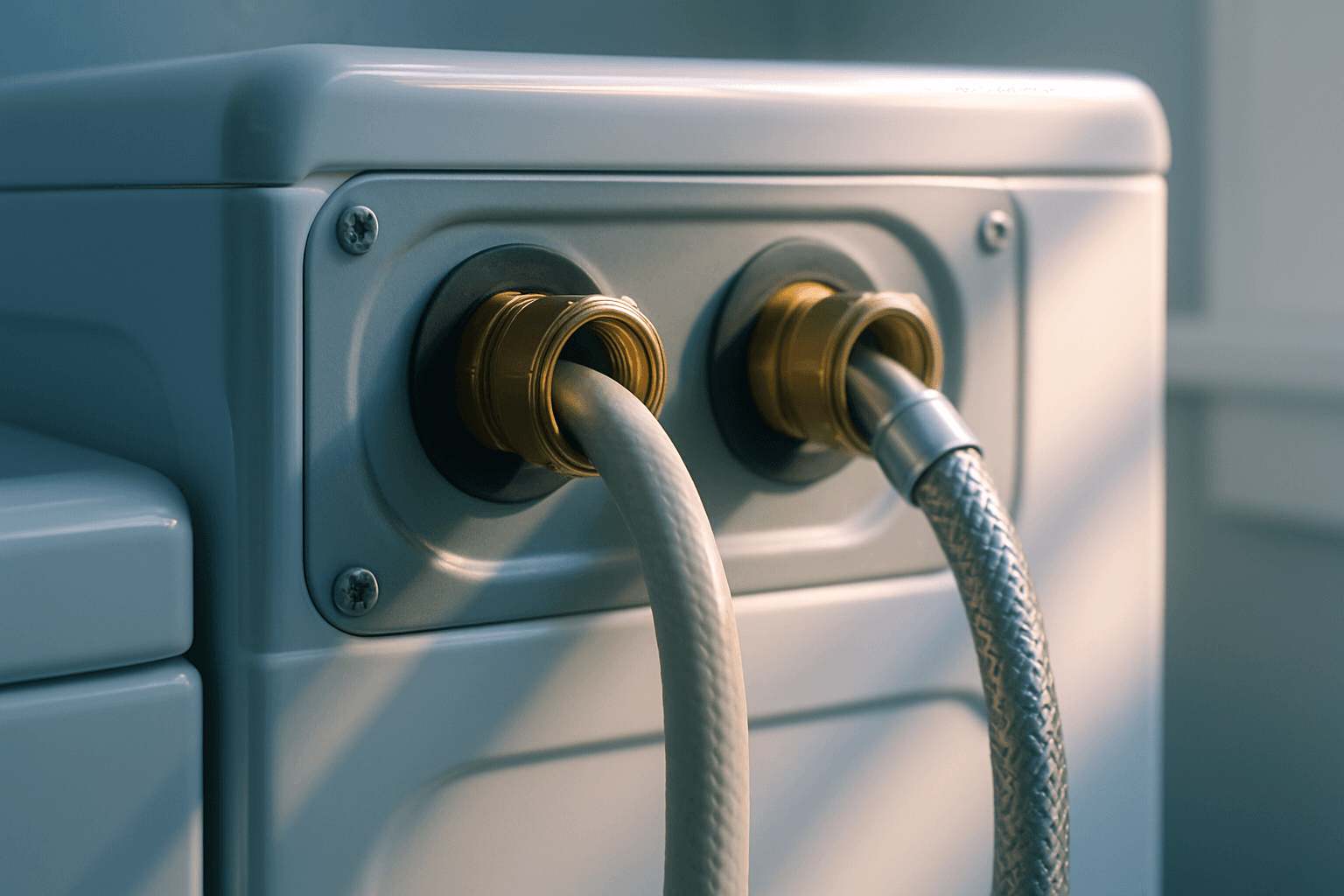
Why your washer's inlet hose fails in early autumn—and how to prevent it
As Port Coquitlam heads into fall, temperature swings and pressure changes can crack inlet hoses. Here's what to check before the Labour Day rush.
Key takeaways
- Temperature swings between warm days and cool nights cause hose material to expand and contract, weakening seals.
- Mineral deposits from hard water buildup inside hoses, restricting flow and creating pressure points.
- A single burst inlet hose can flood your laundry room and damage flooring—damage insurance often doesn't cover.
- Braided stainless-steel hoses resist cracking better than rubber in Vancouver's humid, variable autumn weather.
- Replace inlet hoses every 5–7 years, or immediately if you spot bulges, cracks, or discolouration.
The autumn hose problem
As September arrives in Port Coquitlam and across Metro Vancouver, we're entering a season of dramatic temperature shifts. One day it's warm and sunny; the next, cool rain rolls in. Your washing machine's inlet hoses experience this stress directly. Rubber and plastic hose materials expand when warm and contract when cool. Over weeks, these tiny movements create microscopic cracks that eventually split—often without warning.
Hard water, common throughout the Lower Mainland, makes the problem worse. Mineral deposits build up inside the hoses, narrowing the passage and increasing internal pressure. That extra pressure accelerates cracking.
Why this matters now
Labour Day marks the start of the busy laundry season. Kids are back in school, sports gear needs washing, and household routines intensify. A burst inlet hose mid-cycle can flood your laundry room, saturate subflooring, and damage drywall—costs that easily reach $3,000 or more. Most home insurance policies don't cover gradual wear, so prevention is far cheaper than repair.
How to inspect your hoses
Take two minutes this weekend to check both inlet hoses (hot and cold). Look for:
- **Bulges or blisters** along the length (a sign of internal pressure damage)
- **Discolouration or staining** (often indicates mineral buildup or mould inside)
- **Cracks or splits**, especially near the connection points at the wall or machine
- **Stiffness or brittleness** when you gently flex the hose
If you spot any of these, replace the hoses immediately—don't wait.
The upgrade worth making
Standard rubber inlet hoses typically last 5–7 years in our climate. If yours are approaching that age, consider replacing them now with braided stainless-steel hoses. The extra cost (usually $20–40 per hose) is negligible compared to water damage. Stainless-steel braiding resists expansion and contraction far better, and the material doesn't degrade as quickly in Vancouver's cool, humid autumn and winter.
Simple maintenance
If your hoses are still in good condition, extend their life by:
- Turning off the water supply at the wall valve when you're away for more than a few days (reduces constant pressure on the hoses)
- Checking connections at both ends quarterly to ensure they're hand-tight but not over-tightened
- Running a cleaning cycle with a commercial washing machine cleaner once a month to reduce mineral buildup inside the machine (which indirectly reduces pressure on the hoses)
When to call for help
If you're unsure whether your hoses are safe, or if you've had a leak before, a quick professional inspection takes 15 minutes and gives you peace of mind. Port Coquitlam's variable autumn weather is exactly when hose failures spike—don't let a burst catch you off guard.
Need a hand from a real technician?
Our licensed pros repair washers and dryers across Metro Vancouver — same-day and next-day, with 90-day parts warranty + 7-day satisfaction guarantee.
Keep reading
Halloween candy wrappers and dryer fires: why your lint trap needs daily checks now
October's trick-or-treat season means sticky fingers, wrapper debris, and a hidden fire hazard in your dryer. Here's what Burnaby homeowners need to know.
Costume cleanup: why your washer's cold-water cycle needs a pre-rinse now
Halloween costumes bring mud, fake blood, and stubborn stains. Here's why a quick pre-rinse before the main wash saves your machine—and your clothes.