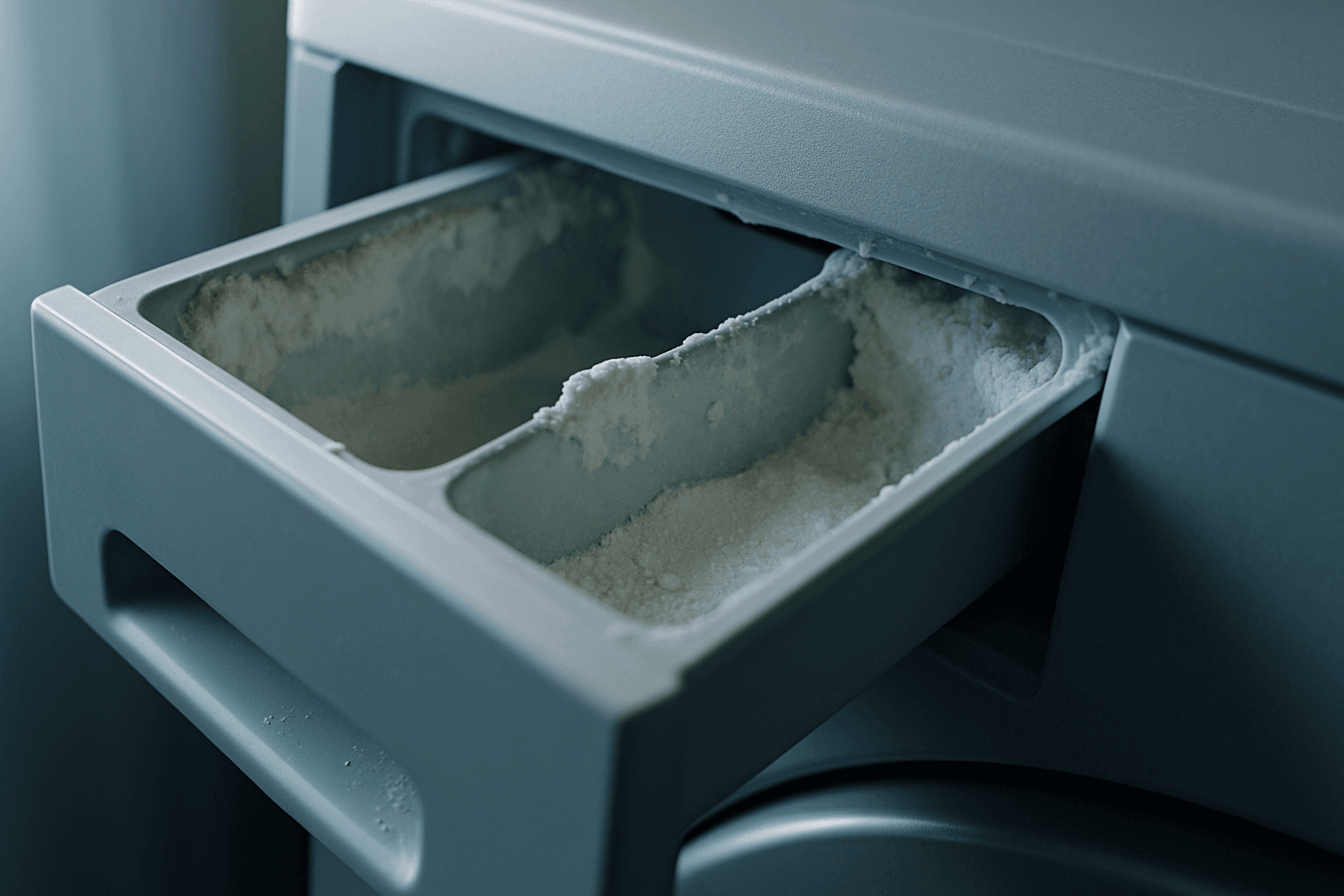
Why your washer's detergent dispenser clogs when autumn rain arrives
As Delta's humidity climbs this September, moisture can turn detergent into a sticky paste—clogging your dispenser and leaving residue on clothes.
Key takeaways
- Detergent clumping is a humidity problem, not a product defect—it worsens as autumn rain arrives.
- Clogged dispensers leave soap streaks, stiff fabrics, and unrinsed detergent buildup inside the drum.
- Clean your dispenser drawer every 7–10 days during wet season to prevent blockages.
- Liquid detergent or pods are more reliable than powder in Metro Vancouver's damp climate.
- A clogged dispenser can force water around the blockage, reducing wash quality significantly.
The autumn humidity problem
September marks the start of Metro Vancouver's wet season, and your washing machine's detergent dispenser knows it. As humidity climbs in Delta and across the Lower Mainland, powder and concentrated detergent granules absorb moisture from the air, turning into a thick paste that hardens inside the dispenser drawer. Water can't flow through properly, so detergent sits in the dispenser instead of mixing into the wash—or worse, it clumps up and gets pushed into the drum mid-cycle, leaving white streaks and stiff residue on your clothes.
Why this happens now
Your laundry room isn't sealed off from outdoor humidity. Every time you open the door or run a load, moisture-laden air enters. Powder detergent is especially vulnerable because it's hygroscopic—it literally pulls water from the air. By late September, when Delta's humidity averages 70–80%, your dispenser drawer becomes a perfect environment for caking. Liquid detergents and pods don't have this weakness because they're already wet or water-soluble, so they don't absorb additional moisture.
The real cost of a clogged dispenser
When the dispenser clogs, water takes the path of least resistance—it either bypasses the detergent entirely, leaving your load under-cleaned, or it forces clumps into the drum, staining clothes with concentrated soap. Fabric softener dispensers clog the same way, sometimes leaving oily spots that won't wash out. Over time, detergent buildup inside the dispenser drawer also creates a breeding ground for mildew, adding a musty smell to your laundry.
How to prevent it
Clean your dispenser drawer every 7–10 days during autumn and winter. Pull it out completely, rinse it under warm running water, and use an old toothbrush to scrub the grooves where paste accumulates. Check the dispenser cavity inside the washer too—detergent can harden there as well. Let everything air-dry before reinserting.
If you use powder detergent, switch to liquid or pods for the wet season. Many Delta households find pods especially convenient because they're pre-measured, they dissolve reliably, and they bypass the dispenser entirely—they go straight into the drum. Liquid detergent works well in the dispenser if you're diluting it slightly with water before pouring it in; this prevents it from gumming up in humid conditions.
A simple seasonal shift
This isn't a fault in your machine. It's the Lower Mainland's climate doing what it does best. By keeping your dispenser clean and switching to humidity-resistant detergent formats during wet months, you'll avoid stained clothes and the frustration of repeat washes. Your washing machine will run more efficiently, and your laundry will come out fresh without the ghost of dried detergent clinging to the fibres.
Need a hand from a real technician?
Our licensed pros repair washers and dryers across Metro Vancouver — same-day and next-day, with 90-day parts warranty + 7-day satisfaction guarantee.
Keep reading
Halloween candy wrappers and dryer fires: why your lint trap needs daily checks now
October's trick-or-treat season means sticky fingers, wrapper debris, and a hidden fire hazard in your dryer. Here's what Burnaby homeowners need to know.
Costume cleanup: why your washer's cold-water cycle needs a pre-rinse now
Halloween costumes bring mud, fake blood, and stubborn stains. Here's why a quick pre-rinse before the main wash saves your machine—and your clothes.